 |
The most powerful
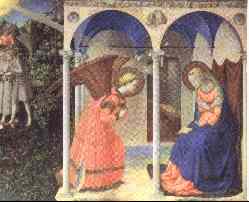
image of woman in the Middle Ages, one which embodied all the
occulted misogyny that the idealization of virginity entailed, was
of course the Virgin Mary. Mary's conception is free from
sexuality and thus free from the Original Sin with all that it
entails, including painful childbirth. Eve, on the other hand, is
a woman of shame and sins. Eve, to all Christians, is the earliest
woman rebel, one that led all others.
Eve was created
out of the Old Adam, but the new Adam, Redeemer of the Old, was
produced out of Mary.
Eve is figured as
a secondary and derivative creation, the daughter, as it were of
her husband Adam, and like an ungrateful child or disobedient
wife, she holds responsibility for his great loss, the loss of
paradise of the one from whom she drew her origin. Mary on the
other hand figures as the mother of Christ who is both her
bridegroom and son.
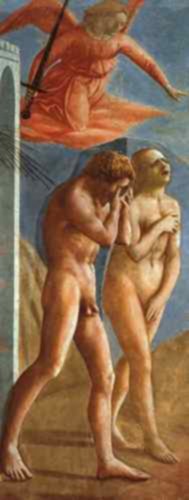
The expulsion of Adam and Eve
from the Garden of Eden as a result of a woman's disobedience and
man's redemption through Christ who was born of a spotless virgin.
|