|
|
Rebel Women: Advocates for Birth Control and Abortion | |
|
|
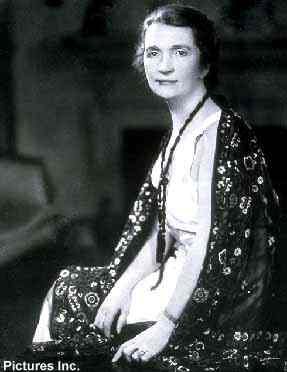
Margaret Sanger (1883-1966) Born September 14th 1883 in Corning New York USA,
Sanger was the sixth of eleven children. She was educated at Cleverack
College and later trained as a nurse at White Plains Hospital, and
Manhattan ear and eye clinic. While working with the poorer women in the Lower East of New York, she became aware of the hardship of unplanned and unwelcome pregnancy. In her article “The Case for Birth control” (First published in Woman citizen, Vol18, Feb23 1924) she wrote:
“Everywhere we look we see poverty and large families going
hand in hand. We see hordes
of children whose parents cannot feed, clothe, or educate even one half of
the number born… and we see sick harassed broken mothers whose health and
nerves cannot bear the strain of further childbearing” Sanger also saw her mother’s health suffer as a result of
bearing eleven children.
Thus, after attending a woman who as dying from a criminally
induced abortion Sanger gave up nursing in 1912 to pursue the cause of
birth control. In
1914 she founded the National Birth control League of which Mary Ware
Dennett took control over. On
that year she also founded a paper called “Woman rebel” and also a
pamphlet on family limitation.
She was however indicted through the Comstock Law for mailing
obscenities and fled to Europe.
The charges were finally dropped in 1916. Despite one brush with the law, Sanger was not prepared to
give up. In late 1916 she
opened the first birth control clinic in Brooklyn, New York. She also continued to write
various articles such as “What every girl should know” (1916) and “What
every mother should know” (1917). However in 1917, her
clinic was quickly closed down and Sanger was arrested for maintaining a
“public nuisance”. On this
charge she served thirty days in Queens penitentiary. Later, her sentencing and many other prosecutions gained her
public support for the birth-control movement. They also led to federal courts
granting doctors the right to give birth control advice. In 1936, the Comstock Law was
re-interpreted so it could no loner be used against the cause of birth
control. Sanger also set up many other organizations such as The
American birth control league (1921); The World Population Conference in
Geneva and the International planned Parenthood Federation (1953). She also took her campaign to
Asian countries such as India and Japan. Marie Stopes The birth control movement was led in Britain by Marie Stopes, daughter of a middle-class Edinburgh family. Her book “Married Love” published in 1918 was considered as one of the most radical texts of the time. In this book, she appealed for sexual equality and fulfillment in marriage. She also spoke out about issues of unwanted pregnancies within marriage as a result of “marriage rape”.
While Sanger’s cause was to alleviate poverty, emotional
trauma and over population, Stopes sought to relieve the physical stress,
strain and risks of continuous childbearing. In 1922, Stopes founded a
society for “constructive birth control and racial progress”.
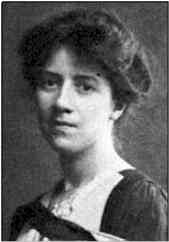
Mary Coffin
W From 1908-1910 Dennett was a field secretary of the Massachusetts Woman Suffrage Association and moved to New York to serve as a corresponding secretary for the National American Woman Suffrage Association. However, in 1915 Dennett became involved in the birth control cause and took over Margaret Sanger’s National Birth control League. Instead of focusing on protests and demonstrations, she transformed the league to focus on public education of sexuality. In 1922 her essay on sex as a natural and joyful part of
life (which had been widely distributed by pamphlets) was banned from mail
for being too obscene. Later
in 1928, Dennett was charged with continuing to answer requests for the
pamphlet through mail. Her
conviction caused a national public outcry and protest but she won an
appeal in March 1930. From
there, the much determined Dennett continued to publish articles such as
“The sex education of children” (1931) and “Who’s Obscene” (1932). Born in Lithuania (then Russia), she left for America in
1885 with her half sister.
Four years later, she moved to New York and became one of the most
well known American radicals of the time, lecturing on women’s rights and
anarchism. To her “The brutal
Russian Cossacks were replaced by the policeman wielding a baton”. Like her fellow birth control counterparts she served prison
jail terms for giving out information on a lecture about birth control and
advising the unemployed to steal food if their pleas for help were
ignored. Thus, in 1908 she
was stripped of her US citizenship and spent her final years supporting
anti-Franco forces in Spain through lectures and fundraising. She suffered a stroke in 1939 and
died a year later in 1940 in Canada.
| |