|
Coningsby
Characters
|
|
(revised key of 1845)
In real life |
| |
|
|
| Coningsby
Rigby
Taper
Tadpole
Lord
Monmouth
The Duke
Lord
Henry Sydney
Madame
Colonna
Princess
Lucretia
Lord
Eskdale
Lucian
Gay
Mr Ormsby
Sir Charles
Buckhurst
Lord
Vere
Oswald
Millbank
Boots
at Christopher
The Duchess
Lord
Fitzbooby Earwig
Lord
Rambroke
Tom
Chudleigh
Lord
Everingham
Lady
Everingham
Lady
Theresa
Eustace
Lyle
Marquess
of Beaumanoir
Mr Melton
Mr G.O.A.
Head
Mr Millbank
Edith
Jawster
Sharp
The Russian
Ambassador
The Russian
Ambassadress
The
Grand Duke
Lady
St. Julians
Lord
Gaverstock
Lady
Gaverstock
Villebecque
Flora
Mr. Guy
Flouncey
Mrs.
Guy Flouncey
Sidonia
Mr.
Donald McFarlane
Mr. Gingerly
Browne
Mr. Juggins
Sir Baptist
Placid
Hon.
Alberic de Crecy
Stella
Sir
Joseph Wallinger
Duchesse
de G-------
Count
M--È
Baroness
S. de R--------d
Duke
D-----s
Baron
von H------t
Princesse
de Petit Poix
Countesse
de C-s---l-ne
Mr. Cassilis
Canterton
Duke
of Agincourt
Ermengarde
Clotilda
|
|
Lord
Littleton
Rt. Hon.
John Wilson Croker
Charles
Ross Esq.
Alexander
Pringle, Esp., M.P.
Lord
Hertford
The Duke
of Rutland
Lord
John Manners
Lady
Strachan
Madame
Zichy
Lord
Lonsdale
Theodore
Hook
Quentin
Dick, Esq., M.P.
Baillie
Cochrane, Esq., M.P.
Lord
Edward Howard Rt.
Hon.
W.E. Gladstone, M.P.
Peter
Borthwock, Esq., M.P.
The Duchess
of Buckingham and Chandos
Lord
Harrington
Sir George
Clerk, Bart., M.P.
Lord
Rosslyn
Augustus
O'Brien, Esq., M.P.
Earl
of Clarendon
Countess
of Clarendon
Lady
Adeliza Manners
Ambrose
Lisle Phillips, Esq.
Marquess
of Granby
Hon.
James MacDonald
J.A.
Roebuck, Esq. M.P.
Mark
Phillips, Esq. M.P.
Miss
Mactavish John Bright, Esq., M.P.
Prince
Lieven
Princess
Lieven
The Czarowitch
(Russian Tsar?)
Lady
Jersey
Lord
Pollington
Lady
Pollington
M. Laporte
Mdlle.
A. D.
Sir Charles
Shackerly
Mrs.
Mountjoy Martin
Baron
Alfred de Rothschild of Naples
Mr. M
Capt.
Layard, M.P.
Sir F.
Booth
Sir Eardly
Wilmot
Hon.
Alberic Willoughby
Mdlle.
L. F.
Sir William
Clay
Duchesse
de Grammont
Count
MolÈ
Baroness
Solomon de Rothschild
Duc de
Cases
Baron
von Humboldt
Princess
de Poix
Countesse
de Castellane
George
Wombwell, Esq.
Charles
Mills, Esq.
Duke
of Buckingham and Chandos
Madame
de P------
Mdlle.
C. A.
|
Many consider George Smythe to be the model for the character Harry Coningsby
though the key of 1845 does not. This is perhaps because George Smythe was
a more flamboyant and reckless person than the character of Coningsby which
is certainly true, however, Coningsby perfectly represents the political
ideals held by Smythe.
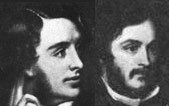
Smythe and Manners
The infernal manufacturer is a boy named Oswald Millbank;
the son of a Manchester manufacturer. The revised key of 1845 indicates
that he parallels William Gladstone, but an argument against this in Peacocks
and Primroses by Muriel Masefield is extremely persuasive: "Oswald Millbank
has been taken as a free study of Gladstone, on the strength of the fact
that he came from a Lancashire family whose wealth was derived from commerce.
It may be admitted that he has some traits in common with Gladstone...but
there is little to suggest that Gladstone was his original. The Young England
group were Gladstone's juniors by ten years or so, and Disraeli was not
yet particularly interested in his great rival of the future"
The character Coningsby travels and a sudden storm drives
him into a small inn. Here he meets Sidonia who makes a suitable entrance.
"...a flash of lightening illuminated the whole country, and a horseman
at full speed, followed by his groom, galloped up to the door [of the inn]."
Sidonia is a magical character, a worldly Jew who is fabulously
wealthy, extremely sophisticated, and a brilliant intellectual. This man
who seems to hold all the answers to the questions he has been mulling in
his head for years fascinates Coningsby.
Sidonia begins with the comment, "The age does not believe
in great men, because it does not possess any, The sprit of the age is the
very thing that a great man changes" Coningsby is unconvinced and a
few minutes later asks, "But what is an individual against a vast public
opinion?" Sidonia answers, "Divine".
The power, money and influence, which Sidonia wields, may
easily have been modeled on the Rothschild but it seems clear that Sidonia
is an idealized representation that Disraeli created of himself. Sidonia
begins as a mysterious figure, appearing in the fog with a magnificent horse,
he does not even give his name to Coningsby but assures him, "If our
acquaintance be worth preserving you may be sure it will not be lost". Disraeli,
although he was maturing retained his zest for the flair of the dramatic
and it seems that he personified his ideal image in the mystical Jew Sidonia.
Rest assured, Sidonia and Coningsby meet again.
"In his novel 'Coningsby' Disraeli depicted a vast and secret
power of Jews, bent on dominating the world. His noble Jewish character,
Sidonia (whom Disraeli let it be known was based on Lionel Rothschild. [...]
The claim is questioned by Richard David, 'The English Rothschilds' since
Disraeli and Lionel at this point [about 1844] were not yet [officially]
intimate; moreover Lionel's personality differed substantially from that
of Sidonia."
(Albert S. Lindemann, "Esau's tears," 1997, p. 77)
"[Coningsby is] an ideal portrait [of the Rothschild Empire]"
(The Jewish Encyclopedia, Vol. 10, pp. 501-2)
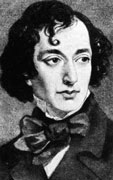
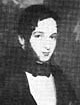
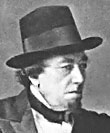
A young Disraeli (left)
and Lionel Rothschild
|
.
I
II
II
IV
V
VI
VII
VIII
IX
X
XI
XII
XIII
XIV
XV
XVI
XVII
XVIII
XIX
XX
XXI
XXII
XXIII
XXIV
XXV
XXVI
XXVII
XXVIII
|
|
Benjamin
Disraeli
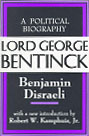
LORD GEORGE BENTINCK: A Political Biography
INTRODUCTION
STATE OF PARTIES IN THE HOUSE OF COMMONS
AT THE CLOSE OF
FOUR MEETINGS OF THE CABINET IN ONE WEEK
1846 - OPENING OF PARLIAMENT
PROPOSITION TO REPEAL THE CORN LAWS
FORMATION OF THE PROTECTIONIST PARTY
SECOND READING OF THE BILL TO REPEAL THE
CORN LAWS
STATE OF IRELAND
THE COERCION BILL
REMEDIAL MEASURES FOR IRELAND
EASTER
CRITICAL POSITION OF THE GOVERNMENT
THIRD READING OF THE CORN BILL
RECIPROCITY
THE PROTECTIONIST PARTY RESOLVE TO
OPPOSE THE COERCION BILL
THE CANNING EPISODE
OVERTHROW OF THE PEEL CABINET
CHARACTER OF SIR ROBERT PEEL
THE SUGAR BILL - PROGRESS AND REACTION
IRISH RAILWAYS
1847 - THE IRISH FAMINE
THE BANK CHARTER ACT
DISSOLUTION OF PARLIAMENT
THE PANIC
THE JEWISH QUESTION
1848 - RELINQUISHMENT OF THE LEADERSHIP
OF THE PROTECTIONIST PARTY BY LORD GEORGE BENTINCK
THE SUGAR AND COFFEE PLANTING COMMITTEE
FOREIGN POLITICS - CLOSE OF THE SESSION
THE LAST CHAPTER |
|

Race, Rothschild and esoteric knowledge
"There are three kinds of lies:
lies, damned lies and statistics."
--Benjamin Disraeli; Mark Twain,
Autobiography (1924) vol. 1, p. 246
"I never deny; I never contradict; I sometimes forget."
--Benjamin Disraeli; Elizabeth Longord, "Victoria R. I" (1964)
"[D]emocracy has degraded statesmen into politicians"
--Disraeli, "Lothair" (1870)
"Governments do not govern, but merely control the machinery
of government, being themselves controlled by the hidden hand."
--Benjamin Disraeli
"Damn your principles! Stick to your party."
--Benjamin Disraeli; E. Latham, "Famous
Sayings and their Authors" (1904), p. 11
"Is man an ape or an angel? I, my lord,
I am on the side of the angels."
--Benjamin Disraeli, 1864 speech
"In a progressive country change is
constant; change is inevitable."
--Benjamin Disraeli, 1867 speech
"'Frank and explicit;' that is the right line to take
when you wish to conceal your own mind and to
confuse the minds of others."
--Benjamin Disraeli; "Sybil: The Two Nations," 1845
"Where knowledge ends, religion begins."
--Benjamin Disraeli
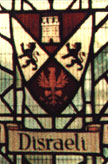
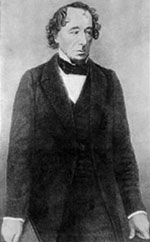
He wrote a novel titled Coningsby. The Jewish Encyclopedia, Vol.
10, pp. 501, 502 describes the book as "an ideal portrait" of the Rothschild
Empire. Disraeli characterized Nathan Rothschild (in conjunction with his
four brothers) as
"the lord and master of the money markets of the world, and of
course virtally lord and master of everything else. He literally held the
revenues of southern Italy in pawn, and monarchs and ministers of all countries
courted his advice and were guided by his suggestions."
"No one must lightly dismiss the question of race; it is the key to world
history and it is precisely for this reason that written history so often
lacks clarity - it is written by people who do not understand the race question,
and what belongs to it."
--Benjamin D'Israeli, crypto-Jew, close friend
of the Rothschilds and British Prime Minister
"All is race - there is no other truth... The influence of a great race
will be felt [...] Sidonia... held relations with all the clever outcasts
of the world... Greeks, Armenians, Moors, secret Jews, Tartars, Gypsies,
wandering Poles and Carbonari, would throw a curious light on those subterranean
agencies of which the world in general knows so little, but which exercise
so great an influence on public events. [...] The secret history of the
world was his pastime. His great pleasure was to contrast the hidden motive,
with the public pretext, of transactions. [...] One source of interest Sidonia
found in his descent and in the fortunes of his race. As firm in his adherence
to the code of the great Legislator as if the trumpet still sounded on Sinai...
[He was] proud of his origin, and confident in the future of his kind. Sidonia...
took comprehensive views of human affairs, and surveyed every fact in its
relative position to other facts, the only mode of obtaining truth. [...]
Sidonia and his brethren could claim a distinction which the Saxon and the
Greek, and the rest of the Caucasian nations, have forfeited. The Hebrew
is an unmixed race. [...] blood may be found as pure as that of the descendants
of the Sheik Abraham. But the Mosaic Arabs [Semitic Jews] are the most ancient,
if not the only, unmixed blood that dwell in cities. [...] An unmixed race
of a first rate organization are the Aristocracy of Nature. Such excellence
is a positive fact; not an imagination"
(Benjamin Disraeli, "Tancred," 1847; the banker "Sidonia" is identified
as Lord Rothschild)
"The fact is we cannot be destroyed. It is a physiological fact; a simple
law of nature, which has baffled Egyptian and Assyrian kings, Roman emperors,
and Christian inquisitors. No penal laws, no physical tortures, can effect
that a superior race should be absorbed in an inferior, or be destroyed
by it. The mixed persecuting races disappear, the pure persecuted race remains.
And at this moment in spite of centuries, or tens of centuries, of degradation,
the Jewish mind exercises a vast influence on the affairs of Europe. I speak
not of their laws, which you still obey; of their literature, with which
your minds are saturated; but of the living Hebrew intellect. You never
observe a great intellectual movement in Europe in which the Jews do not
greatly participate."
("Sidonia"; Benjamin Disraeli; "Coningsby," Chapter XV of Book
IV, London, 1844, p. 249)
One of Disraeli's most famous quotes is: "Race is all."
In the early nineteenth century, "race thinking," as Disraeli called
it, was immature.
Both Jewish and English "race thinking" in the nineteenth century
are examples of the way in which racism became the ideology of a bourgeoisie
jealous of the legitimacy of distinction of descent possessed by the aristocratic
class, whom they were joining and slowly displacing at the helm of society.
"I am quite a Turk," Benjamin wrote on one occasion. He defended
oriental Turkey, but only as long as it did not conflict with a Semitic
Egypt (even though it was, in this case, represented by a Turkish suzerain
- Mehemet Ali was ethnically a Turk, as was his entourage).
"An unmixed race of a first rate organization are the Aristocracy of Nature.
Such excellence is a positive fact; not an imagination, a ceremony, coined
by poets, blazoned by cozening heralds, but perceptible in its physical
advantages, and in the vigor of its unsullied idiosyncrasy"
(Benjamin Disraeli, in his "Consingsby: The New Generation,"
1849)
And in describing his character Sidonia
(Rothschild) in the novel, Disraeli wrote:
"There was not an adventurer in Europe with whom he was not familiar. No
Minister of State had such communication with secret agents and political
spies as Sidonia. He held relations with all the clever outcasts of the
world. The catalogue of his acquaintance in the shape of Greeks, Armenians,
Moors, secret Jews, Tartars, Gypsies, wandering Poles and Carbonari, would
throw a curious light on those subterranean agencies of which the world
in general knows so little, but which exercise so great an influence on
public events. His extensive travels, his knowledge of languages, his daring
and adventurous disposition, and his unlimited means, had given him opportunities
of becoming acquainted with these characters, in general so difficult to
trace, and of gaining their devotion. To these sources he owed that knowledge
of strange and hidden things which often startled those who listened to
him. Nor was it easy, scarcely possible, to deceive him. Information reached
him from so many, and such contrary quarters, that with his discrimination
and experience, he could almost instantly distinguish the truth. The secret
history of the world was his pastime. His great pleasure was to contrast
the hidden motive, with the public pretext, of transactions.
"One source of interest Sidonia found in his descent and in the fortunes
of his race. As firm in his adherence to the code of the great Legislator
as if the trumpet still sounded on Sinai, he might have received in the
conviction of divine favour an adequate compensation for human persecution.
But there were other and more terrestrial considerations that made Sidonia
proud of his origin, and confident in the future of his kind. Sidonia was
a great philosopher, who took comprehensive views of human affairs, and
surveyed every fact in its relative position to other facts, the only mode
of obtaining truth.
"Sidonia was well aware that in the five great varieties into which Physiology
has divided the human species; to wit, the Caucasian, the Mongolian, the
Malayan, the American, the Ethiopian; the Arabian tribes rank in the first
and superior class, together, among others, with the Saxon and the Greek.
This fact alone is a source of great pride and satisfaction to the animal
Man. But Sidonia and his brethren could claim a distinction which the Saxon
and the Greek, and the rest of the Caucasian nations, have forfeited. The
Hebrew is an unmixed race. Doubtless, among the tribes who inhabit the bosom
of the Desert, progenitors alike of the Mosaic and the Mohammedan Arabs,
blood may be found as pure as that of the descendants of the Sheik Abraham.
But the Mosaic Arabs are the most ancient, if not the only, unmixed blood
that dwell in cities."
 "Jews,
Jews, everywhere Jews! Has there ever been any great movement in Europe
without our involvement? Let us take the Russian politics, which is being
treated in such a secret manner that the whole of Western Europe is pale
of fear. Who inspires it, who leads it? Jews! In Germany a revolution much
like that of the reformation is being planned. Who is secretly managing
it? Once again the Jews! [...] Neander the founder of Spiritual Christianity,
and who is Regius Professor of Divinity in the University of Berlin, is
a Jew. Benary, equally famous and in the same university, is a Jew. Wehl,
the Arabic Professor of Heidelberg, is a Jew. [...] for the German professors
of this race, their name is legion. I think there are more than ten at Berlin
alone. [...] I resolved to go myself to St. Petersburg. I had on my arrival
an interview with the Russian Minister of Finance, Count Cancrin; I beheld
the son of a Lithuanian Jew. [...] Spanish minister Senior Mendizabel; I
behold one like myself, the some of Nuevo Christiano, a Jew of Aragon. [...]
I went straight to Paris to consult the President of the French Council;
I beheld the son of a French Jew, a hero, an imperial marshal and very properly
so, for who should be military heroes if not those of the Jewish faith.
[...] And is Soult a Jew? Yes, and others of the French marshals, and the
most famous Massna, for example; his real name was Mannasheh [...] Count
Arnim entered the cabinet, and I beheld a Prussian Jew. So you see, my dear
Coningsby, that the world is governed by very different personages from
what is imagined by those who are not behind the scenes."
"Jews,
Jews, everywhere Jews! Has there ever been any great movement in Europe
without our involvement? Let us take the Russian politics, which is being
treated in such a secret manner that the whole of Western Europe is pale
of fear. Who inspires it, who leads it? Jews! In Germany a revolution much
like that of the reformation is being planned. Who is secretly managing
it? Once again the Jews! [...] Neander the founder of Spiritual Christianity,
and who is Regius Professor of Divinity in the University of Berlin, is
a Jew. Benary, equally famous and in the same university, is a Jew. Wehl,
the Arabic Professor of Heidelberg, is a Jew. [...] for the German professors
of this race, their name is legion. I think there are more than ten at Berlin
alone. [...] I resolved to go myself to St. Petersburg. I had on my arrival
an interview with the Russian Minister of Finance, Count Cancrin; I beheld
the son of a Lithuanian Jew. [...] Spanish minister Senior Mendizabel; I
behold one like myself, the some of Nuevo Christiano, a Jew of Aragon. [...]
I went straight to Paris to consult the President of the French Council;
I beheld the son of a French Jew, a hero, an imperial marshal and very properly
so, for who should be military heroes if not those of the Jewish faith.
[...] And is Soult a Jew? Yes, and others of the French marshals, and the
most famous Massna, for example; his real name was Mannasheh [...] Count
Arnim entered the cabinet, and I beheld a Prussian Jew. So you see, my dear
Coningsby, that the world is governed by very different personages from
what is imagined by those who are not behind the scenes."
(From Disraeli's "Coningsby," 1844, pp. 249-252; said to
be describing Rothschilds, or "Mr. Sidonia")
Quotes from writings and speeches
"Napoleon [III] will do exactly and all that I shall advise him."
(Disraeli, at a Rothschild wedding)
"It is useless to deny, because it is impossible to conceal, that a great
part of Europe - the whole of Italy and France and a great portion of Germany,
to say nothing of other countries - is covered with a network of these secret
societies, just as the superficies of the earth is now being covered with
railroads.
"Governments do not govern, but merely control the machinery of government,
being themselves controlled by the hidden hand.
You never observe a great intellectual movement in Europe in which the Jews
do not greatly participate. The first Jesuits were Jews; that mysterious
Russian Diplomacy which so alarms Western Europe is organized and principally
carried on by Jews; that mighty revolution which is at this moment preparing
in Germany, and which will be, in fact, a second and greater Reformation,
and of which so little is as yet known in England, is entirely developing
under the auspices of Jews, who almost monopolize the professoriat chairs
of Germany.
"In the attempt to conduct the government of this world, there are new elements
to be considered which our predecessors had not to deal with ...the secret
societies - an element which at the last moment may baffle all our arrangements,
which have their agents everywhere, which have reckless agents which countenance
assassination, and which, if necessary, could produce a massacre.
"I can assure you, gentlemen, that those who govern must count with
new elements! We have to deal not with emperors and cabinets only. We must
take into consideration secret societies, who can disconcert all measures
at the last moment, who have agents everywhere, determined men, encouraging
assassinations, and capable of bringing about a massacre at any moment."
(Disraeli, in speech at Aylesbury on September 20, 1873 or 1876)
"There is in Italy a power which we seldom mention in this House,
but without considering and understanding which we shall never rightly comprehend
the position of Italy. I mean the secret societies. The secret societies
do not care for constitutional government...
"lt is useless to deny... a great part of Europe - the whole of Italy and
France, and a great portion of Germany, to say nothing of other countries
- are covered with a network of these secret societies, just as the superficies
of the earth is now being covered with railroads. And what are their objects?
They do not attempt to conceal them. They do not want constitutional government.
They do not want ameliorated institutions; they do not want provincial councils
nor the recording of votes; they want ... an end to ecclesiastical establishments...
"I am told that a British Minister has boasted - and a very unwise boast
it was - that he had only to hold up his hand and he could raise a revolution
in Italy tomorrow..."
"A great prince fell suddenly... solely and entirely by the action of secret
societies. That I apprehend is a fact which no man acquainted with the events
of 1848 will deny!'
[Referring to the 1848 revolutions which rocked France, Italy, Germany and
Austria, during which Prince Metternich, the well-known Austrian Foreign
Minister, was forced to seek refuge in England.]"
(Benjamin Disraeli, in the House of Commons, July 14, 1856)
"This mystic Order [the Rosicrucians] spread among the Germans, a mystic
people, where its origin was actually debated in the same way as those of
other secret societies; In fact, its hidden sources defy research."
--Disraeli, 1841
The secret Zionist Jewish Prime Minister of Great Britain, Benjamin Disraeli,
was so impressed with the Khazar Messiah, David Alroy, that he wrote the
historic novel The Wondrous Tale of Alroy (London, 1833)!
Later, in the early and middle parts of the nineteenth century, the fictional
writings of Benjamin Disraeli provide an insight into the statesman's pride
in his Jewish and Sephardic heritage.
The Mystery of the Jewish People
"The evidence of archaeology and history indicates that the early Jewish
people were predominantly of Mediterranean race and that their homeland
was in or near Arabia. At one time they formed an important state and through
the centuries have maintained themselves as a distinctive religious grouping.
Following their dispersal many spread across North Africa to Spain and during
this movement converted many of the Berber tribes to Judaism. This had little
effect on the physical type since most of the Berber tribes were likewise
of Mediterranean race. That portion which moved into Spain and later northward
achieved considerable wealth and prestige and became known as Sephardim
Jews.
"Others of the faith pushed into the region south of the Aral and Caspian
Seas and there so mingled with the local population that today they are
predominantly of the Armenoid subrace of Caucasoids. Still others spread
to the area around the Black Sea where they came in contact with the people
of the Alpine race who made up the empire of the Khazars. This was a powerful
trading stage which controlled the commerce between the Baltic and Black
seas and the lower portions of the Danube. In the year 740 the Khazars were
officially converted to Judaism. A century later they were crushed by the
incoming Slavic-speaking people and were scattered over central Europe where
they were known as Jews. It is from this grouping that most German and Polish
Jews are descended, and they likewise make up a considerable part of the
population now found in America. The term Askenazim is applied to this roundheaded,
dark complexioned division.
"It is clear from this brief discussion that the Jews do not form a race.
Some are Mediterranean, some are Alpine, some Armenoid, and a minority are
Nordic."
("Peoples of the World; The Jews"; article
in "American Peoples Encyclopedia," 1952)
"From the ethical standpoint two kinds of Jews are usually distinguished;
the Portuguese branch and the German branch (Sephardim and Askenazim). But
from the psychological standpoint there are only two kinds: the Hassidim
and the Mithnagdim.
In the Hassidim we recognize the Zealots. They are the mystics, the cabalists,
the demoniancs, the enthusiasts, the disinterested, the poets, the orators,
the frantic, the heedless, the visionaries, the sensualists. They are the
Mediterranean people ['Arab' Jews, Sephardim majority], they are the Catholics
of Judaism, of the Catholicism of the best period. They are the Prophets
who held forth like Isaiah about the time when the wolf will lie down with
the lamb, when swords will be turned into plough shares for the plough of
[Jehuda] Halevy, who sang: 'May my right hand wither if I forget thee O
Jerusalem! May my tongue cleave to the roof of my mouth if I pronounce not
thy name,' and who in enthusiastic delirium upon landing in Palestine kissed
the native soil and disdained the approach of the barbarian whose lance
transfixed him. They are the thousands and thousands of unfortunates, Jews
of the Ghettos, who during the Crusades, massacred one another and allowed
themselves to be massacred...
"The Mithnadgim, are the Utilitarians, the Protestants of Judaism,
the Nordics ['Nordic' Jews, Sephardim minority]. Cold, calculating, egoistic,
positive, they have on their extreme flank vulgar elements, greedy for gain
without scruples, determined to succeed by hook or by crook, without pity...
"This distinction between the two elements, the two opposite extremes
of the soul has always been."
(Kadmi Cohen, "Nomades," Paris, 1929, pp. 129-130)
"These 'Ashkenazim Jews' (as Jews of Eastern Europe are called), whose
numbers were swelled by Jews who fled from Germany at the time of the Crusades
and during the Black Death, have little or no trace of Semitic blood. [...]
For all that anthropologists know, Hitler's ancestry might go back to one
of the ten Lost Tribes of 'Israel'; while [Chaim] Weizmann may be a descendant
of the Khazars, the converts to Judaism who were in no anthropological respect
related to Palestine. [...] 'Here's a paradox, a paradox, a most ingenious
paradox': in anthropological fact, many Christians may have much more Hebrew-'Israelite'
blood in their veins than most of their Jewish neighbors."
("The Zionist Connecton: What Price Israel?"
by Dr. Alfred M. Lilienthal, 1953, p. 222-3)

3 Israeli
stamps: Montefiore,
Rothschild & Weizmann
The Bronfmans
Secret Jews
"Christopher
Columbus"
(Cristobal Colon) |
|
Maximilien Isidore
"Robespierre"
(Ruban; 1758-1794) |
|
"Marx"
(Kissel
Herschel Mordochai;
1818-1883) |
|
"Trotsky"
(Levi
David Bronstein;
1879-1940) |
"The late tzar Nicholas
made Stieglitz Russian baron, as emperor Franz [Josef II] made old [Salomon]
Rothschild Austrian baron, while Louis Napoléon made [Achille] Fould minister
of Cabinet, with free entrance to the Tuileries for the female members of
the family. Thus we notice that every tyrant is backed by a J*w, like there
is a Jesuit behind every pope. The fact is that the oppressors impossibly
could do as they pleased and wars wouldn't be allowed, if there wasn't an
army of Jesuits whom calmed the senses and a handful of J*ws who plundered
the pockets."
--Karl Marx, "The Russian Loan"
"When the secret societies, in February 1848, surprised Europe, they
were themselves surprised by the unexpected opportunity, and so little capable
were they of seizing the occasion, that had it not been for the Jews, who
of late years unfortunately have been connecting themselves with these unhallowed
associations, imbecile as were the governments, the uncalled for outbreak
would not have ravaged Europe."
--Benjamin Disraeli; "Lord George Bentinck: A Political Biography,"
1852
"Concerning the Jewish emancipation he [Max Nordau-Suedfeld] said: It has
not come around because of the notion that any group of people has been
poorly treated and then one wants to apologize. It's a result of the 18th
century rational French [read: Jewish] thinking. Rousseau [Jewish?] and
the encyclopedists have put forth the question of human rights. Each human
is considered having certain [equal?] rights given by nature. The Jews are
people. Thus these rights also included them. And so one started the emancipation
of the [Sephardic Jacobin] Jews [after the bloodly revolution - as in Russia]
not because of brotherly feelings towards the Jews but because the [presented]
logic required it [and then the way to success was paved]."
("Zionisten-Kongress in Basel 1897: Officielles Protocoll," p. 13; quote
taken from a stupid author who wanted to prove the "Protocols of Zion"
false)
"The Jacobin of 1793 has become the communist of our day. [...] Communism
denies the necessity of the existence of classes; it wants to abolish all
classes, all class distinctions [...] equal rights to all classes"
--Karl Marx, "Communism, revolution, and
a free Poland," speech, Feb. 22, 1848)
"Marx was of purely Jewish origin"
--Georg Friedrich Engels
"The social democrat distinguishes himself from the Jacobin
through his optimism, because he is in harmony with the movements of his
time."
--L. Trotsky
"... neither, I am a social democrat!"
--L. Trotsky, answering a question by a Yiddish
Bund member about him consider himself
"Russian" or Jewish
"Terror as the demonstration of the will and strength of the working class
is historically justified, precisely because the proletariat was able to
break the political will of the Intelligentsia, pacify the professional
men of various categories and work, and gradually subordinate them to its
own aims within the fields of their specialties."
--L. Trotsky, in "Izvestia," Jan. 10, 1919
"Of course do the Jews hold an disproportionate amount of positions within
the bureaucracy... Of course can we keep out eyes shut for facts and restrict
ourselves to vague generalizations about all races equality and
brotherhood. But a policy of an ostrich wont get us forward one single step."
--L. Trotsky; "Termidor and antisemitism," in Mexican exile about 1940
"[World
dictatorship] can only be established in different countries or groups of
countries, after the victory of socialism, whereupon the proletariat republics
should unite with already existing on a federative level. This system should
expand... and evidently make the Soviet World Union of Socialist Republics."
(Program of the Comintern, 1936)
"The influence of the Jews may be traced in the last outbreak of the destructive
principle in Europe. An insurrection takes place against tradition and aristocracy,
against religion and property. Destruction of the Semitic principle, extirpation
of the Jewish religion, whether in the Mosaic [Old Testament-Torah] of the
Christian form [New Testament], the natural equality of men and the
abrogation of property are proclaimed by the Secret Societies which form
Provisional Governments and men of the Jewish Race are found at the head
of every one of them. The people of God cooperate with atheists; the most
skillful accumulators of property ally themselves with Communists; the peculiar
and chosen Race touch the hand of all the scum and low castes of Europe;
and all this because they wish to destroy that ungrateful Christendom which
owes to them its name, and whose tyranny they can no longer endure."
--Benjamin Disraeli Disraeli; "The Life of Lord George Bentinck,"
1852
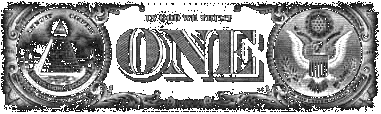
It was Franklin Delano Roosevelt (32nd degree mason) who decided that the
old seals of 1789 should be printed on the American One-dollar bill in 1933.
The "Great Seals" feature both 13 stars making the Shield of David,
"New World Order" in Latin, a pyramid base with a hovering top
(symbolizing the "élite" in control of the masses) and
the "All-seeing Eye" (a symbol for Adam Weishaupt's Freemasonic
Illuminati lodge, Jewish in spirit and funded by the Rothschilds).
Roosevelt may have had Italian-Jewish ancestors named "Rossocampos.") He
was also surrounded by Jewish staff members and advisors. Bernard Baruch
was his very special advisor and his "Brain Trust" was also largely
Jewish. Morgenthau Jr. was his right-hand man.
"Hitler, no doubt, would be disappointed to learn that his blond Aryans
(supposedly invaders from a distant land) were not very different from the
Jews he despised so heartily."
(Steve Jones, "The Search for the Lost Tribes," 1996)
"No one must lightly dismiss the question of race; it is the key to world
history and it is precisely for this reason that written history so often
lacks clarity - it is written by people who do not understand the race question,
and what belongs to it."
--Benjamin D'Israeli, crypto-Jew, close friend
of the Rothschilds and British Prime Minister
"I am not an American citizen of the Jewish faith, I am a Jew. I have been
an American for sixty-three years, but I have been a Jew for 4000 years.
[...] Hitler was right in one thing. He calls the Jewish people a race and
we are a race."
--Stephen S. Wise, President of the American Jewish Congress and the
World Jewish Congress, at a New York rally in June 1938
"Wir sind ein Volk! (We are a people!)"
--Theodor Herzl; "Judenstaat," 1896
"[The Sephardim are] descendants or heads of wealthy families and who,
as Marranos [crypto-Jews], had occupied prominent positions in the countries
they had left... They considered hemselves a superior class, the nobility
of Jewry and for a long time their co-religionists, on whom they looked
down, regarded them as such... The Sephardim never engaged in chaffering
occupations nor in usury and they did not mingle with the lower classes.
Although the Sephardim lived on peaceful terms with other Jews they rarely
intermarried with them"
(The Jewish Encyclopaedia; Ahmad Thomson,
"The Next World Order," 1994)
"The Jews are, as I mentioned, a very complicated and exceptional people.
It isn't easy to have a clear and plain picture of them. [...] the Arabs
have the same memory as the Jews. The Semitic race is very stubborn and
never forgets... one could say ['the Hebrew people' but...] 'the Jewish
people' is more suitable... Instead of the idea of a 'chosen people' I prefer
the one about 'a unique people'"
--Nahum Goldmann; "The Jewish Paradox," 1976
"[T]here rose before our eyes a Russian Jewry, the strength of which
we had not even suspected. Seventy of our delegates came from Russia, and
it was patent to all of us that they represented the views and sentiments
of the five million Jews of that country. What a humiliation for us [Sephardim],
who had taken our superiority for granted!"
--Theodor Herzl, in his dairy, after the
first Zionist Congress at Basle, 1897
"[T]he Talmud says that a guer, a converted
is as hard to stand as a wound."
--Nahum Goldmann; "The Jewish Paradox,"
Sw. Edition , 1976, p. 77
"[T]he Jew is the exact opposite of the German in every single
respect, yet is as closely akin to him as a blood brother."
--Adolf Hitler
"As long as these blood brothers are our leaders, and as long as your
party officials are Jewish lackeys, you will be no threat to the big money
men. As long as you yourself do not lead the way, and as long as the black
shadow of foreign blood is behind you... The black shadow cares for itself,
not for you."
--Julius Streicher; "Deutscher Volkswille," ca. 1921
"The only new thing in this world is
the history you do not know"
--Harry S. Truman, Jewish-American
Freemason and President

 Major works by Disraeli