| Quick Info
Variants
Manchester Mk III Avro type 683 prototypes with
Merlin X engines, (2 built)
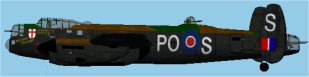
Lancaster Mk I First production model, production
of Lancaster started with Merlin XX's, but during construction they switched
to Merlin 22's, and later to Merlin 24's. Also, the initial ventral turret
was dropped and other aerodynamic changes made sure that the Lancaster's
performance and bombload increased (3440 built)
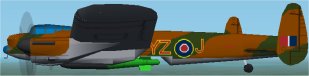
Lancaster Mk I (Special) Conversion of Mk I, built
to carry the Grand Slam bomb, weapons bay doors removed, aerodynamic fairings
were fitted. (33 built)
Lancaster B.Mk I (FE) Meant for operations in the
Far East Theatre (FE), fuel capacity increased, and the dorsal turret
was dropped.
Lancaster Mk II Fearing that the number of airframes
would outnumber the production of Merlin engines, the Bristol Hercules
VI or XVI radial, was used. (302 built)
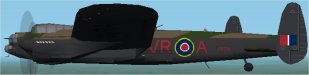
Lancaster B.Mk III Equivalent to Mk I, but fitted
with American licensed Merlin engines, built by Packard, these engines
were respectively typed as the Merlin 28 or 38 (equal to the British Merlin
22), or the Merlin 224 (equal to the British Merlin 24). Locally the engine
was typed Packard V-1650, 23 adapted aircraft were converted to carry the
bouncing bombs. (3020 built)
Lancaster Mk III (Special) Modified Mk III to carry
Upkeep mine (bouncing bomb).
Lancaster Mk VI Conversion of the Mk III, powered
by 4 × Rolls Royce Merlin 85, and were used in the electronic warfare
with radar jamming and chaff (window) equipment. (9 built)
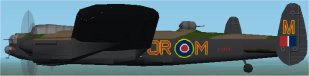
Lancaster Mk VII Based on the Lancaster Mk III,
these aircraft entered service after the war, included another dorsal turret
with 2 × 0.50 in guns, which was installed a little more forward
on the fuselage (180 built)
Lancaster B.Mk VII (FE) Meant for operations in
the Far East Theatre (FE), fuel capacity increased, and the dorsal
turret was dropped.
Lancaster Mk X Identical to B.Mk III, but built
in Canada by Victory Aircraft (430 built)
|