|
|
Threatened and
Endagered Species of Colorado
A WebQuest for 11th-12h
Grade (Ecology/Field Biology)
Designed by Ryan D. Wayt
[email protected]
Introduction
| Task | Process | Conclusion | Evaluation
| Credits
Introduction
Colorado
has a large number (93) of endemic
species,
species found nowhere else in the world. Many of these species
are
thought to be threatened or endangered. In addition, about ten
percent
of the total number of plant and animal species found in Colorado are
considered to be rare or at risk of extinction.
Most people would like to preserve Colorado's biodiversity for
future generations. The term conservation
is used to describe the wise use management of natural resources which
includes the perservation of habitats and wildlife. Many
conservation efforts are aimed at managing individual species to keep
them from becoming extinct. Often, conservation efforts focus on
protecting entire ecosystems as well as a single species.
Protecting an ecosystem ensures that the natural habitats and the
interactions of many different species are perserved at the same time.
In this activity, you will choose and research a specific threatened or
endangered species of Colorado. You will research the
characteristics and the habitat of the species. Then, you will
write a letter to the editor of your local newspaper stating the
problem and offering one or more possible conservation efforts for that
species. Throughout the project, you are to consider the
question:
What actions
can be taken to protect threatened or endangered species in Colorado?
The Task
At the
end of this
activity, your will have researched a specific endangered or threatened
species and its habitat. You will have written a letter to the
editor of your local newspaper describing the problem and offering one
or more possible conservation efforts to ensure the survival of the
species.
This
activity addresses
the following standards:
Roaring
Fork School District Science Standards (for grades 9-10):
- 1.1.3: Select and use appropriate technologies to
gather, process, and analyze data and to report information related to
an investigation.
- 3.2.2: Know that changes in an ecosystem can affect
biodiversity; biodiversity contributes to an ecosystem's stability.
- 6.2.1: Identify and predict cause-effect relationships
within a system.
NETS
Standards:
- III A: Students use technology tools to enhance
learning, increase productivity, and promote creativity.
- III B: Students use productivity tools to collaborate
in constructing technology-enhanced models, prepare publications, and
produce other creative works.
- V A: Students use technology to locate, evaluate, and
collect information from a variety of sources.
The
Process
- Use the
following web
sites to choose a species and research the characteristics and habitat
of a specific endangered or threatened species in Colorado:
- Use the
following website to explore current conservation efforts in Colorado:
- Write a
letter to the editor of your local newspaper stating the problem and
offering one or more possible conservation efforts for your
species. Use the following website to help you write your letter:
Conclusion
At
the completion of this project, you should have gained knowledge of the
characteristics and habitat of at least one threatened or endangered
species in Colorado. You should also have identified possible
conservation efforts to ensure the survival of the species.
Evaluation
Your
letter to the editor will be evaluated using the following
rubric: Persuasive
Letter Rubric
Credits
Opening
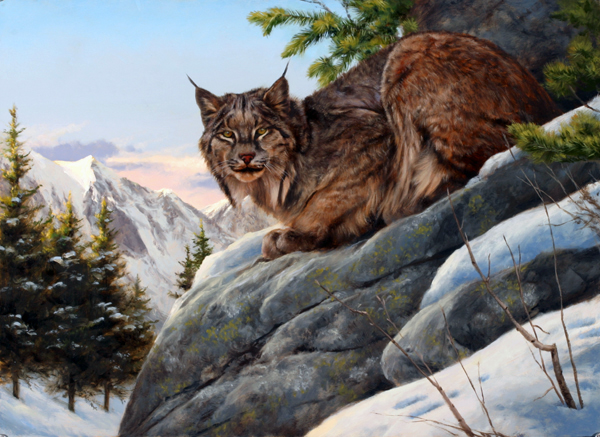
image retreived from:
http://wildlife.state.co.us/WildlifeSpecies/SpeciesOfConcern/Mammals/Lynx/LynxPoster.htm
Some text was adapted from: WILD Colorado: Crossroads of Biodiversity
Other
text was adapted from: Miller, M. R., and Levine, J. (2002). Prentice Hall Biology. Pearson
Education, Inc. Upper Saddle River, New Jersey
|


