|
Biodiversity
in Colorado
A WebQuest for 9th-12th
Grade (Biology/Ecology)
Designed by
Ryan D. Wayt
[email protected]
Introduction
| Task | Process | Conclusion | Evaluation
| Credits
Introduction
The term biodiversity is
short for biological diversity, which refers to all of the variety of
species, the variety of genetic differences within the species, and the
variety of ecosystems within a defined area. In regards to
biodiversity, Colorado is truly a unique place.
In this cooperative learning activity, your instructor will assign you
to one of eight groups. Your group will use print resources and
the Internet to research the different biotic and abiotic factors of
one of the eight major ecosystems in Colorado. All of the groups
will present their information to the class, providing an overview of
the biodiversity of our state as it applies to the ecosystems of
Colorado. After analyzing the information from all of the groups, you
are to consider the question:
What makes the state of Colorado suitable for such rich biodiversity?
The Task
At the end of this activity, your group will have
designed and delivered to the class a PowerPoint presentation
discussing the characteristics of your assigned ecosystem with respect
to biodiversity. You will have written an essay describing how
the different components of the eight major ecosystems of Colorado
contribute to the biodiversity of our state.
This activity meets the
following standards:
Roaring Fork School
District Standards for High School Ecology and Field Biology:
- 1.1.4: Select and use
appropriate technologies to gather, process, and analyze data and to
report information related to an investigation.
- 3.3.1: Analyze the
dynamic equilibrium of ecosystems, including interactions among living
and non-living components.
- 3.3.4: Explain how
changes in an ecosystem can affect biodiversity and how biodiversity
contributes to an ecosystem’s stability.
NETS standards
- III A: Students use
technology tools to enhance learning, increase productivity, and
promote creativity.
- III B: Students use
productivity tools to collaborate in constructing technology-enhanced
models, prepare publications, and produce other creative works.
- VI A: Students use
technology resources for solving problems and making informed decisions.
The
Process
1)
Your
instructor will assign you to one of eight different groups. Your
group will be responsible for researching one of the following
ecosystems of Colorado:
- Grasslands
- Sage Shrublands
- Montane Shrublands
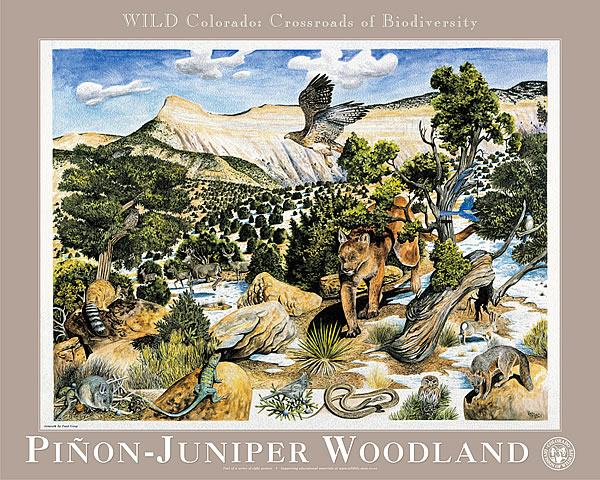
- Pinon-Juniper
Woodlands
- Montane Forest
- Subalpine Forest
- Alpine Tundra
- Riparian
2)
Obtain the Colorado
Division of Wildlife packet entitled "WILD Colorado: Crossroads of
Biodiversity" from your teacher, or download the packet yourself at:
3)
Your group will work collaboratively
to develop a PowerPoint presentation about your assigned ecosystem and
deliver it to the class. It would be a good idea to split the
topic
into different
sections and assign each group member a section to research and report
on. Your group's PowerPoint should include the following:
- A description of some
the biotic and abiotic factors found in the ecosystem. The
abiotic factors that should be included are: an example of its location
(include a map), its approximate
elevation, amount of precipitation and soil type.
- A description of at
least three different types of organisms, and the niches that they
belong to, found in your
ecosystem. Be sure to include an example of a community
interaction (competition, predation, sybiosis) that the organism is a
part of. Include a picture of each organism as
well as a few interesting facts about it.
- A specific example of
biodiversity within your ecosystem (see the section entitled "Crossroads of
Biodiversity" found in the Division of Wildlife packet).
4)
Because each individual in your
group will need to know how to create a PowerPoint presentation, a
tutorial is available at the link below:
5)
Begin your research
using the following sites:
- Biodiversity
Facts - Provides useful information about biodiversity.
- Ecosystems
of Colorado - Provides useful information about specific ecosystems.
- Google
Image Search
- Useful for finding pictures of species to include in your
PowerPoint. Be sure to record the site's address that you retieve
your
picture from so that you can cite it as a resource.
6)
After all of the groups have
finished presenting their information to the class, you will be asked
to write an essay describing the importance of biodiversity to an
ecosystem.
Conclusion
After
each group has given their presentation, you will discuss the role each
of the
groups' topics played in determining the biodiversity of each
area. Discuss the attributes and
inefficiencies of
studying elements in isolation rather than as a whole ecosystem. Can recommendations on how to conserve
biodiversity of an ecosystem be based on one component of the ecosystem?
Evaluation
Have
students grade the peers in their group according to their quality and
quantity of research, communication with the group, and accountability. A Biodiversity
in Colorado Presentation Rubric is available for the students and
teacher to use.
Evaluate each
student's
comprehension of the subject matter in all presentations by having them
write an essay on the importance of biodiversity in ecosystems. A Biodiversity
in Colorado Essay Rubric is available for the students and teacher
to use.
Credits
Opening
image retrieved from: Pinon-Juniper
Woodlands Poster
Format for web design and some text retrieved from: ForestQuest
Other text modified from: WILD Colorado: Crossroads of Biodiversity
|


