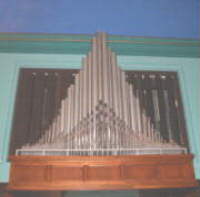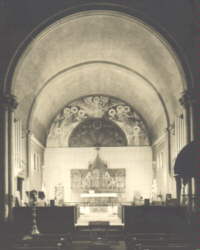
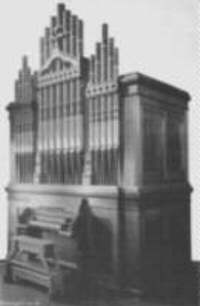
Hook and Hastings of Boston was a prominent and respected organ building firm in the 19th century. Trinity�s organ was a Model 8. The photo below at right shows a Model 8 from a Hook and Hastings brochure printed in 1881 and is used here with the kind permission of The Organ Historical Society. The organ had thirteen stops, 595 pipes, and eighteen registers. It is described in the brochure as having front pipes richly ornamented in gold and colors. The organ was at first located on the right (east) side of the nave and was later moved to the west transept (photo top right) where it remained in use until 1939.
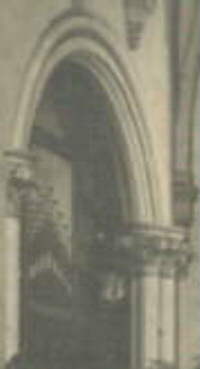
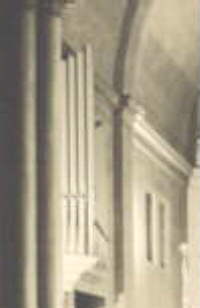
Trinity again contracted with the M. P. M�ller company on January 26, 1978 to enlarge and rebuild the 1939 organ. This is the instrument serving Trinity today (right) and is the one heard on these CDs. Some pipes from the previous organ were again retained and used in this new instrument. The 1939 console, although modified, was preserved, including the two manuals with ivory naturals and ebony sharps.
The superb acoustics of Trinity church provide an excellent environment for this organ to be heard. Trinity has had an admirable history of fine organs which have provided the foundation for music in worship and enrichment of the life of the congregation and the community. Soli Deo Gloria.