I needed to make a launch controller to control my Hypertek Hybrid system.
This needed to be able to operate the Fill and Dump solenoid as well as the O2 solenoid and HT supply.
I also wanted to be able to use it for regular ignitors and rockets so I added a continuity test to it.
Communications:
The master in/out and Data in/out are where the units connect.
The slave data connections are for dazzy chaining or having two controllers.
As far as cable length. It uses RS232 signals so the range should be similar to RS232.
I found some info about cable length on the internet here is an excerpt:
|
Maximum cable lengths Cable length is one of the most discussed items in RS232 world. The standard has a clear answer, the maximum cable length is 50 feet, or the cable length equal to a capacitance of 2500 pF. The latter rule is often forgotten. This means that using a cable with low capacitance allows you to span longer distances without going beyond the limitations of the standard. If for example UTP CAT-5 cable is used with a typical capacitance of 17 pF/ft, the maximum allowed cable length is 147 feet. The cable length mentioned in the standard allows maximum communication speed to occur. If speed is reduced by a factor 2 or 4, the maximum length increases dramatically. Texas Instruments has done some practical experiments years ago at different baud rates to test the maximum allowed cable lengths. Keep in mind, that the RS232 standard was originally developed for 20 kbps. By halving the maximum communication speed, the allowed cable length increases a factor ten!
|
So it looks like range is of no issue.
I have a circuit board layout and have built one. I am working on getting it programmed. I am on my third generation of code for the box.
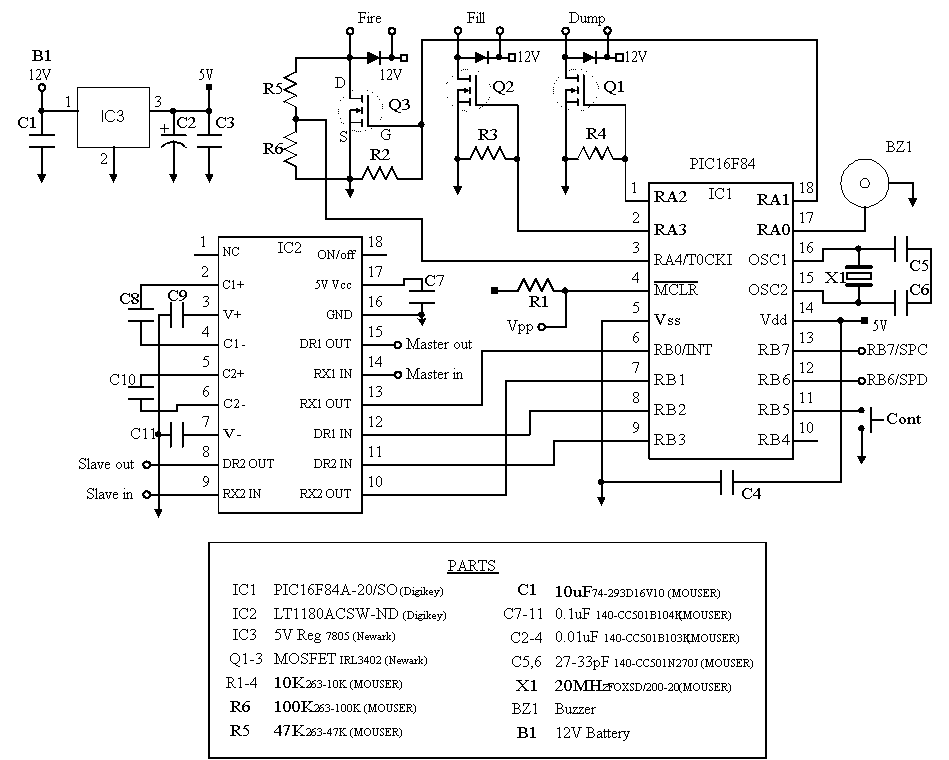
The output box placed at the pad is build in a plastic outdoor outlet box. It has two outlets on it. One is for connection of the fill and dump solenoids and uses all 3 prongs. The other outlet is used for Launch and has a continuity circuit. The ground pin is plugged with epoxy since only two of the pins are used.
Here is the schematic:
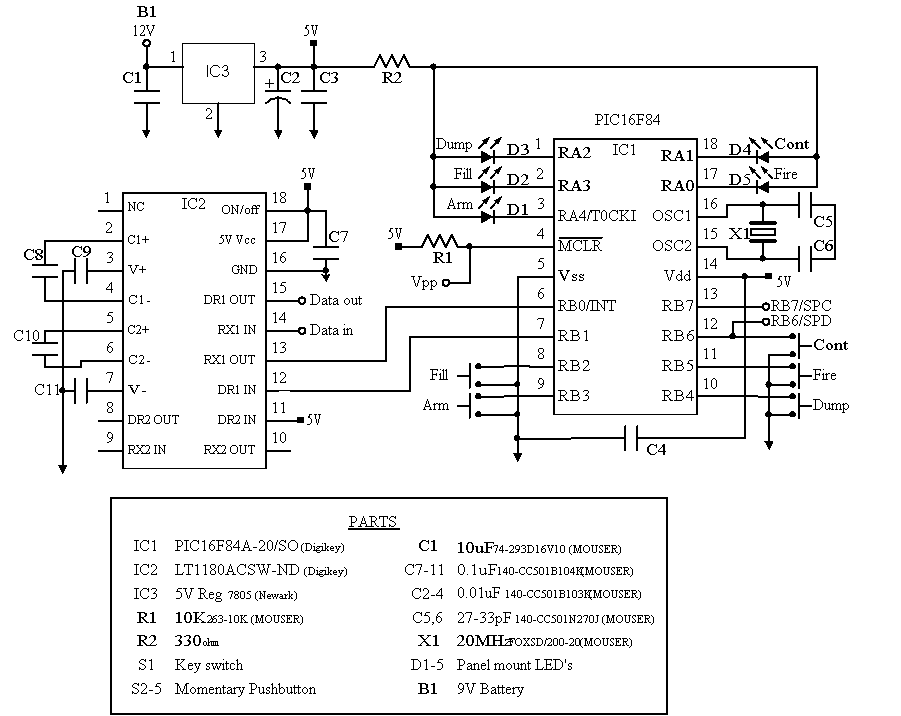
I almost used a laptop or handheld computer for the controller but decided to simplify it so I just built a controller using a similar design as the Pad Box. I can still drive it with the serial port of a computer since it uses an RS232 level convertor. All I would need to do is reprogram the controller and make a cable.
Here is the schematic: