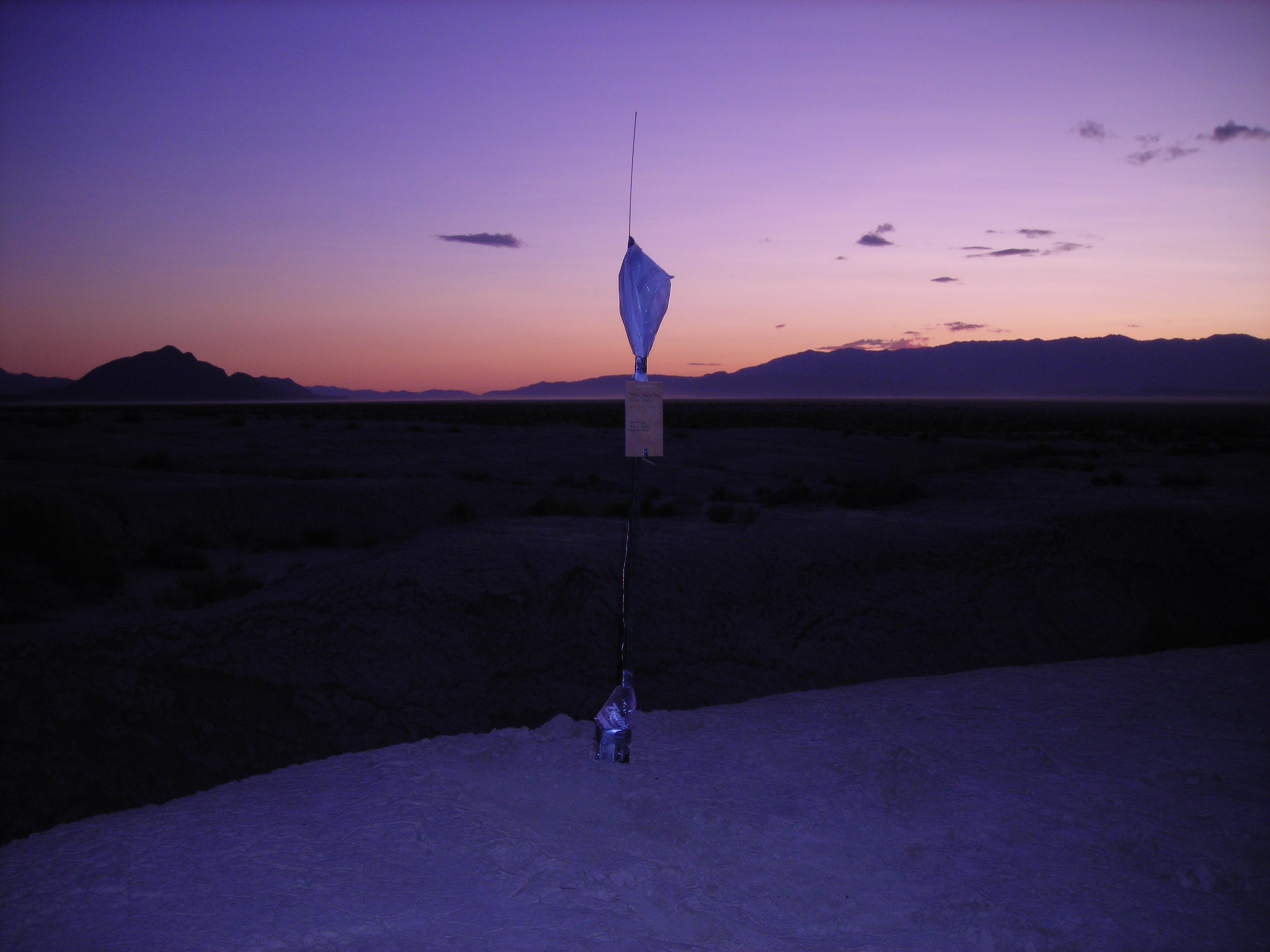
Remote logger at dusk
@
Flight:
| Location | Motor | Notes |
| BALLS17 BRD,NV 10/1/2008 | RDH8 P6000BB AMW N4000BB |
Peak altitude ~85k' |
Weather was perfect, sky was clear and the wind was almost non-existent all weekend.
I only placed one remote logger on the edge of the playa over by the Quinn river sink.
This would allow it to receive signal from behind the mountains on the east side behind Trego as it had line of site up the valley.
Last time I wasted valuable hours placing the loggers in the morning so I redesigned them to run overnight and placed it Friday night.
I covered it with a white plastic bag to keep moisture out but also to keep it cool.
Remote logger at dusk
I had the rocket ready for flight by 8AM Saturday morning and on the pad by 10:30AM.
At 11:16AM they pushed the button and the P motor came to life.
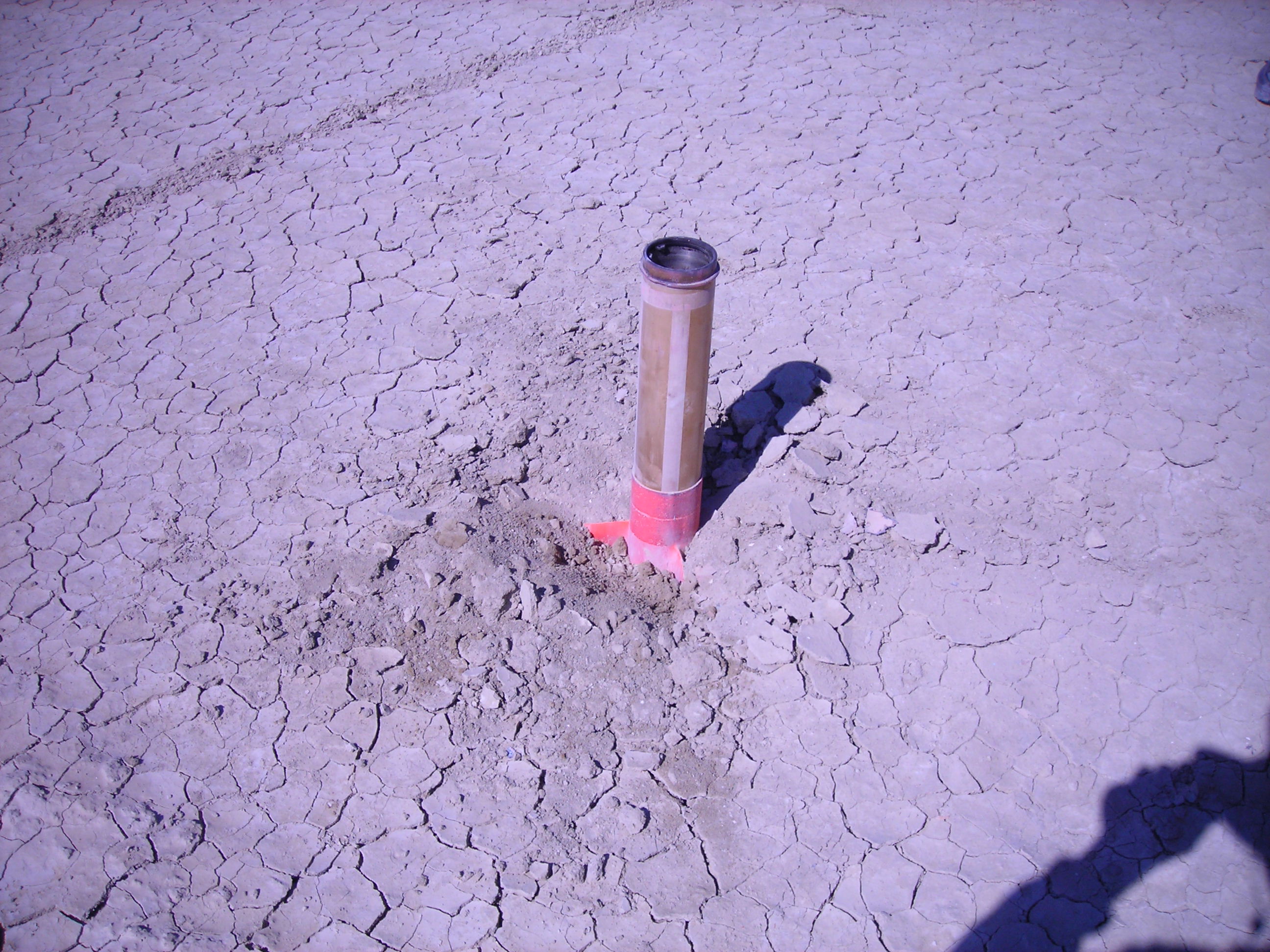
Landed...Well sort of
Sustainer:
3 x #4 shear pins
Drogue=CD3 CO2 deployment & backup 4g BP
Main=pinch(tether)
Booster:
Drogue=6g
Main=pinch(tether)
Conclusion:
The 6in P motor was only my second 6in motor I have built.
Because of that and the fact I had flown this rocket several times I didn't put enough thought into the recovery.
I was focused too much on making the motor work.
I believe temperature played a roll into my recovery failure.
The telemetry data dropped out shortly after booster ignition
I received several packets on the way in starting at about 20k.
This data gave me the timing of the flight. I also had data from the booster accelerometer on the booster motor performance.
The total flight time was 252seconds and it took 80sec to reach apogee.
Looking into altitude temperature data the Troposphere ends around 45,000 feet. Above that point the temperature is -70degF.
So the rocket was exposed to -70degF for over 45seconds.
The electronics in the fiberglass nosecone didn't stand a chance without any insulation.
Without the GPS log or acceleration data that was stored in the nose I used the timing data to extract altitude.
Using a conservative decent speed of 500ft/sec and a decent time of 172seconds that gives us 86,000feet.
The booster hit an apogee of 24,000'.
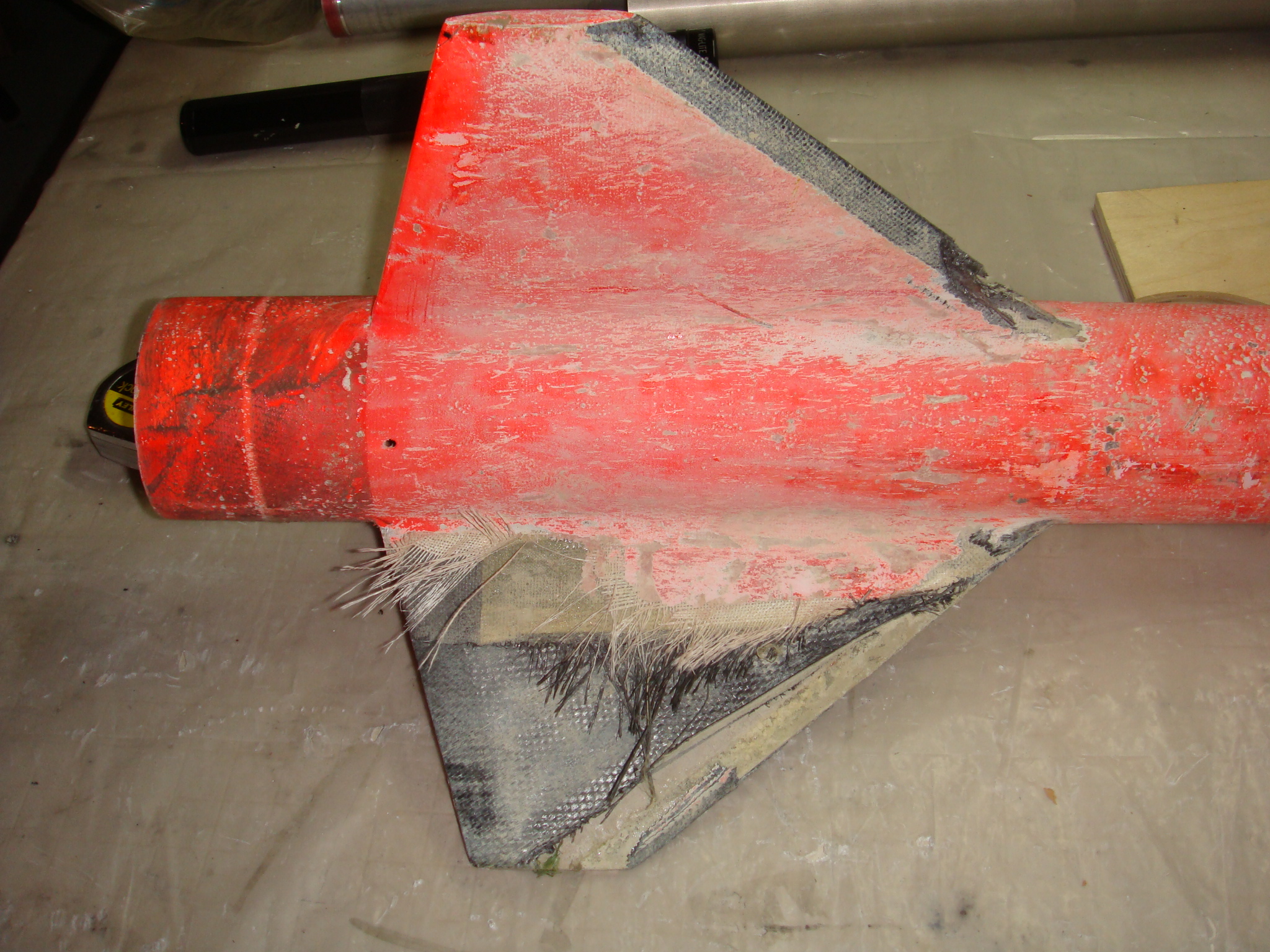
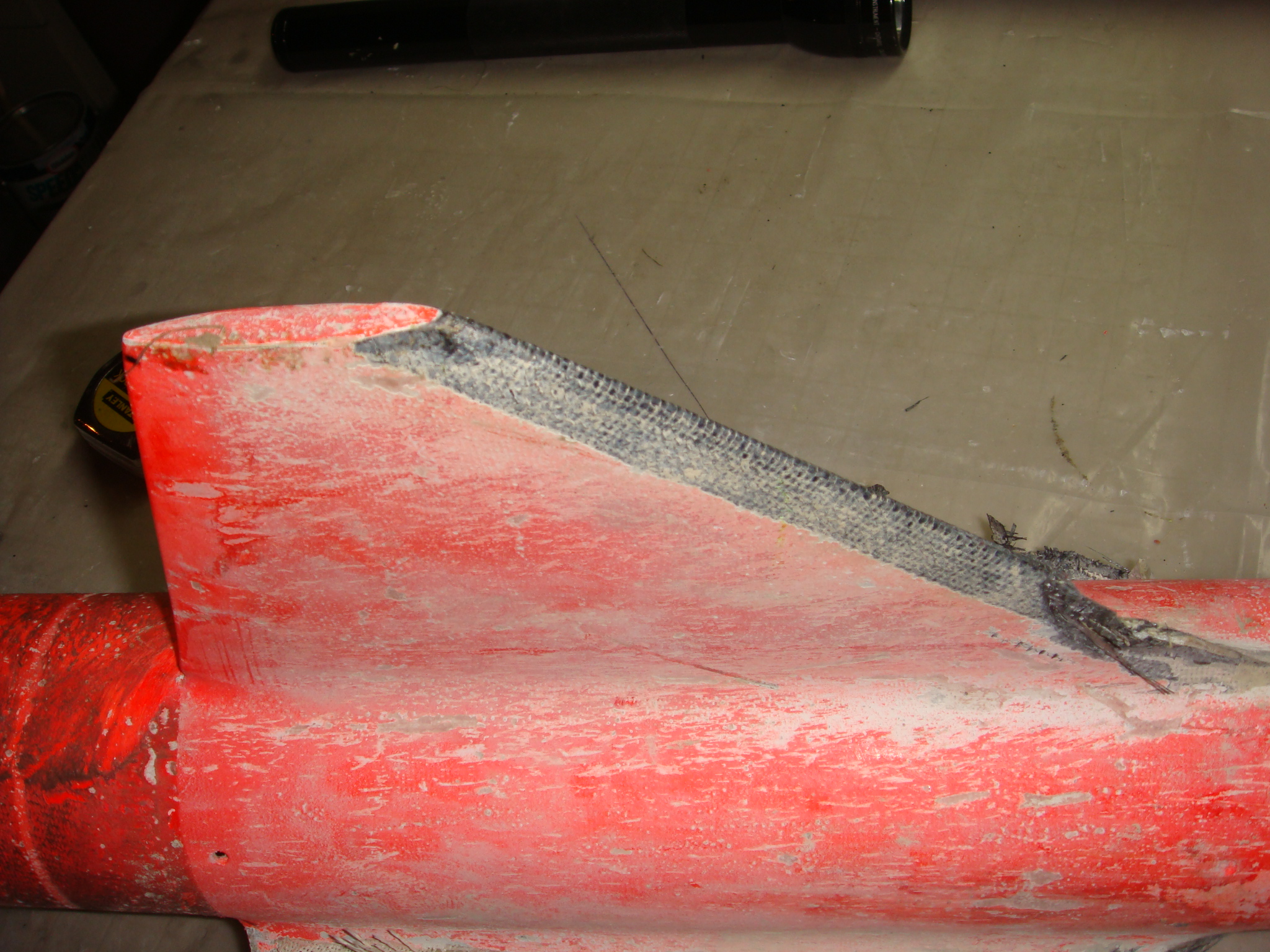
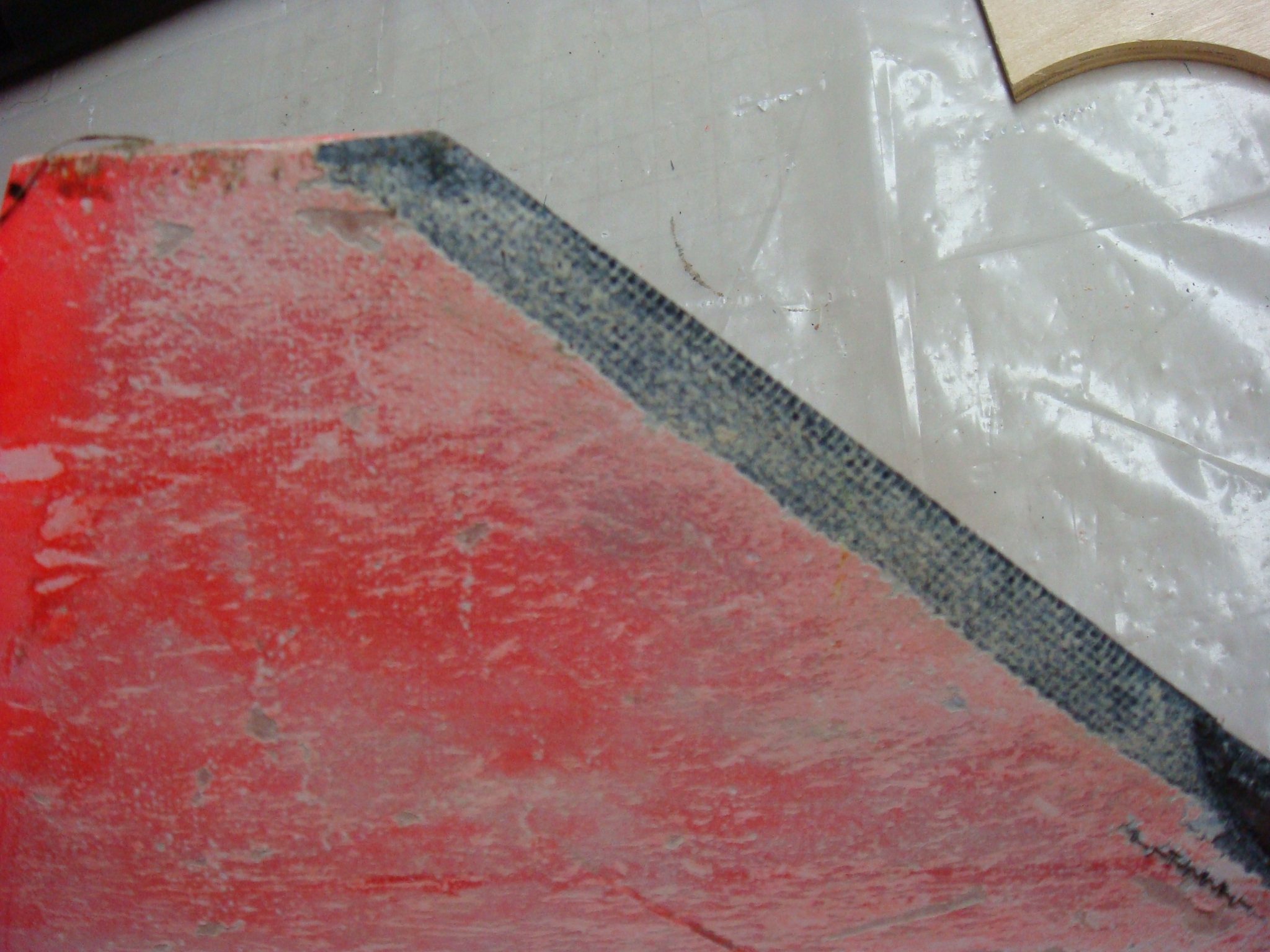
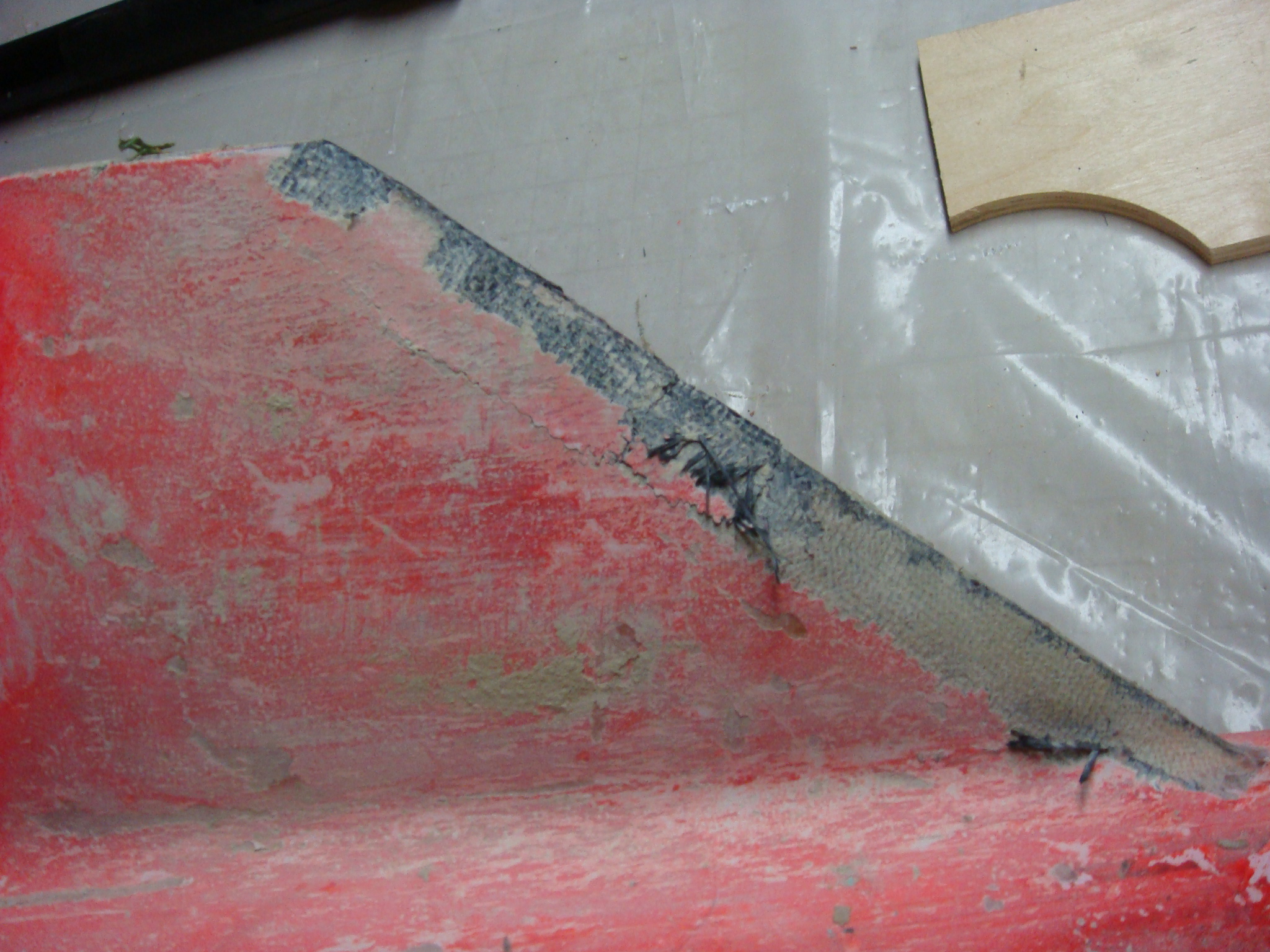
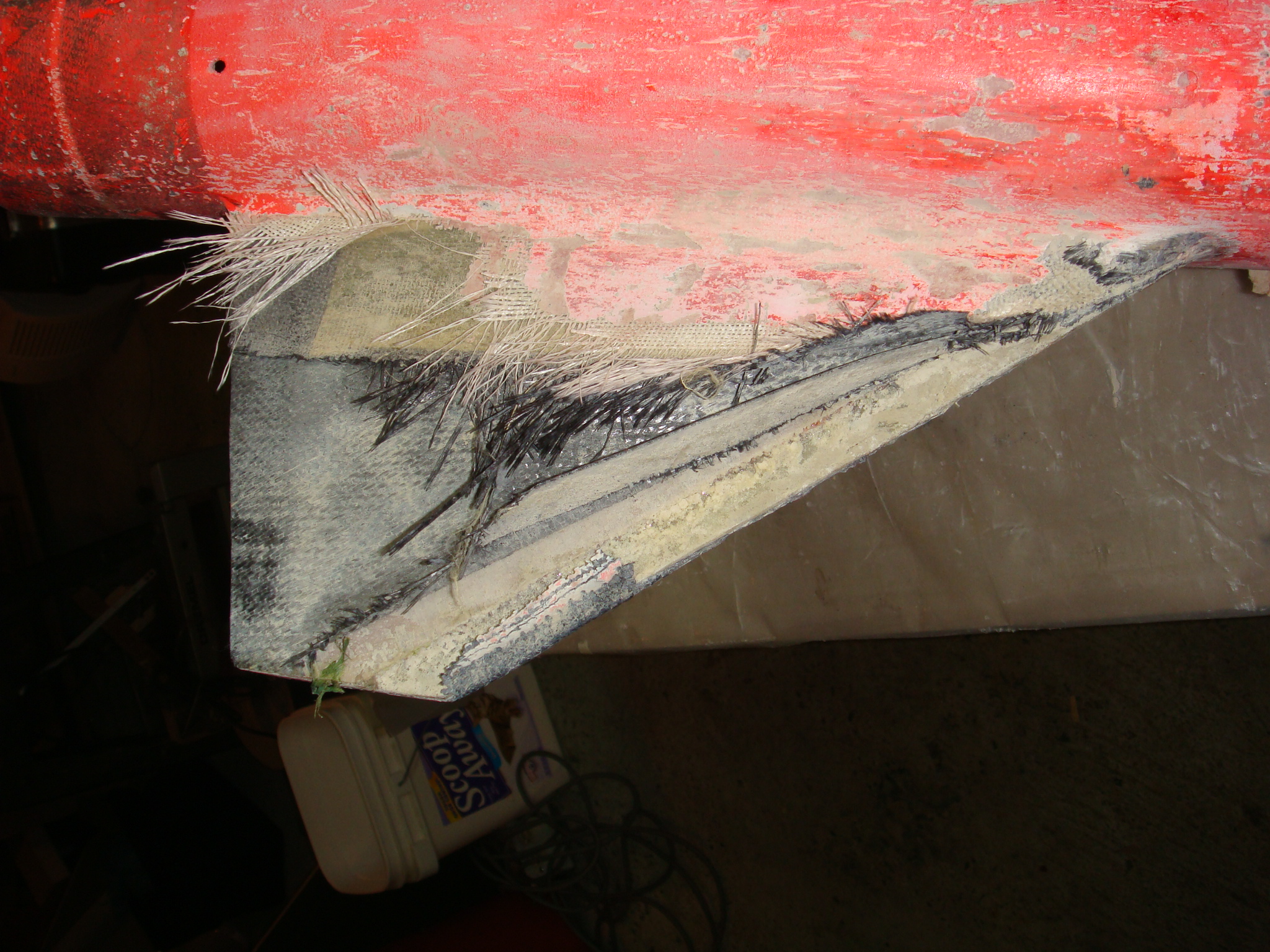
Take a look at these photos. It is clear the majority of this damage was from flight. The fins delaminated one layer at a time then that layer of cloth shreaded.


 Hosted by www.Geocities.ws