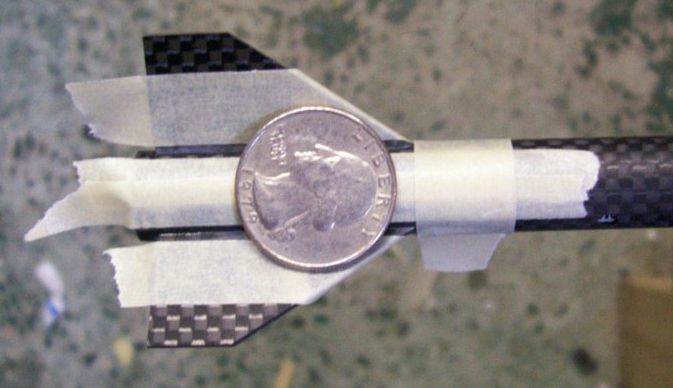
Doing fillets
Basic design(PDF file)
Weights
| Item | Weight |
| Nose cone | 2.322g |
| Sustainer airframe | 7.226g |
| Sustainer electronics bay | 8.838g |
| Booster airframe | 6.208g |
| Booster electronics bay | 3.496g |
| Total | 28.09g |
The fins were cut from 1/16" carbon fiber plate.
They were glued to the airframe with CA then a fillet of 5min epoxy was applied using my masking tape technique. link
Doing fillets
The body tubes were bought from McMaster and took a great deal of effort to sand the inside so the motor would fit. As purchased they were 1.5g/in. I reduced that to ~1g/in.
I sanded down a 1/2in wooden dowel and used it as a form to make tiny fiberglass coupler tubes.
I used these tubes to hold the electronics. I made bulkheads out of 1/16in balsa wood for each end. I mounted the charge connector to one end with epoxy. The connector is what supports the timer and altimeter.
The timer in the booster is set to light the sustainer after 1second.
It
will have a bridge wire made of solder that goes across the booster motor that
burns away on ignition.
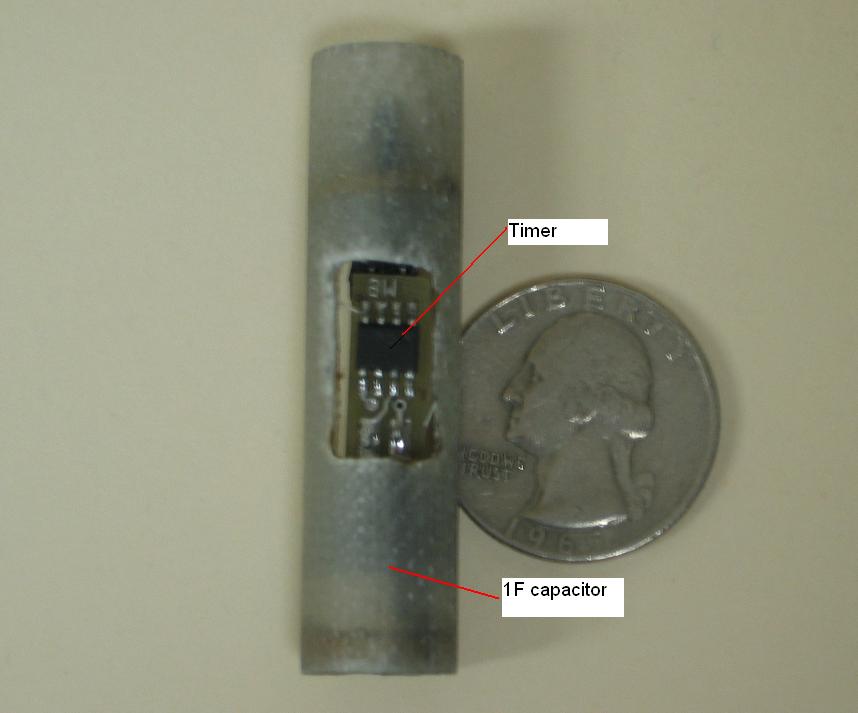
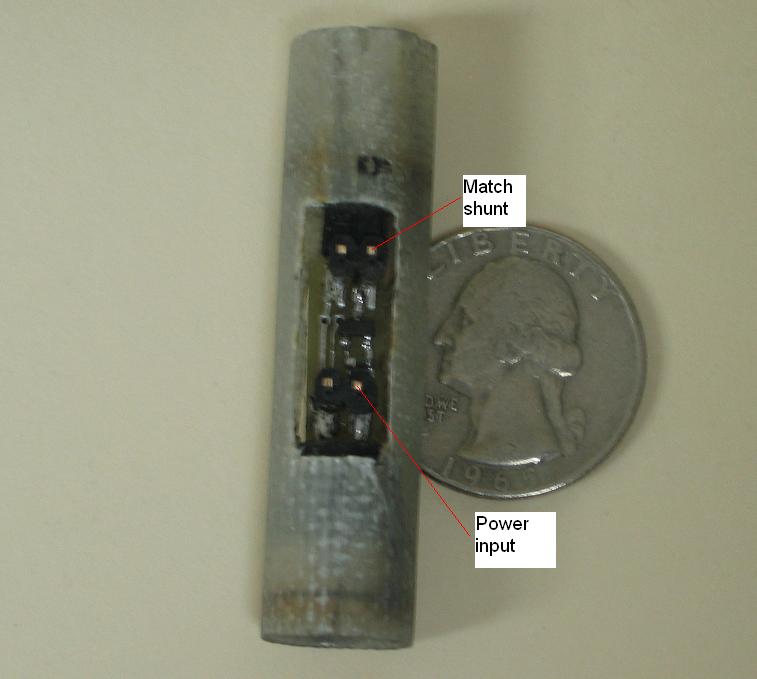
Staging timer
The altimeter's output will be used to deploy a streamer at 200' by poping
the nose cone off.
I installed a 95dB buzzer that will be controlled by the
altimeter.
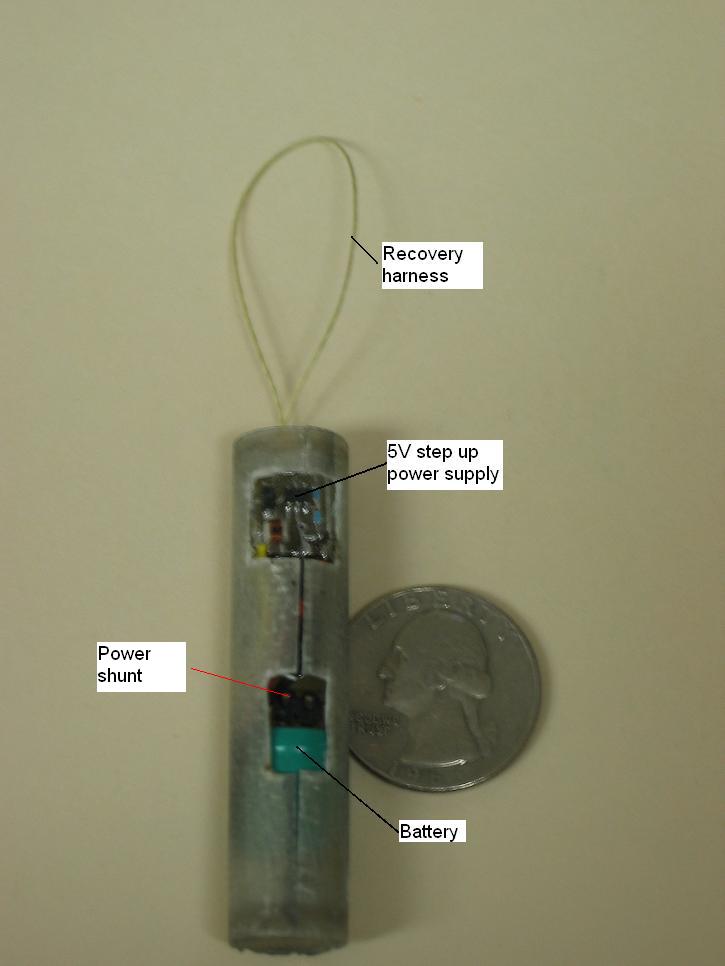
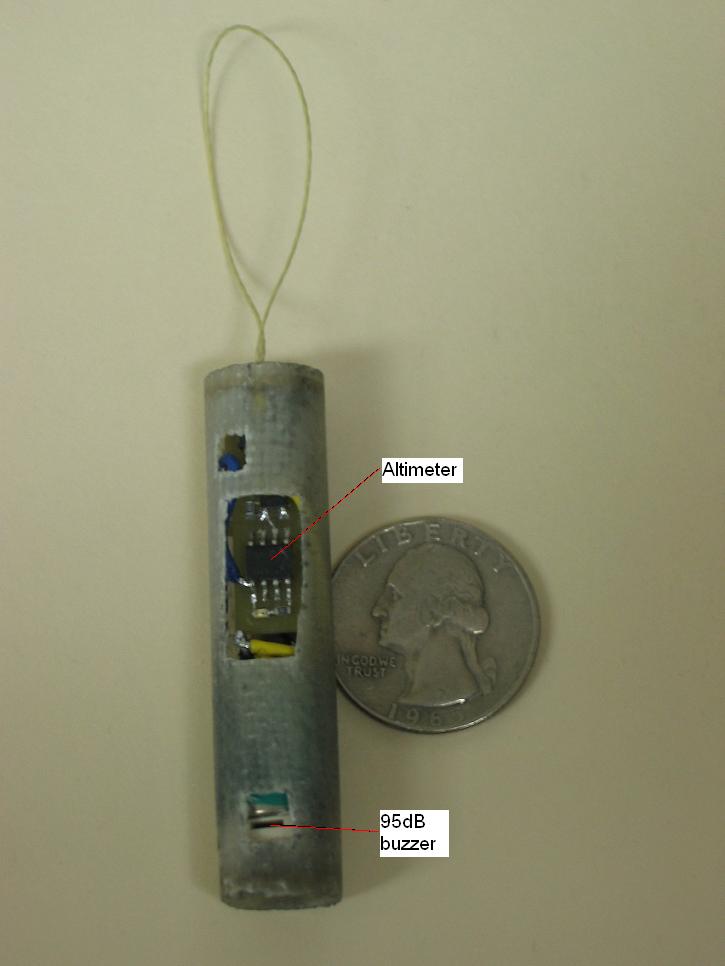
Sustainer Altimeter
I wanted to paint it a bright color that would be easy to find but the carbon looks nice.
I found a plastic nose cone in the junk box and decided to use that rather than roll my own.
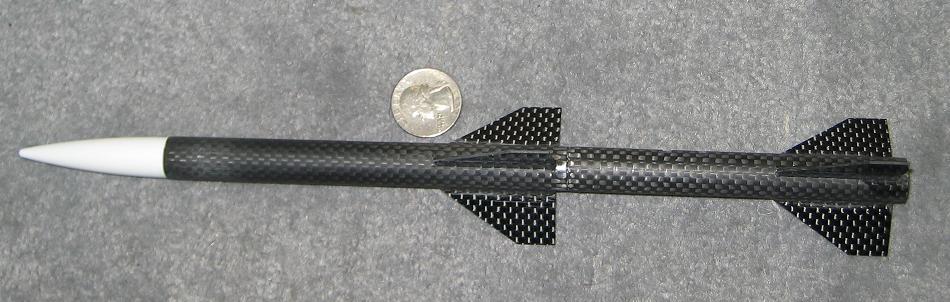
Almost complete