
IMPAIRED DRIVING:
Lets put things in perspective:
Impaired Driving is the Leading Criminal Cause of Death in Canada.
Thirty or more years ago the general public was predominantly indifferent to the issue of drinking and driving and many regarded it as a joke. Opinion surveys would now seem to indicate that the attitude of Canadians is changing with regards to this issue. Nearly 90% of the public believe that drinking and driving is a VERY SERIOUS or EXTREMELY SERIOUS problem. Many people are now taking personal action to avoid drinking and driving - ie: designated drivers and alternative transportation. The result has been that fewer Canadians drink and drive. In fact, statistics indicate that young drivers are less likely to drink and drive - as they have bought the message that drinking and driving don't mix - having heard it form a young age in school and through various forms of advertising etc...
However, it may surprise you to know that one in every 33 vehicles on Canadian roads at night contains a drunk driver. This is just around the 3% range - yet they account for ONE THIRD (33%) of all dead drivers.
 In Nova Scotia, 3.5% (or 1 in 28) vehicles on the road at night, contains a drunk driver. This 3.5% accounts for HALF (50%) of all dead drivers!!
Remember the part a paragraph or 2 ago about young drivers being less likely to drink and drive? Well, the harsh reality is this: while they are less likely to partake in this activity, the ones who do are at an extremely high risk of being in a serious crash. As Blood Alcohol Content (BAC) goes up, young drivers are much more likely to be in a serious or fatal collision.
Another group considered to be at high risk are the "Hard Core" drinkers. These people often drink and drive, usually have a very high BAC, have a history of convictions (both provincial and/or criminal), and many are alcohol dependent. A National Opinion Poll conducted in 1999 estimates that 84% of all motor vehicle trips conducted by impaired drivers in Canada annually, are undertaken by only 3% of the drivers. What is significant here is that drivers with high BAC's account for only 1% of all nighttime drivers - YET THEY ACCOUNT FOR 64% OF THE NIGHTTIME FATAL CRASHES!!
Alcohol is involved in nearly 40% of all motor vehicle fatalities in Canada. Obviously, the impaired driver is at greater risk of injuring or killing himself, or others - and we (the police) need to key in on this high risk driving activity. Statistics also indicate that impaired drivers are less likely to be wearing their seatbelts, yet another reason to be stopping & checking drivers who are not belted.
It is exactly this type of information which has caused our unit, and RCMP Traffic Units across Canada, to re-examine our roles so that we can have the most impact in our effort to make Canada's Highways the safest in the world!

 �
�
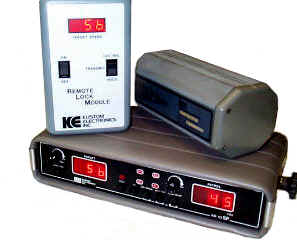 Enforcement of maximum (and in some cases minimum) speed limits will always be a part of the uniform police officer's responsibility. You do not have to be a 'rocket scientist' to realize that a collision which involves high speed, will almost always have more devastating results than the same collision at lower speeds. However, speed is one collision factor which the vehicle operator has direct control over, and one for which a driver must be held accountable if the posted maximum is exceeded. Drivers must also be aware of road and weather conditions. There are occasions when it is not even safe to travel at the posted limit,let alone in excess of it. The Motor Vehicle Act of Nova Scotia describes this as Driving Too Fast For Existing Road Conditions, and there is a fine for this, just the same as there is for exceeding the posted speed limit. Collisions involving high speed have always shocked and saddened Canadians, whenever they occur. The photographs of these collisions grace the front pages of our newspapers and are the lead story on the evening news, monthly - or worse - weekly. These collisions always garner an extra degree of media coverage, because of the impact they have on communities and individual familes, and the often spectacular nature of the scenes.
 where they occur
 The examination of collision data has yielded interesting results. Not the least of which was this: In the year 2000 (for RCMP jurisdictions) in Nova Scotia, 92% of traffic offence tickets issued were issued for 'speed related' offences, while only 18% of collisions indicate that speed was a contributing factor. Obviously, while speed is a factor, it is not worthy of 92% of our enforcement affort.
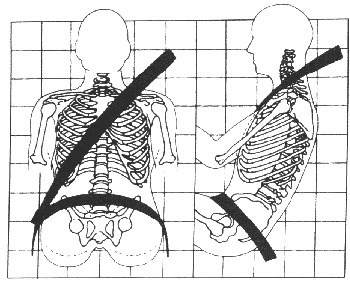 In Canada 11% of vehicle occupants do not wear their seatbelt. This 11% accounts for 40% of all vehicle occupant fatalities!
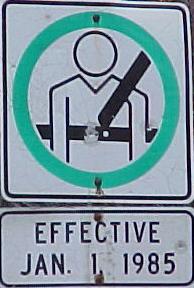 In Nova Scotia there is no way to determine exactly how many seatbelt offences were written by police in recent years. Until recently we did not record such specific data. The numbers reported above would strongly indicate that with our identified goal being to reduce injuries and deaths on our highways - enforcement of existing seatbelt legislation would be an excellent place to start as we attempt to achieve our goals.
 Driver behaviour and attitude, the driver's knowledge of the area, and the level (if any) of risk perceived by that driver, will all influence the manner in which a driver handles an intersection. Whether it be an intersection controlled by a yield sign, stop sign, or a street light, there are factors to be considered when investigating intersection related events and collisions.
  There are two recommended solutions when dealing with an identified problem with intersections - (1) to address the engineering of the intersection, ie: a merge lane, placement of rumble strips, larger signs, or flashing warning lights. Many times these solutions offer the best approach infinding a long-term solution, but they are also the most expensive. (2)The most common solution to ensure compliance with the laws pertaining to intersections is to increase enforcment and couple that with education. There are obvious difficulities with this approach as there are far more intersections than there are police officers. However,this is seen as a cost effective means of increasing compliance rates and ensuring that motorists are reminded to be careful and obey the provincial legislation as it applies to these sometimes complicated pieces of highway.