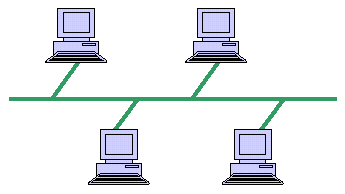
Various Topologies Used In Data Networks
Bus Topology
When using a Bus topology for your network, all computers are connected to each other via a single cable or "backbone". This topology allows for a simple layout and construction but offers many drawbacks. When data is sent out over a Bus network all machines connected to the network will see the data but only the machine that it's intended for will accept and process it. One can understand from this that if the network were very large then performance would be drastically lowered. With so many messages being sent over the network and no way of controlling them, collisions are bound to take place and hinder network performance. Another short coming of Bus is the fact that with a single backbone cable connecting all machines, the network has a single point of failure. If one problem should arise in the backbone then the whole network goes down.
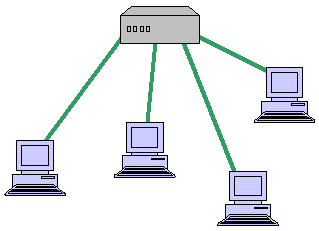
Star Topology
In a star topology all devices are connected to a centralized hub, switch, or router. This is very similar to a Bus topology in which they all shared a single cable backbone. However in this case they all have a single cable themselves to the hub, switch, or router which will send the message out. The advantage of this topology over Bus is that should a cable go down now, only the machine that cable is attached to will lose network access and the rest of the network and machines connected to it will remain functioning.
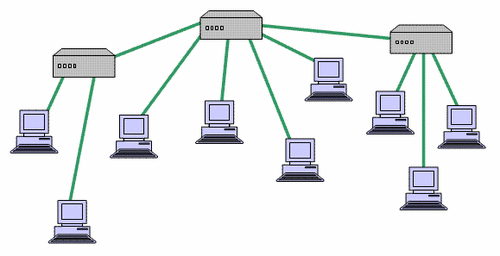
Tree Topology
Tree topologies are simply multiple star topologies with the hubs, switches, and routers interconnected with each other. This interconnection simply extends the network to include the other existing star topologies. The disadvantage here is that only a single route exists between the networks and should that route fail all access to that network is lost.
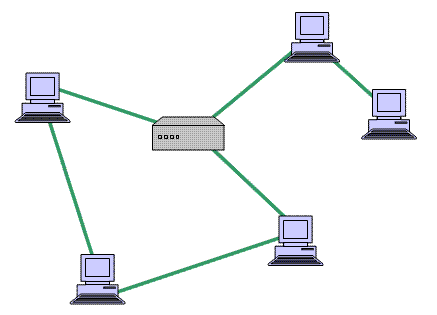
Mesh Topology
With Mesh topologies, messages are concerned about routes, and almost always they have multiple routes they can take. In the example above, with the exception of one machine, a message will always have more the one possible route that it can take to get to its destination. This allows more probability that the message will reach its destination due to the fact that should one route go down, another route to take will be available.
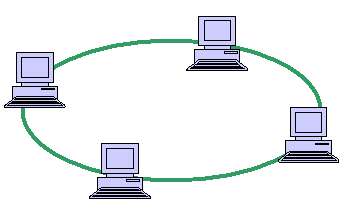
Ring Topology
Ring topologies have all machines or devices on the network connected to two other machines or devices. The message will be sent around the network in one direction with the intended machine or device eventually receiving the message once it is passed to it. This makes for a collision free network, but the downside to this topology is that if the intended destination of a message is the machine on the side of your network that doesn't have the network flow that direction it must transverse the entire network before arriving there, not taking advantage of the fact it could have gone a much shorter distance.
Further information can be found regarding network topologies at the following location: http://fcit.usf.edu/network/chap5/chap5.htm
Send any inquiries regarding topologies to: [email protected]