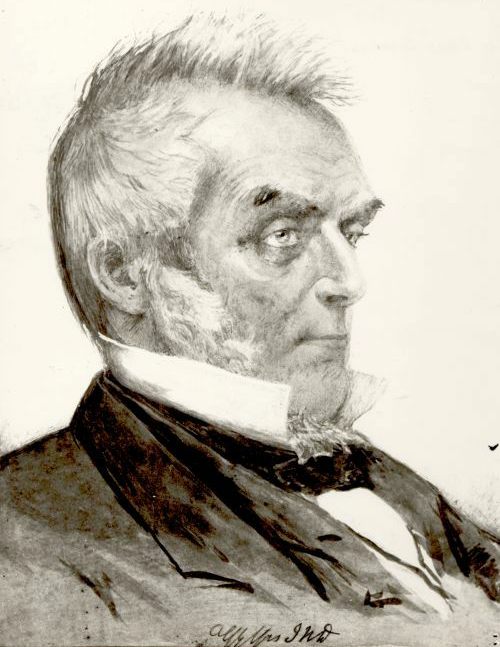
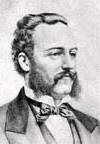
 John Nelson Darby(1800-1882)Darby was primarily responsible for the doctrine of dispensationalism, which spread rapidly across Fundamentalism in the early twentieth century, and for the popularization of the associated doctrine of the secret, pretribulation rapture of the church. Dispensationalism divided GodÕs redemptive workings into dispensations, or ages. In each age, God offered salvation on a different basis. Traditionally, dispensationalists taught that under the law of Moses God required ÒworksÓ in the form of obedience to the law, but the New Testament era is the age of grace. Dispensationalists generally recognize that in every age salvation is by grace through faith. Each dispensational age merely demonstrates the inability of man to meet the just demands of a holy God, and condemns man apart from grace. Thus each dispensation follows a definite pattern of God's promise, man's failure, Divine judgement, and finally, redemption of the faithful remnant. As developed by Darby, the grace dispensation began with God's promise of salvation by faith, but many, perhaps a majority of man would reject God's free offer of salvation and trample under foot the blood of Jesus. As a result of this rejection, God will pour out His great wrath upon the unbelieving world in the form of the Great Tribulation. The faithful of this age will escape the Wrath of God by means of the "Rapture." Darby was the first to teach clearly that Christ's second coming will occur in two phases: (1) Before the Tribulation, He will come in the air to catch away the saints (the "Rapture"). (2) After the Tribulation, He will come to the earth with His saints to rescue Israel at the close of the Battle of Armageddon and to establish His millennial kingdom. |
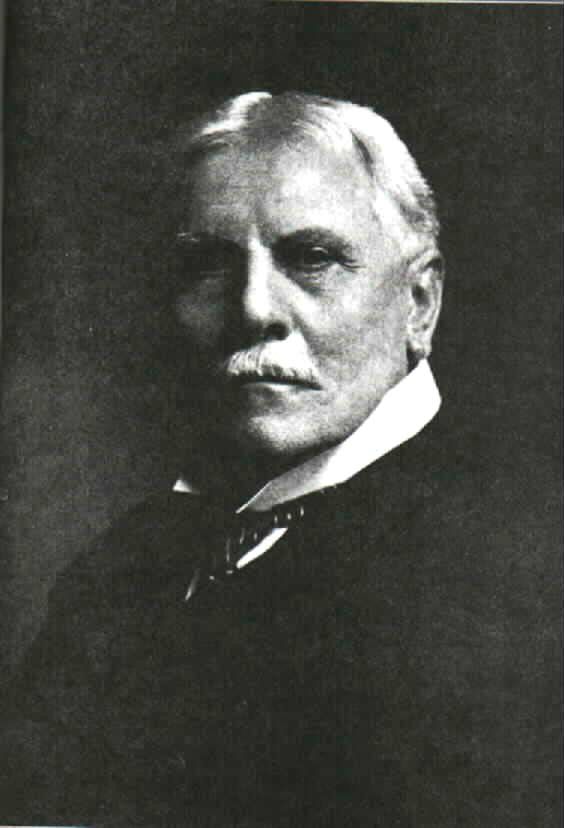 Cyrus I. Scofield(1843-1921)At seventeen Scofield entered the Civil War, and earned the Confederate Cross of Honor for bravery at Antietam. After the war, he studied law and was admitted to the bar in 1869. He served in the Kansas State Legislature and at the age of 29 was appointed by President Grant as United States District Attorney for Kansas. Later he reentered law practice and began to drink heavily. However, his passion for drink was completely removed when he accepted Christ through the efforts of Thomas S. McPheeters, a YMCA worker. Scofield immediately became active in Christian work. He was ordained in 1883, and began his ministry as pastor of a Congregationalist church. Scofield became acknowledged as a dilligent and careful teacher of the Word. His numerous books and pamphlets were well received by American Christians. As the nineteenth century drew to a close Scofield became convinced that the church world was about to experience a "second Pentecost" which would be accompanied by all of the Spiritual manifestations that are reported in the book of Acts. He saw this as a final period of worldwide revival, a last chance for repentance just prior to the end of the Grace dispensation and the Rapture of the church. Using the terminology of the Old Testament prophets, Scofiled called this the "latter rain" (see Hosea 6:1-3; Joel 2:23; Zechariah 10:1). Under Scofield's influence churches across America entered into a period of prayer and fasting to seek for "an outpouring of the Holy Ghost as on the Day of Pentecost." The Scofield Reference Bible was a tremendous undertaking, requiring a great deal of tedious work including trips to England and the continent to consult with Brethern leaders and study at European libraries. The Oxford University Press published the Bible in January 1909. Both the original Scofield Bible and revised editions are still in publication. |
|||
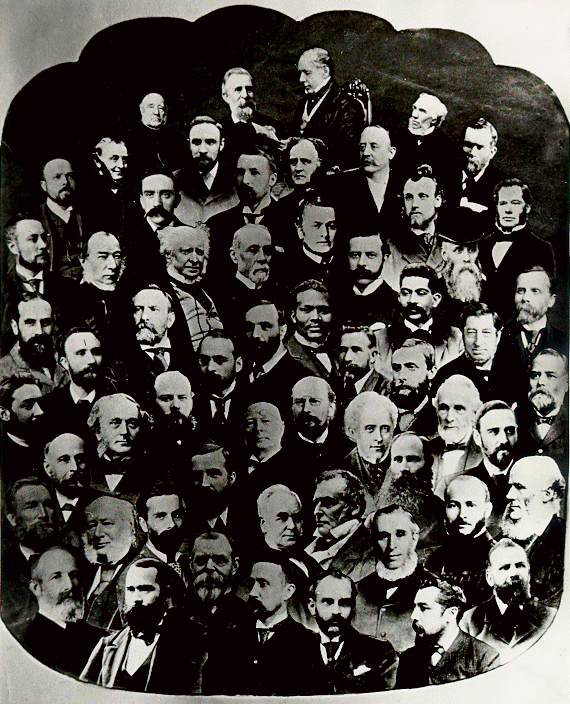
The Plymouth BrethernThe Plymouth Brethern promoted the literal interpretation of Scripture, sought spiritual renewal, strongly taught holiness and separation from the world, and gave great attention to the study of Bible prophecy. Some of the Plymouth Brethren, as well as other English groups at this time, practiced baptism in the name of Jesus Christ in obedience to the book of Acts. Some also received the Holy Spirit with the sign of speaking in tongues. The Plymouth Brethern had an influence on the intellectual development of fundamentalism far beyond what their numbers might suggest. They combined with many other English revivalist groups to bring Dwight L. Moody to England for a series of crusades. At the conclussion of these crusades, the sponsors met in the small English resort town of Keswick (pronounced "kessick"). The meeting was so poroductive that it was followed by many similar meetings which eventually resulted in a doctrinal system known as Keswick theology. The Plymouth Brethern were acknowledged as the primary framers of Keswick theology. Keswick theology denied that the inward nature of sin is eradicated in this life, but it proclaimed that by His Spirit God gives Christians power to overcome and suppress the influence of the sinful nature. It exhorted all Christians to seek a distinct encounter with God's Spirit in which they would receive power for Christian service and power to bear spiritual fruit. It could happen at conversion or afterward. Subse-quently, they should live in the "fullness of the Spirit" and participate in the "higher Christian life." Keswick theologians also began to use the scriptural terminology of being "baptized with the Holy Ghost" for this crisis experience. Prominent advocates of Keswick theology included William E. Boardman, F. B. Meyer, Andrew Murray, G. Campbell Morgan, A. B. Simpson, and A. J. Gordon. Dwight Moody, Reuben A. Torrey (credited with formulating the concept of "fundamentalism"), and the Moody Bible Institute were strongly influenced by Keswick theology, although they spoke primarily of power for service rather than power for holiness. |
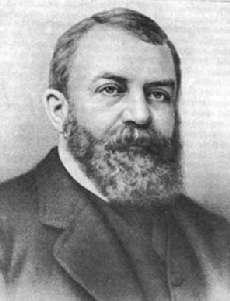
Dwight L. Moody(1837-1899)
Moody applied "scientific management," mass advertising, and other business techniques popular during this period, to professionalize revivalism. His style of professional evangelism reached its peak of influence in Billy Sunday, who was arguably responsible for passage of the Prohibition Ammendment to the United States Constitution, and continues today with the ministry of Billy Graham. Andrew D. Urshan, an immigrant from Iran and prominent leader in early Pentecost, was a minister at Chicago's Moody Church when he received the baptism of the Holy Spirit in 1908 and began to hold Pentecostal services. After being disfellowshipped, he established a Pentecostal "Persian mission" in the same city. Moody Ministries is still influential in fundamentalist Evangelical circles. In his famous sermon, "Why Did God Use Dwight L. Moody," R.A. Torrey, one of his closest friends, writes his conclusions (1) fully surrendered, (2) man of prayer, (3) student of the Word of God, (4) humble man, (5) freedom from love of money, (6) consuming passion for the lost, (7) definite enduement with power from on high. |
 |
 |
 |
 |
Email Me!