





on this page
never for the birds
All Rights Reserved
|
|
|
|
|
|
|
|
|
|
|
|
|
|
|
|
|
|
|
|
|
|
|
|
|
|
|
|
|
|
|
|
|
|
|
|
|
|
||||||||||||||||||||||||||||||||||||
|
||||||||||||||||||||||||||||||||||||
|
||||||||||||||||||||||||||||||||||||
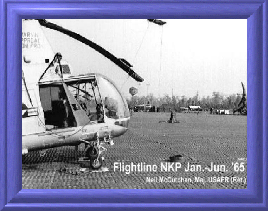
| The C-130 Crew Chief shouted over the din of the aircraft noise: "We're about to land at "Naked Fanny!". That was my introduction to Nakhon Phanom Royal Thai Air Force Base, Thailand. Otherwise known as "NKP" or "Naked Fanny". We landed with a thump and a rumble as the aircraft tires rolled over pierced steel planking. The AC wheeled around 180 degrees in front of a small flight line building. A year later that building would be of prime importance. It was the clearing center for end of tour personnel headed back to the land of milk and honey, the land of round eye women, Uncle Sugar. No matter what you called it, it spelled HOME! | ||||||||||||||||||||||||||||||||||||
| My assignment was to Detachment 5, 621st Tactical Control Squadron, part of the 505th Tactical Control Group. Squadron Headquarters was located at Udorn RTAFB, Thailland. Group Headquarters was located at Tan Son Nhut Air Base, Saigon, South Vietnam. With all that said it meant that as a Ground Radar Maintenance Supervisor, I was soon to find myself as the NCOIC of the detachment radar maintenance shop. The day I checked in, the shop NCOIC introduced himself and told me he was leaving for the states and the shop was all mine! He then dropped a bombshell: Hq 7th AF Quality Control Inspection team was due in a week, good luck! I found that the search radar, a AN/ MPS-11, carried serial number 0001 (which meant it was really, really old).The MPS-11 radar was a end of WW II design, and the Height Finder Radar, a AN/ TPS-40D was a system that was designed to be operated for a period of about 90 days and then be returned to a rear area shop for overhaul. But miracles do happen. My room mate soon arrived and together we and the other nine maintenance men soon had our radar euipment in tip top condition. We all realized that "Invert Control" (our call sign) played a important role in the on going air war. NKP was located about 50 miles North of the Viet Nam DMZ. Invert radar coverage was responsible for a wide variety of track monitoring which included tanker refueling hook-ups, Air America flights into Laos (and beyond)."Nail" FAC flights, "Sandy" A1E aircraft, and "Lamplighter" (flare drop missions). Interdiction of the Ho Chi Min Trail (using, among others, WW II vintage A-26 aircraft), Search and Rescue missions and a host of other efforts. We were blessed with a great group of people who coped with monsoon rains, stifling heat, either clouds of reddish dust or cloyingly sticky red mud. There were no pavements, just rough graded dirt roads. Aircraft were constantly taking off or landing, Construction was continous as building teams on the main base tried to cope with an average of 250 new arrivals each day. | ||||||||||||||||||||||||||||||||||||
|
||||||||||||||||||||||||||||||||||||
| The picture to the left is of the early days at NKP. In the background can be seen the Search radar to the left, and on the right is the Height Finder radar. A short time after this picture was taken, the Detachment moved to a more secure area. Invert would have its own seperately fenced and guarded compound. . | ||||||||||||||||||||||||||||||||||||
| My NKP duty tour began August 12, 1967. One year later I could say "One Day And A Wakeup". | ||||||||||||||||||||||||||||||||||||
| Every GI had visions of their "Jeannie" back home, which made every letter from her so important. | ||||||||||||||||||||||||||||||||||||
|
||||||||||||||||||||||||||||||||||||
|
|
||||||||||||||||||||||||||||||||||||
|
||||||||||||||||||||||||||||||||||||
|
The number of landings on this page |
|||||||||||||||||||||||||||||||||||
| To Home Base | ||||||||||||||||||||||||||||||||||||
| Your thoughts are never for the birds |
||||||||||||||||||||||||||||||||||||
| Copyright 2000 JayLu Production All Rights Reserved |
||||||||||||||||||||||||||||||||||||