Feel free to click on all the underlined words and pictures to go to another place on the internet. Also, rest your cursor (for several seconds), on each picture, after the page loads completely...you get a cool surprise!
Back to Top
Alec Guinness (Star Wars)
America Supports You
Donald Pleasance
(The Great Escape)
David Niven
James Stewart
Clark Gable
Charleton Heston
Ernest Borgnine
Charles Durning
Charles Bronson
George C. Scott
Eddie Albert
(Green Acres)
Bryan Keith
Lee Marvin
Tyrone Power
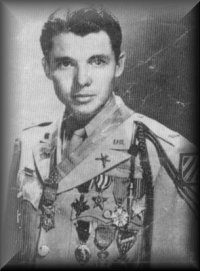
Audie Murphy,
John Russell
Robert Ryan
Back to Top
Back to Top
This site is best viewed and heard in Internet Explorer. You can use Netscape to view/hear it, but you may need to get a plugin for everything to be seen/heard correctly.
The sites, that can be altered, will be whenever possible. This page was altered on November 5th, 2006. Thank You.
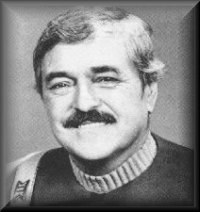
James Doohan
("Scotty" on Star Trek)
Packages from Home
Defend America
Defense Link
Back to Top
America's Army (GAME)
On The Flip Side of Hollywood In contrast to the ideals, opinions and feelings of today's "Hollywonk" the real actors of yester-year loved the United States. They had both class and integrity. With the advent of World War many of our actors went to fight rather than stand and rant against this country we all love. They gave up their wealth, position and fame to become service men & women, many as simple "enlisted men." This page lists but a few, but from this group of only 18 men came over 70 medals in honor of their valor, spanning from Bronze Stars, Silver Stars, Distinguish Service Cross', Purple Hearts and one Congressional Medal of Honor. So remember; while the "Entertainers of 2003" have been in all of the news media lately (for it seems News Paper, Television and Radio has been more than ready to put them and their anti-American, anti-Bush message before the public) I would like to remind the people of what the entertainers of 1943 were doing, (60 years ago). Most of these brave men have since passed on. Real Hollywood Heroes
landed in Normandy with the U. S. Army on D-Day.
operated a British Royal Navy landing craft on D-Day.
was a Sandhurst graduate and Lt. Colonel of the British Commandos in Normandy.
really was an R. A. F. pilot who was shot down, held prisoner and tortured by the Germans.
Entered the Army Air Force as a private and worked his way to the rank of Colonel. During World War II, Stewart served as a bomber pilot, his service record crediting him with leading more than 20 missions over Germany, and taking part in hundreds of air strikes during his tour of duty. Stewart earned the Air Medal, the Distinguished Flying Cross, France's Croix de Guerre, and 7 Battle Stars during World War II. In peace time, Stewart continued to be an active member of the Air Force as a reservist, reaching the rank of Brigadier General before retiring in the late 1950s.
(Mega-Movie Star when war broke out) Although he was beyond the draft age at the time the U.S. entered WW II, Clark Gable enlisted as a private in the AAF on Aug. 12, 1942 at Los Angeles. He attended the Officers' Candidate School at Miami Beach, Fla. and graduated as a second lieutenant on Oct. 28, 1942. He then attended aerial gunnery school and in Feb. 1943 he was assigned to the 351st Bomb Group at Polebrook where flew operational missions over Europe in B-17s Capt. Gable returned to the U.S. in Oct. 1943 and was relieved from active duty as a major on Jun. 12, 1944 at his own request, since he was over-age for combat.
was a U. S. Navy Gunners Mate 1935-1945.
was an Army Air Corps Sergeant in Kodiak.
was a tail gunner in the Army Air Corps, more specifically on B-29s in the 20th Air Force out of Guam, Tinian, and Saipan
was a U. S. Army Ranger at Normandy earning a Silver Star and awarded the Purple Heart.
was awarded a Bronze Star for his heroic action as a U. S. Naval officer aiding Marines at the horrific battle on the island of Tarawa in the Pacific Nov. 1943.
was a decorated U. S. Marine.
was a U.S. Marine on Saipan during the Marianas campaign when he was wounded earning the Purple Heart.
served as a U.S. Marine rear gunner in several actions against the Japanese on Rabal in the Pacific.
was a U. S. Marine who served with the O. S. S. in Yugoslavia.
In 1942, he enlisted in the Marine Corps where he received a battlefield commission and was wounded and highly decorated for valor at Guadalcanal.
little 5'5" tall 110 pound guy from Texas who played cowboy parts? The Most Decorated serviceman of WWII and earned: Medal of Honor, Distinguished Service Cross, 2 Silver Star Medals, Legion of Merit, 2 Bronze Star Medals with "V", 2 Purple Hearts, U.S. Army Outstanding Civilian Service Medal, Good Conduct Medal, 2 Distinguished Unit Emblems, American Campaign Medal, European-African-Middle Eastern Campaign Medal with One Silver Star, Four Bronze Service Stars (representing nine campaigns) and one Bronze Arrowhead (representing assault landing at Sicily and Southern France) World War II Victory Medal Army of Occupation Medal with Germany Clasp, Armed Forces Reserve Medal, Combat Infantry Badge, Marksman Badge with Rifle Bar, Expert Badge with Bayonet Bar, French Fourragere in Colors of the Croix de Guerre, French Legion of Honor, Grade of Chevalier, French Croix de Guerre With Silver Star, French Croix de Guerre with Palm, Medal of Liberated France, Belgian Croix de Guerre 1940 Palm.
(an established movie star when Pearl Harbor was bombed) joined the U.S. Marines, was a pilot flying supplies into, and wounded Marines out of, Iwo Jima and Okinawa.
So how do you feel the real heroes of the silver screen acted when compared to the hollywonks today who spray out anti-American drivel as they bite the hand that feeds them? Can you imagine these stars of yester-year saying they hate our flag, making anti-war speaches, marching in anti-American parades and saying they hate our president? I thought not, neither did I!
Rules of the Rucksack 1. No matter how carefully you pack, a rucksack is always too small. 2. No matter how small, a rucksack is always too heavy. 3. No matter how heavy, a rucksack will never contain what you want. 4. No matter what you need, it's always at the bottom. Iraq-Bound Troops Getting New Digitized Uniforms August 9, 2005 By Terry Boyd Stars and Stripes Mideast edition Germany-based soldiers headed for Iraq are the first in Europe to get the new digitized, permanent press Army Combat Uniform, or ACU. The new uniform replaces both battle dress uniforms, or BDUs, and desert camouflage uniforms, or DCUs, said Paul Rivera, team leader for Program Executive Officer Soldier. PEO Soldier, which is based at Fort Belvoir, Va., arms and equips soldiers. �This is the uniform for all environments � jungle, urban and desert,� Rivera said. �There will be no BDUs or DCUs. They'll all be gone,� Rivera said. �All war fighters will wear one uniform.� That will happen sooner rather than later in Europe, where soldiers with the 1st Armored Division and V Corps are getting ACUs. Units from the 1st AD, as well as V Corps troops, are scheduled to deploy to Iraq this year. Two teams are issuing the new uniforms, one at H.D. Smith Barracks in Baumholder, and one in Grafenw�hr Training Area, Rivera said. Baumholder is home to the 1st Armored Division's 2nd Brigade and Division Artillery, and V Corps units are at Grafenw�hr, one of the Army's main training areas. As of Monday afternoon, his 11-person team has issued ACUs to 4,950 soldiers at Baumholder since Aug. 1, Rivera said, averaging about 705 per day. Each soldier gets four sets of the uniform. About 7,400 soldiers in the 2nd Brigade Combat Team at Baumholder will get the uniforms, he said. New hot-weather boots are issued separately by Rapid Fielding Initiative teams. The teams distributing the uniforms will be on the move Thursday, with the Baumholder group heading to Darmstadt and the Graf group going to Hanau. The first soldiers to get the new uniforms � the first major Army uniform redesign since the early 1980s � were Fort Stewart-based troops with the 48th Infantry Brigade of the Georgia National Guard, Rivera said. The uniforms are radically different than the uniforms they replace, most distinctly their lack of black, according to Army documents. Black is omitted because it's not commonly found in nature. Instead, ACU colors are green �woodland,� gray �urban environments� and sand brown. The new uniform also has �Mandarin� collars with Velcro fasteners, as well as zippers for tops, rather than buttons. Pants have knee pouches for kneepad inserts. Bottom pockets found on DCUs are gone, replaced by pockets on the sleeves a la Special Forces uniforms so soldiers can use them while wearing body armor. The uniforms cost about $80, compared with about $30 for BDUs. ACUs were designed by a team of noncommissioned officers and tested by soldiers at U.S. bases, as well as in Iraq. http://www.military.com/NewContent/0,13190,SS_080905_Uniforms,00.html?ESRC=army-a.nl Waiving TRICARE Deductibles and Cost Shares Is Illegal Uniformed Services beneficiaries who use TRICARE Standard and Extra are responsible, under law, to pay annual deductibles and cost-shares associated with their care. The law prohibits health care providers from waiving TRICARE beneficiary deductibles or cost-shares and requires providers to make reasonable efforts to collect these amounts. Health care providers who offer to waive deductibles and cost-shares or who advertise that they will do so may be investigated for program abuse and suspended or excluded as authorized providers. According to Rose M. Sabo, Director, TRICARE Program Integrity, TRICARE Management Activity, "TRICARE prohibits any scheme designed to waive a patient's deductible or cost-share. Beneficiaries should contact their local TRICARE Service Center for more information on deductibles and cost-shares. If you suspect provider or insurance fraud, report it by e-mailing fraudline@tma.osd.mil. NEWS RELEASE from the United States Department of Defense No. 499-05 IMMEDIATE RELEASE May 20, 2005 Media Contact: (703)697-5131 Public/Industry Contact: (703)428-0711 Vietnam War Missing in Action Serviceman Identified The Department of Defense POW/Missing Personnel Office (DPMO) announced today that the remains of a U.S. serviceman, missing in action from the Vietnam War, have been identified and returned to his family for burial with full military honors. He is Air Force Maj. Robert Harry Schuler, Jr., of Wellsburg, N.Y. His internment is scheduled for Saturday in Franklindale, Penn. On Oct. 15, 1965, Shuler was flying his F-105 *Thunderchief* as part of a four-ship flight north of Hanoi when the lead aircraft was hit by enemy fire. Shuler remained in the area to provide support to the downed pilot while the two other aircraft departed for aerial refueling. When they returned, Shuler was no longer in the area and they could not establish radio contact with him. An extensive aerial search of the entire flight route met with negative results. Between 1993 and 1998, joint U.S. and Vietnamese teams conducted seven investigations, including unilateral archival research by Vietnamese officials. The final investigation in Nov. 1998 led the teams to a Vietnamese army officer who recounted his unit shooting down an F-105 on the date and in the area where Schuler went down. That team surveyed the crash area, found fragments of an F-105, and recommended the area for excavation. Teams led by the Joint POW/MIA Accounting Command (JPAC) excavated the site on four occasions between Sept. 1999 and Mar. 2001, recovering more wreckage as well as human remains. In addition to other forensic tools, JPAC scientists used mitochondrial DNA comparisons to confirm the identification of Schuler's remains. Of the 88,000 Americans missing in action from WWII, the Korean War, the Cold War, the Vietnam War and Desert Storm, 1,833 are from the Vietnam War, with 1,397 of those within the country of Vietnam. Another 750 Americans have been accounted for since the end of the Vietnam War, with 524 of those from the country of Vietnam. For additional information on the Defense Department's mission to account for missing Americans, visit the DPMO website at www.dtic.mil/dpmo or call 703-699-1169. [Web Version: http://www.defenselink.mil/releases/2005/nr20050520-3241.html] -- News Releases: http://www.defenselink.mil/releases/ -- DoD News: http://www.defenselink.mil/news/dodnews.html -- Subscribe/Unsubscribe: http://www.defenselink.mil/news/dodnews.html#e-mail -- Today in DoD: http://www.defenselink.mil/today/ -- U.S. Department of Defense Official Website - http://www.defenselink.mil -- U.S. Department of Defense News About the War on Terrorism - http://www.defendamerica.mil
Thirty years later: Witnessing Monumental Change in Army Diversity Oct 29, 2008 BY Amy Perry, Fort Lee Public Affairs Chief Warrant Officer 5 Vickie Vachon poses next to the Pallas Athena statue at the U.S. Army Women's Museum at Fort Lee, Va. Pallas Athena was the insignia members of the Women's Army Corps wore. Photo by Amy Perry, Fort Lee Public Affairs FORT LEE, Va. -- Few women who served in the Women's Army Corps are still in uniform today. Only those who have served at least 30 years have the distinction as former WAC Soldiers and can remember a time when they served under Pallas Athene collar insignia. Chief Warrant Officer 5 Vickie Arnold Vachon, a logistics systems analyst at U.S. Army Materiel Command Logistics Support Activity, Redstone Arsenal, Ala., has served for 32 years and has seen the Army transform through the years. A major part of this Army transformation is the acceptance of women in different careers, said Vachon. "We're not just clerical people anymore; we're kind of more along the same lines as the business world," she said. "I think we get better recognition than the business world does, but it gives the guys something else to base their performance on. They were so used to working alongside men, and now they are able to diversify and be able to get a woman's point-of-view instead of a man's point-of-view." Over the years Vachon has seen the opportunities gradually improve. "At first, we were molded to stay in our clerical and nurse lanes; then it became let's have people down in the motor pool," Vachon said. "You saw the stigmatism 'you're a girl, what do you know about making a truck run?' Then they started realizing that some of these girls grew up with dads that took them out there and they did get their hands greasy, and they enjoyed it. They were probably better mechanics than the males were. "My side of the house is logistics, we do a lot of paperwork, but we can go out there and drive forklifts, still go out there and move supplies, and process parts and all that," she continued. "We don't need some guy standing there to move stuff for us." Vachon remembers her early days in WAC as a time of integration. During basic training at Fort Jackson, S.C., she said her male drill instructor reinforced the Army ideals of a changing force. "We were all turning in our linen on the back of the dock of the building for our basic training and these guys came by on the truck and were hooting and hollering at us," she said. "Our drill sergeant stopped them and pulled them off the truck and told them 'these are ladies, and you will not treat these ladies with wolf calls, it is not tolerated.' "They all had to apologize and do pushups before they were able to get back on the truck," she continued. "Our drill instructor gave us a speech that we were ladies and we would be treated like ladies, but we had to act like ladies." Vachon arrived at her first duty station with a military occupational speciality of teletypewriter repair and soon ran into issues. "When I got to my first assignment, my platoon sergeant looked at me and said 'you will be the major's secretary up on staff,'" she said. "I said 'no, I am trained as a 31 Juliet, and I will work as a 31 Juliet. This is my contract and this is what it says I'm going to do.' "I was the only female in the platoon, and the platoon sergeant didn't like the idea," said Vachon. "The guys and I all got along; we had an understanding that there were certain things I couldn't pick up because it was too heavy for me, but I was beside them and we would do it together." In Vachon's first formation, even her uniform inspections were questionable because men still were not used to women in the ranks. "When I got there, they didn't know the uniform regulations at all - they had little cheat cards - when they did inspections, they used the cheat cards," said Vachon. "It took them a long time for them to finally say men have to understand (the uniform regulations)." Vachon knows that the Army has diversified when she observes women rise to ranks previously unseen, such as Lt. Gen. Ann E. Dunwoody, who is set to receive her fourth star soon and assume command of Army Materiel Command. "Over the years, you walk in and it's not such a shock to see a woman (in leadership)," Vachon said. "It's just been a slow process integrating them." Vachon has served for more than 30 years of active federal service, and she plans to spend a total of 40 years in. "The jobs have been wonderful; they tell you you'll know when you have enough, but I haven't had enough yet," she said. "But so far it's been great assignments, I've seen a lot of the world and learned a lot of different things. It's a different Army than when I came in." Education: The Best Kept GI Bill Secret The VA pays for OJT! Most veterans know that they can use the G.I. Bill to pay for the costs of education. But did you know that you can also receive up to $12,000 in tax-free benefits for training twenty-four months in an On-The-Job or Apprenticeship training program? That means that the VA will pay you up to $753 a month ($216 for Reserve) tax-free, on top of your regular salary! Here's how the GI Bill On-The-Job training program works for you! If you are a veteran or currently in the guard or reserve the On-The-Job Training (OJT) Program offers you an alternative way to use your VA (G.I. Bill) education and training benefits. While training, you can receive monthly training benefits from the Veterans Affairs in addition to your regular salary. OJT programs may be approved in a wide variety of occupations. Some in trades that may relate to your military occupation, but many that don't. Currently approved programs range from law enforcement officers to mechanics to electricians. Get Money For School Find scholarships, schools that credit military experience, distance learning programs and more. Use your GI Bill and other benefits to get ahead! Request free information from Military-Friendly schools and get the 2004 Guide to Military & Veteran Education -- free. Qualifying Jobs: To qualify, your job must meet the following criteria: � You must be supervised at least 50% of the time. � Job training must lead to an entry level position. (Management training programs do not qualify) � You must be a full-time paid employee, not on commission. � Your training must be documented and reported. � You cannot be already qualified for the Job by previous experience. � You must be recently hired (within one to two years). � The Job must require at least six months training to become fully trained. � The Employer may be private; local or state government Here is a list of well-known employers who participate in the VA's Apprenticeship Program: � Pirelli Tire Co. � Proctor & Gable Co. � Merck Pharmaceuticals � Cessna Aircraft � Gulfstream Aerospace Corp. � Lockheed Martin Corp. � Bell South � World Toyota � Comcast � Pratt and Whitney Engine Co. � Law enforcement (police, sheriff, State Patrol) � Dept. of Corrections (prisons, detention centers) � Local Fire Departments Eligibility: You may be eligible if you are otherwise eligible for the GI Bill either under the Active Duty (Veteran) or Reserve GI Bill programs and: � You are no longer on Active Duty; � You were recently hired or promoted; � it's been less than 10 years since you left the service; or � you are currently a member of the Guard or Reserve (Reserve GI Bill). So if you are qualified for the GI Bill and you have started a new job or apprenticeship program, you need to apply for this little known GI Bill benefit. This is in addition to your take home pay. In some cases the VA will even pay retroactively for OJT from the past 12 months. Note: You may not receive GI Bill OJT benefits at the same time you are receiving the GI Bill education benefits. Click here for the latest information on the exact amounts the GI Bill will pay. The next step: Your next step should be to contact your Regional VA office or local State Approving Agency (SAA). They will help you get started on the process and answer any questions you may have. Remember: If you have decided to pursue your education, many schools offer free information packets they will mail you. You can request information from multiple schools at once by filling out a form on Military.com. With no obligation or cost, learning about different schools is a great way to take the first step. Click here to request information. (http://www.military.com/Education/Content?file=Education_Best.htm&ESRC=army-a.nl) Congress Seeks to Expand Death Benefits The House has passed the Servicemembers Group Life Insurance (SGLI) Enhancement Act of 2005 (H.R. 3200), which permanently increases SGLI and Veterans Group Life Insurance (VGLI) from $250,000 to $400,000. SGLI and VGLI were increased earlier this year through emergency war supplemental appropriations, but the increases were due to expire 30 September 2005. The legislation also requires the DoD to notify a servicemember's spouse should the member decline SGLI or choose an amount less than the maximum. The spouse must also be notified should the member designate someone other than the spouse or dependent child as a beneficiary. The Fleet Reserve Association (FRA) and other veterans' groups have expressed concern over this requirement, citing concerns about compromising the servicemembers' right to privacy in designating a beneficiary of his or her choice. The Senate's FY 2006 National Defense Authorization Bill (S. 1042), which will not be acted on until September, increases SGLI to $400,000 as well; however, the legislation fails to make the increased SGLI retroactive - which means that if a servicemember died on active duty in 2003, his or her family would receive the one-time retroactive death gratuity payment of $100,000, but would not be eligible for the increased SGLI payment of $400,000 (up from $250,000). The Senate also voted to permanently increase the death gratuity benefit paid to families of servicemembers killed while on duty to $100,000 (up from $12,420), and makes the payment retroactive to 7 October 2001 -- the day operations began in Afghanistan as part of the Global War on Terror. Contact your representative and let your voice be heard on this important legislation. (http://www.military.com/MilitaryReport/0,12914,75247,00.html?ESRC=miltrep.nl) Hawaii on a Budget When it comes to finding the cheapest military lodging amenities in Hawaii, the best places to look are hotels and cabins owned and operated by the Department of Defense. These facilities are made available specifically for all active duty personnel, reservists and retirees looking to take a vacation offering a wide range of rooms that can fit into anybody's budget. Lodging rates run from $51 - $190 a night depending the facility and amenities you choose. Learn more at: Doing Hawaii on a Military Budget. For more travel discounts and information on military travel benefits, see Travel Discounts and Benefits. (http://www.military.com/MilitaryReport/0,12914,75250,00.html?ESRC=miltrep.nl) Vacation Club Adds Nightly Getaways The Armed Forces Vacation Club (AFVC), a vacation rental program offered to military personnel by RCI (Resort Condominiums International, LLC), has added the option of nightly rental opportunities as an expanded service to eligible participants. Active duty and retired military personnel now have the option to rent a vacation condo either in seven day increments or choose to stay for one night or more, subject to availability. Rentals come in a variety of sizes: one bedroom and larger condos, studios and cottages. Many of the vacation properties come with fully equipped kitchen, washer and dryer, living room, dining area, swimming pool, hot tub, fitness center and handicapped accessibility features. For Nightly Getaway reservations call 1-888-338-0970. For weekly reservations call 1-800-724-9988 or go to the Armed Forces Vacation Club website. To make any AFVC reservation, members will need their AFVC installation identification number obtainable from the following offices, depending on the military installation: MWR (Moral, Welfare & Recreation), ITT (Information, Tours & Tickets or Information, Tours & Travel) and ITR (Information, Tours & Recreation). The Armed Forces Vacation Club is a space available program offering Department of Defense affiliated personnel the opportunity to take affordable vacations at resorts. For more travel discounts and information on military travel benefits, see Travel Discounts and Benefits. (http://www.military.com/MilitaryReport/0,12914,75245,00.html?ESRC=miltrep.nl)
Murphy�s Law of Combat Operations Friendly fire - isn't. Recoilless rifles - aren't. Suppressive fires - won't. You are not Superman; Marines and fighter pilots take note. A sucking chest wound is Nature's way of telling you to slow down. If it's stupid but it works, it isn't stupid. Try to look unimportant; the enemy may be low on ammo and not want to waste a bullet on you. If at first you don't succeed, call in an airstrike. The enemy attacks on two ocasions: when he's ready and when your not If you are forward of your position, your artillery will fall short All 5 second grenade fuses burn down in 3 seconds Never share a foxhole with anyone braver than yourself. Never go to bed with anyone crazier than yourself. When your attack is going really well, its an ambush Never forget that your weapon was made by the lowest bidder. If your attack is going really well, it's an ambush. The enemy diversion you're ignoring is their main attack. The enemy invariably attacks on two occasions: when they're ready. & when you're not. No OPLAN ever survives initial contact. There is no such thing as a perfect plan. Five second fuzes always burn three seconds. There is no such thing as an atheist in a foxhole. A retreating enemy is probably just falling back and regrouping. The important things are always simple; the simple are always hard. The easy way is always mined. Teamwork is essential; it gives the enemy other people to shoot at. Don't look conspicuous; it draws fire. For this reason, it is not at all uncommon for aircraft carriers to be known as bomb magnets. Never draw fire; it irritates everyone around you. If you are short of everything but the enemy, you are in the combat zone. When you have secured the area, make sure the enemy knows it too. Incoming fire has the right of way. No combat ready unit has ever passed inspection. No inspection ready unit has ever passed combat. If the enemy is within range, so are you. The only thing more accurate than incoming enemy fire is incoming friendly fire. Things which must be shipped together as a set, aren't. Things that must work together, can't be carried to the field that way. Radios will fail as soon as you need fire support. Radar tends to fail at night and in bad weather, and especially during both. Anything you do can get you killed, including nothing. Make it too tough for the enemy to get in, and you won't be able to get out. Tracers work both ways. If you take more than your fair share of objectives, you will get more than your fair share of objectives to take. When both sides are convinced they're about to lose, they're both right. Professional soldiers are predictable; the world is full of dangerous amateurs. Military Intelligence is a contradiction. Fortify your front; you'll get your rear shot up. Weather ain't neutral. If you can't remember, the Claymore is pointed towards you. Air defense motto: shoot 'em down; sort 'em out on the ground. 'Flies high, it dies; low and slow, it'll go. The Cavalry doesn't always come to the rescue. Napalm is an area support weapon. Mines are equal opportunity weapons. B-52s are the ultimate close support weapon. Sniper's motto: reach out and touch someone. Killing for peace is like screwing for virginity. The one item you need is always in short supply. Interchangeable parts aren't. It's not the one with your name on it; it's the one addressed "to whom it may concern" you've got to think about. When in doubt, empty your magazine. The side with the simplest uniforms wins. Combat will occur on the ground between two adjoining maps. If you can keep your head while those around you are losing theirs, you may have misjudged the situation. If two things are required to make something work, they will never be shipped together. Anything you do can get you shot, including nothing. Whenever you lose contact with the enemy, look behind you. The most dangerous thing in the combat zone is an officer with a map. The quartermaster has only two sizes, too large and too small. If you really need an officer in a hurry, take a nap. There is nothing more satisfying than having someone take a shot at you, and miss. If your sergeant can see you, so can the enemy. You'll only remember your hand grenades when the sound is too close to use them. Close only counts in horseshoes and hand grenades. Well .. It could be worse: It could be raining .. and we could be out in it. So he said, "Cheer up: it could be worse!" So we cheered up. And it got worse. The side with the simplest uniform wins... The spare batteries for the PRC-whatever your troops have been carrying are either nearly dead or for the wrong radio. The ping you heard was the antenna snapping off at 6 inches above the flexmount, while a fire mission was being called in on a battalion of hostiles who know your position. Why is it the CO sticks his head in your radio hooch to see if anything has come down from DIV when you are listening to the VOA broadcasting the baseball games? How come you are on one frequency when everyone else is on another? Why does your 500-watt VRC-26 (real old) not make it across 200 miles while a ham with 50 watts on the same MARS frequency can be heard from Stateside? Know why short RTOs have long whips on their radios? So someone can find them when they step in deep water. The enemy "Alway's" times his attack, to the second you drop your pant's in the Latrine!! The ammo you new "NOW"!! is on the "Next" airdrop!! The enemy inevitably attacks on two occasions: when they're ready and when you're not. Field experience is something you don't get until just after you need it. If your ambush is properly set the enemy won't walk into it. The only time you have too much fuel loaded is when your aircraft is on fire. TRICARE Builds Its Uniform Formulary The TRICARE has announced the addition of 11 new medications to the TRICARE Uniform Formulary. Additionally, they approved moving seven medications to non-formulary status. The following medications have been added to the Uniform Formulary: Levitra (PDE-5 Inhibitor); nystatin, clotrimazole, ketoconazole, miconazole, Mentax, Naftin (Topical Antifungals); and Rebif, Avonex, Copaxone, Betaseron (Multiple Sclerosis Disease Modifying Drugs). The non-formulary medications include: Viagra, Cialis (PDE-5 Inhibitors); and ciclopirox, econazole, Oxistat, Ertaczo, Exelderm (Topical Antifungals). Formulary alternatives are available for these medications at a co-pay of either $3 or $9. Beneficiaries will pay $22 for up to a 30- or 90-day supply for non-formulary medications, depending on whether they fill the prescription at a TRICARE Retail Network Pharmacy (TRRx) or through the TRICARE Mail Order Pharmacy (TMOP). Beneficiaries will pay the higher of $22 or 20 percent in retail non-network pharmacies. The implementation date of the $22 co-payment for the topical antifungal medications is Aug. 17, 2005, and the implementation date for PDE-5 Inhibitors is Oct. 12, 2005. Patients currently using the newly designated non-formulary medications may wish to consult their doctor about formulary alternatives or if a medical necessity is appropriate for them. If medical necessity is established for using non-formulary medications, patients may qualify for the $9 co-payment for up to a 30-day supply or up to a 90-day TRICARE Mail Order Pharmacy (TMOP) supply. Medical necessity forms are available on the TRICARE Pharmacy Website. Procedures for completing and submitting medical necessity information may be found on these forms. For more information about TMOP, eligible beneficiaries may visit the Express-Scripts Inc. Website, or they may call (866) DOD-TMOP, (866) 363-8667. Beneficiaries may also contact the TRICARE Retail Pharmacy Program TRRx customer service line at (866) DOD-TRRX, (866) 363-8779, or visit the TRICARE Pharmacy Website. For additional information about various medications, their availability and cost, beneficiaries may use the TRICARE Formulary Search Tool. For general information on TRICARE, see the TRICARE Overview. (http://www.military.com/MilitaryReport/0,12914,75243,00.html?ESRC=miltrep.nl) TRICARE Survivor Benefits: Overview TRICARE-eligible family members, whose sponsor dies while on active duty will continue to receive TRICARE benefits. During the three years following a sponsor's death, surviving spouses and children under 21 years of age (23, if enrolled in a full-time course of study in an institution of higher learning) remain eligible for TRICARE Prime without enrollment fees and copayments. Surviving family members may enroll in TRICARE Prime where offered, but lose eligibility for TRICARE Prime Remote for Active Duty Family Members, if enrolled in that program at the time of the sponsor's death. Surviving family members who are not enrolled in TRICARE Prime may use TRICARE Extra or Standard, but are subject to the appropriate active duty cost shares and annual deductible requirements for each program. During the three-year survivor benefit period, surviving family members are protected from having to pay out-of-pocket expenses of more than $1,000 per fiscal year for TRICARE allowable charges for covered services. Active duty family members who accompanied their sponsor on orders outside of the continental United States (OCONUS) and reside in that location at the time of their sponsor's death are eligible for three-year transitional health care benefits under the TRICARE Overseas Program Prime. Surviving family members who are enrolled in the TRICARE Dental Program (TDP) at the time of the servicemember's death remain eligible for dental care under the TDP Survivor Benefit program. Under this survivor program, the Government will pay 100 percent of the premium for three years from the month following the sponsor's death. For additional information on dental survivor benefits, beneficiaries may refer to the TRICARE Dental Program Survivor Benefit fact sheet. It is extremely important for survivors to update their TRICARE eligibility in DEERS. Surviving family members may go to the nearest Uniformed Services identification card-issuing facility , which can be found at the RAPIDS Site locator, or contact the Defense Manpower Data Center Support Office Telephone Center at (800) 538-9552. Surviving spouses must contact the ID card-issuing facility in advance to determine the range and scope of available services. For general information on TRICARE, see the TRICARE Overview. (http://www.military.com/MilitaryReport/0,12914,75244,00.html?ESRC=miltrep.nl) TRICARE to All Reservists Sen. Lindsey Graham (R-S.C.), chairman of the Senate armed services subcommittee on military personnel, says he will be "adamant" during negotiations with House conferees on a final defense authorization bill that it include his Senate-approved amendment to open a premium-based military health insurance plan to any drilling Reservist or National Guard member. For more details, see Graham Vows Fight to Open Tricare to All Reservists. (http://www.military.com/MilitaryReport/0,12914,75249,00.html?ESRC=miltrep.nl) Body Armor Being Replaced Again (http://www.military.com/NewsContent/0,13319,FL_armor_081505,00.html?ESRC=army-a.nl) Associated Press | August 15, 2005 WASHINGTON - For the second time since the Iraq war began, the Pentagon is replacing body armor for U.S. troops in Afghanistan and Iraq, citing a need for better protection that can withstand the strongest of attacks from insurgents, a spokesman said Saturday. The effort, which began more than a year ago, would upgrade the protection used by more than 500,000 soldiers as well as civilian employees and news reporters. The first upgrade installed ceramic protective plates in the vests and was completed in early 2004. Defense officials acknowledge the replacement processes have been slowed in part by debates over what is best for the troops. The current replacement is expected to take several more months to complete, said an Army official, who requested anonymity because of the sensitivity of information affecting troop safety. Pentagon spokesman Paul Boyce said Saturday, "Obviously, the body armor is manufactured and tested to exceptionally high standards. This is not the type of technology that is readily available from a local hardware store. It's very exact. "But as new technologies emerge, the Army works aggressively with the commercial industry to develop, test and produce the best possible equipment for our soldiers. Members of Congress have been briefed, and they have been fully supportive," he said of the latest replacement effort. Maj. Gen. William D. Catto, head of the Marine Corps Systems Command, said he wasn't happy about the yearlong delay to replace the armor, noting that if defense officials had the capability, they would upgrade the protective garb right away. But he blamed the delay partly on a shortage of the raw material that is needed to strengthen the plates. The new armor weighs about 18 pounds, about one pound heavier than the original plates, and consists of thicker plates that could shield soldiers against stronger attacks, according to the Army official. The heavier weight was one factor that hindered a quicker change, the official said, pointing to concerns that soldiers might not be able to move swiftly in the face of an attack. The official declined to release additional information or specifics about how much armor had already been shipped to Iraq. The New York Times first reported the Pentagon's efforts Saturday on its Web site. It said upgrades will cost at least $160 million. The Times said it withheld details of which insurgent munitions are able to pierce the older body armor to protect troops still using it in the field.