Click on the picture above for Army Products.
Back to Top
Back to Top
Back to Top
Rest your cursor on the images in this page (after it fully loads) and get a cool surprise! Many of the pictures (gifs in the webpages) come from
Animation Factory
.
To check out Your Pay-DFAS
Us Army Separation
US Savings Bonds
CIA JOBS
Hollywood War Heroes!
US Army Separation
Hot Site: Army Posts
Human Resources Command - Program Details for Re-Enlistment Bonuses
FBI JOBS
Army MWR - My Installation (Click Here)
Congress passed a Law called (I believe), "Check 21". This Law will take full effect on October 28th, 2004...Some Creditors have said October 1st, 2004. What it means is that any Checks written will clear Banks faster, because Creditors now have a way to send it through for payment (By Law) to get thier money faster. GEICO already does this. They hand you your check back stamped "Paid" as a receipt when you pay them at their offices.
Creditors are changing to ACH (Automatic Clearing House)...For Example: Texaco/Shell, Capital One (already took place), and Sam's Club...Credit Card Accounts, to name a few. This form of payment is that your checking account may be debitted without your check.
FREE Hallmark e-Cards
FREE K
inky
C
ards
e-C
ards
(
ADULTS ONL
Y)
National Military Appreciation Month
THE PENTAGON CHANNEL
TRICARE HAS BEEN MOVED TO MILITARY PATRONS, P.2.
YOUR FAMILY MIGHT BE TOO HOOAH IF: � Your wife's two favorite shades of lipstick are light green and loam. � You go to a barbecue and insist that your family feed in a tactical chow line at five meter intervals � Before you hit the road on vacation you conduct rehearsals, backbriefs, PCI, and cover your convoy checklist. � Your children clear their hand receipt and housing before they go to college. � Your wife has more jumps than most LTs in the company. � Your kids call the yard their MWR area. � You require your mechanic to replace the sandbags in your floorboard as a part of a tune-up. � Your station wagon is equipped with blackout lights, OVE, OVM, and has to be properly dispatched. � Your kids call their mother "Household 6." � Your kids use the "F" word at least five times in every sentence. � Your kids volunteer to pull air guard on the school bus. � Your doorbell sounds off with the current challenge and password. � Your house has sector sketches posted by every window. � You give the command "Fix Bayonets" at Thanksgiving Dinner. � Your kids show their meal cards at the kitchen door, except the oldest, who is on separate rations. � You make your daughter sign out on pass on Prom Night. � Your kindergartner calls recess "smoke break." � Your wife calls foreplay "prepping the objective." � Your wife conducts an AAR after sex. � Your wife "takes a knee" in the checkout line at the Food Lion. � You do your "back to school" shopping at the U.S. Cavalry store. � Your kids call the tooth fairy "Slicky Boy." � Your son fails the third grade but tells everyone he was a "phase three recycle." � Your kids salute their grandparents. � Your wife's "high-n-tight" is more squared away than your commander's. � Your kids get a LES for their allowance. � Your grandmother won "All American Week" and "Best Ranger." � All your kids have names that start with AR, FM, TM, or DA Form. � Your pick-up has your name stenciled on the windshield. � Your kids are hand-receipt holders. � Your older kids call the youngest one "Cherry." � Your kids recite their ABCs phonetically. � Your wife keeps Mermites in the China cabinet. � You DX'd your wife and then you held a "Change of Command" ceremony. � You call your in-laws the "Slice Elements." � Your dog's name is "Ranger." � All your possessions are military issue. � Your kids call their sandbox "NTC or CMTC" � You have pull-up bars outside the kitchen door. � Your daughter's first haircut was a flattop. � Your kids pull fireguard. � Your newborn's first words were "all OK Jumpmaster." � You "bum dips" from your four year old daughter. � The only channels you get are CNN, and ESPN. Be All You Can Be Today�s Army wife has come a long way from the days when Martha joined George on at Valley Forge, when Molly fired the cannon volleys at Fort Monmouth, and when women crossed the prairies to be with their Indian-fighting husbands on the western frontiers. She has changed, yes, but in some ways there remains a marked similarity between the Army wife of today and her sisters of yesteryear. Spirit, courage, vitality and a sense of dedication are terms that apply as much today in describing her as in days gone by. Who is the Army wife of today and what does she represent? � She is a unique individual, a one-of-a-kind person, belonging to a sisterhood of women making a difference in their world. � She is the young Korean bride studying English in order to feel more a part of her new country. � She is the girl who smiles from behind the counter at the post exchange. � She is a teacher, a lawyer, a real estate agent. � The Army wife of today attends school in order to further her education. � She spends hours volunteering at the thrift shop. � She may be an action officer at the Pentagon, a helicopter pilot at Fort Rucker, or a platoon leader in West Germany. � She is the Scout Leader, the Sunday School teacher, the wives club president. � She is the baker of vast quantities of cookies to take to the motor pool for troops returning from the field. � She is the young mother at the commissary with an infant in her car seat and a toddler in tow dressed in BDU's just like Dad. � She is independent, resourceful, and adaptable. The Army wife of today is many things to many people. She is part of the spirit of America and a special part of the Army family that encourages each person to "Be All That You Can Be." The mission's impact on family life will change over a soldier's or civilian employee's career and will be greatly influenced by a number of factors such as the type of mission and the mission's location and its relationship to higher headquarters missions. Over the past few years, the DoD has increasingly encouraged servicemembers and veterans to take advantage of the GI Bill, both during active duty as well as after transitioning out. Over 50 percent of GI Bill benefits are not used within the 10-year span of eligibility after separation. Many veterans do not realize they have likely earned college credit through their military training, coursework, and occupational specialty. These credits will reduce the amount of time it will take to complete a degree and save tuition dollars. Servicemembers and veterans who are interested in receiving credit for their service can get tips on doing so, as well as find schools that award credit for military service, at Military.com. Go to the College Credit section for more information. NEWS RELEASE from the United States Department of Defense No. 497-05 IMMEDIATE RELEASE May 19, 2005 Media Contact: (703)697-5131 Public/Industry Contact: (703)428-0711 Pentagon Channel Celebrates One-Year Anniversary The Pentagon Channel will mark the one-year anniversary of its launch by broadcasting live from the Joint Service Open House at Andrews Air Force Base on Friday, May 20, 2005. The Pentagon Channel broadcasts military news and information for and about the 2.6 million members of the U.S. Armed Forces: Active Duty, National Guard and Reserve. Broadcast 24/7, the Pentagon Channel helps ensure that U.S. Forces remain the best informed in the world. Today, more than one million service members on 201 military bases in the U.S. can watch the Pentagon Channel - and this number is increasing every day. The Pentagon Channel is also available to the 700,000 service members and their families serving in 177 countries overseas via the American Forces Radio and Television Service (AFRTS). In addition, the Pentagon Channel also offers streamed programming live at pentagonchannel.mil - as well as individual newscasts and original programs as Video On Demand. "Our focus at the Pentagon Channel is to communicate to the men and women in the military," said Allison Barber, deputy assistant secretary of defense for public affairs. "We provide what our service members want and need to their jobs better: relevant, timely, and credible military news and information." Service members who work and live on military bases can watch the Pentagon Channel on their installation's cable systems. But many live off-post - particularly National Guard members and military reservists, who comprise nearly half the potential military audience. The Pentagon Channel works to ensure their access to military news and information by encouraging carriage of the service by commercial cable and satellite systems. The Pentagon Channel now reaches more than 12 million households through this commercial distribution. The Pentagon Channel is carried nationwide by DISH Network, as well as by divisions of Time Warner Cable, Charter Communications, Cox Communications, Mediacom Communications Corporation, RCN Corporation, Armstrong Cable Services, Knology Holdings, GCI Communications, Verizon Services Corporation, and a number of smaller cable companies and public access and government channels in communities around the country. [Web Version: http://www.defenselink.mil/releases/2005/nr20050519-3222.html] Radio Messages Connect Families to Front Lines The Army & Air Force Exchange Service (AAFES) recently introduced its Patriot Family Connection program to help connect deployed military members with their loved ones back home. The new program offers family members, friends of deployed service members and AAFES associates a chance to record their greetings, words of support and thanks. Messages can be recorded 24 hours a day, free of charge, and are forwarded to American Forces Network (AFN) Radio, which is heard at locations overseas including those in Operations Enduring and Iraqi Freedom. Anyone can record a message simply by calling 1-800-713-1302 and following the prompts. For more information, log on to the AAFES Web site and click on the Patriot Family link.
Physical Fitness THIS HEADQUARTERS REQUIRES NO PHYSICAL FITNESS PROGRAM. Everyone here gets enough exercise: Jumping to conclusions; Flying off the handle; Carrying things too far; Dodging responsibilities; and Pushing their luck.
Children and Deployments The time before a deployment is not only stressful for parents, but it is also stressful the children. Children often do not fully understand why a parent is going away and is confused, in addition to feeling a sense of loss of the parent and their security. Younger children may become fearful not only will the deploying parent will leave them but that the remaining parent may also leave. Children are not very good at expressing fears and feelings in words. Anger and a desire for revenge, and guilt for feeling that way, are often demonstrated in the child's behavior. Change is puzzling to children. They want everything to remain the same. When change occurs, children usually have no other way to release anxieties, and no where to go for help. At a time when the deployed spouse's responsibility to the military becomes more demanding of their time and energy, the other spouse feels overwhelmed, anticipating a long time as sole support for their children and their home. What can be done about relieving the stress of the pre-deployment period? Think about these ideas which have been helpful to others in similar situations. Talk To Your Children About The Deployment Before it Happens Communicate your thoughts and feelings about the separation. Be open and honest. Some parents worry that advance warning will only give the child more time to fret. However, children can sense when something is about to happen and worry more when they are left in the dark. Knowing about the deployment in advance helps in adjusting to the idea. Building and Emotional Bond The deploying parent needs to spend some quality time with each child before they leave. Younger children (under 8) will be willing to accept a half hour of face-to-face communication. Don't be afraid to hug your child. A display of affection is powerful communication. Older children (8 & over) appreciate being consulted when deciding how long and where this special time together can occur. Use this time to share pride in your work, unit, military and the purpose of this deployment. Children of school age are beginning to understand that some events must happen for the good of everyone. It is a little easier to let go if mom or dad's job is seen as essential to the mission of the military. Often when asked if something is bothering them, a child will say no. But there are ways to get through. Make some casual reference to your own worries or ambivalent feelings about the impending deployment. Sometimes that enables parent and child to share similar feelings. It also helps a child to realize his parent is a real person who can cry as well as laugh, and it models an appropriate way to release feelings - talking about them. Visit Your Child's Teacher Frequently children react to the deployment by misbehaving in class or performing poorly in their studies. A teacher who is aware of the situation is in a better position to be sensitive and encouraging. Informing the teacher that the child may be acting out because his parent is away does not make dealing with the behavior any easier for the teacher. If the behavior is very harmful or disruptive, outline what you don't expect the teacher to deal with. The deploying spouse should leave at least three stamped, self-addressed envelopes with the teacher with a request for periodic communication regarding the child's progress as well as a special product of the school or classroom, such as classroom newspaper and PTO newsletter. Children Need to See The Spouse�s Work place Very young children need to see where mom or dad eats, sleeps, and spends some of their day when away from home. Pictures or TV videos can do this. This provides them with a concrete image of where the parent is when they can't come home. Older children can learn a great deal from the parent about the function of his job, the sophisticated technology, interdependence of each division of the military with the other and of course, career direction. Plan For Communication Expect children to stay in touch with the deployed spouse. A lively discussion needs to take place before deployment. Encourage children to brainstorm the many ways communication can occur in addition to letter writing, such as cassette tape exchange, photographs with their parents, encoded messages, puzzle messages: (a written letter cut into puzzle parts that must be assembled in order to read.), unusual papers for stationary and pictures drawn by preschoolers. Help Children to Plan For The Departure While the spouse is packing the bags, allow your children to assist in some way. Suggest a swap of some token, something of your child's that can be packed in a duffel bag in return for something that belongs to the departing spouse. Discuss the household chores and let you children choose (as much as possible) the ones they would rather do. Mother and father need to agree with each other that division of household chores is reasonable. The role of disciplinarian needs to be supported by the deploying member. Turn On Your Sensors and Tune into Your Child's Worries about the Deployment Just because children do not tell you about their concerns doesn't mean that they are not troubled. Children don't usually recognize the cause of their feelings nor will they tell you. The spouse that is deploying should communicate with each child individually. There is no substitute for a letter with your own name on the envelope. Send postcards, snapshots, and tape-recordings of the sounds around you where you are deployed. Use unusual stamps, felt-tip pens, colored pencils and different styles of alphabets and lettering. Source: 1998, 1999 Military Personnel Support Ministry One Soldier's Leadership (New York Post, November 30, 2004) A 47-year-old U.S. Army sergeant major shipped out to Iraq for a year-long deployment�after asking for and getting permission to delay his scheduled April retirement. The twist: He's Michael Jordan's big brother, James Jordan. Stories like this bring home the broader truth about America's military: It's an all-volunteer force, and most of the people in it love and take enormous pride in their jobs.
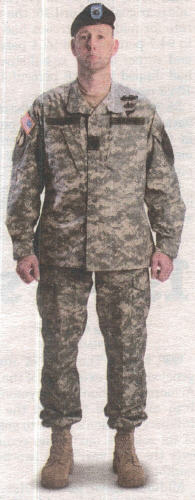
U.S. Transfers Authority for Military Security Operations in Afghanistan To: DODNEWS-L@DTIC.MIL NEWS RELEASES from the United States Department of Defense No. 1001-06 IMMEDIATE RELEASE October 05, 2006 Media Contact: (703) 697-5131/697-5132 Public/Industry(703) 428-0711 U.S. Transfers Authority for Military Security Operations in Afghanistan Today marks another important milestone in the progress of improving security and stability in Afghanistan.NATO's International Security Assistance Force assumed command of international military security operations in eastern Afghanistan from coalition forces today, effectively becoming responsible for security operations throughout the country. The transition from a US-led coalition to the NATO/ISAF-led security operation was started two years ago with transfer of responsibility for the northern part of Afghanistan to NATO.The transfer today signifies continued progress and commitment.The Afghan National Army has been integrated into Coalition combat operations, resulting in increased capability which has enabled the transfer of authority to NATO/ISAF to occur today. The United States remains committed to the future of Afghanistan and the success of this NATO operation.We will continue to lead the counter-terrorism operations in Afghanistan, train and equip the Afghan national security forces and assist with reconstruction.Our commitment to the alliance is also evident as the United States will continue to provide military troops and capability to the NATO/ISAF mission as ISAF's largest troop contributor, and we welcome further international participation. Much progress has occurred, most notably the first free national elections in Afghanistan last year, and improvements in security and reconstruction continue.Continued international support is crucial to further the progress that Coalition and NATO have made in Afghanistan during the past five years.As we work through current security challenges, the international community's increased support for reforming the Afghan police, developing a judicial system, and combating the narcotics problem is crucial for long-term success in Afghanistan. Today's events remind us of the sacrifices proud professionals from many nations have made for the people of Afghanistan and our collective security.The NATO alliance's successful record in Afghanistan speaks volumes about the future of Afghanistan.Tested militarily and diplomatically, nations have continued to answer by supporting free elections, expanding the mission, and supporting reconstruction and redevelopment in Afghanistan.Today's expansion is yet another step toward a brighter future for the people of Afghanistan. [Web Version: http://www.defenselink.mil/Releases/Release.aspx?ReleaseID=10051] -- News Releases: http://www.defenselink.mil/releases/ -- DoD News: http://www.defenselink.mil/news/dodnews.html -- Subscribe/Unsubscribe: http://www.defenselink.mil/news/dodnews.html#e-mail -- Today in DoD: http://www.defenselink.mil/today/ -- U.S. Department of Defense Official Website - http://www.defenselink.mil -- U.S. Department of Defense News About the War on Terrorism - http://www.defendamerica.mil Iraq-Bound Troops Getting New Digitized Uniforms August 9th, 2005 By Terry Boyd Stars and Stripes Mideast edition Germany-based soldiers headed for Iraq are the first in Europe to get the new digitized, permanent press Army Combat Uniform, or ACU. The new uniform replaces both battle dress uniforms, or BDUs, and desert camouflage uniforms, or DCUs, said Paul Rivera, team leader for Program Executive Officer Soldier. PEO Soldier, which is based at Fort Belvoir, Va., arms and equips soldiers. �This is the uniform for all environments � jungle, urban and desert,� Rivera said. �There will be no BDUs or DCUs. They'll all be gone,� Rivera said. �All war fighters will wear one uniform.� That will happen sooner rather than later in Europe, where soldiers with the 1st Armored Division and V Corps are getting ACUs. Units from the 1st AD, as well as V Corps troops, are scheduled to deploy to Iraq this year. Two teams are issuing the new uniforms, one at H.D. Smith Barracks in Baumholder, and one in Grafenw�hr Training Area, Rivera said. Baumholder is home to the 1st Armored Division's 2nd Brigade and Division Artillery, and V Corps units are at Grafenw�hr, one of the Army's main training areas. As of Monday afternoon, his 11-person team has issued ACUs to 4,950 soldiers at Baumholder since Aug. 1, Rivera said, averaging about 705 per day. Each soldier gets four sets of the uniform. About 7,400 soldiers in the 2nd Brigade Combat Team at Baumholder will get the uniforms, he said. New hot-weather boots are issued separately by Rapid Fielding Initiative teams. The teams distributing the uniforms will be on the move Thursday, with the Baumholder group heading to Darmstadt and the Graf group going to Hanau. The first soldiers to get the new uniforms � the first major Army uniform redesign since the early 1980s � were Fort Stewart-based troops with the 48th Infantry Brigade of the Georgia National Guard, Rivera said. The uniforms are radically different than the uniforms they replace, most distinctly their lack of black, according to Army documents. Black is omitted because it's not commonly found in nature. Instead, ACU colors are green �woodland,� gray �urban environments� and sand brown. The new uniform also has �Mandarin� collars with Velcro fasteners, as well as zippers for tops, rather than buttons. Pants have knee pouches for kneepad inserts. Bottom pockets found on DCUs are gone, replaced by pockets on the sleeves a la Special Forces uniforms so soldiers can use them while wearing body armor. The uniforms cost about $80, compared with about $30 for BDUs. Indiana City Flourishes After 'Fort Ben' Closure To: DEFENSE-PRESS-SERVICE-L@DTIC.MIL By Sgt. 1st Class Doug Sample, USA American Forces Press Service INDIANAPOLIS, June 15, 2005 - Along Post Road here, the post exchange and commissary are still in business, and the Defense Finance and Accounting Service's Building 1, though remodeled, still stands. However, those military facilities are nearly all that remains of the former Fort Benjamin Harrison, located at the northeast corner of Indianapolis in the city of Lawrence. After the post closed nearly a decade ago as a result of the 1991 base realignment and closure process, more than a million square feet of building space has been demolished. In its place has risen millions of more square feet in new business and housing. "It took us a little time to get the financing and the infrastructure together to really encourage new development," said Ehren Bingaman, executive director of the Fort Harrison Reuse Authority, the agency charged with redeveloping the post and bringing new business here. "But, boy, since that time we have all kinds of development. Most everything that's still standing is stuff that we deemed historic or that fits into the architectural character that our plan calls for," he said. So much has been torn down, the old post rarely resembles its former self. Though a few historic markers point to the post's past, most signs signal Lawrence's future, with construction signs advertising that new housing developments and retail and office space are coming soon. In all, Lawrence has invested $250 million in the 550 acres that once made up the main post area. Plans are in place for a new Lawrence government center building that will house civic organizations. And the city of the Indianapolis has expressed interest in building a library on land where the post bowling alley once stood. In fact, signs of progress are everywhere, with new businesses and housing developments at every corner. At the former post office, hot cups of latte and cappuccino are now served at the Java Junction. The big white building that once housed the Defense Information School where servicemembers received training in journalism, broadcasting, public affairs and photography is now called Ivy Tech, where high school students prepare for careers in nursing and other careers. Inside the post gym, where soldiers once played intramural sports, children and adults learn arts and crafts and take swimming classes at a state-of-the-art YMCA. Construction is finished on a 19,000-square-foot medical office building, and nine buildings sit in a new 67-acre industrial park. The American Legion has built a 65,000-foot office and warehouse facility next to a 250-unit senior citizen apartment complex. The housing boom ranges from condominiums and apartments to single-family homes. Many of the rustic brick officers' quarters on what used to be "Colonel's Row" have been remodeled, and now sell for upwards of $500,000. "One of the things the Reuse Authority has benefited from is the close proximity of Indianapolis, the 12th largest city in the United States," Bingaman said. "Land is going to be at a premium," he said. About 1,700 acres of the post once used for training was turned into a state park and golf course. "So that's a quality-of-life issue. People like to be near those natural resources, and that's been an attractor to all that's going on here," he said. That is what attracted Jerry Clifford and his wife, Mary, who bought a two-story red brick colonial. The house is nestled on a tree-lined street near what was the post parade field where Jerry once stood in formation as a young Army Reserve soldier. "One of the things that initially attracted us was the history of the place," he said. "The fact that things looked older and there were trees and places to walk, that's the type of neighborhood we came from," he said. The plan for building housing here was "well thought out," said Mary. "You look at the housing and you've got half-million-dollar homes, but you've also got moderate housing and adult communities. They've really done a nice job of making it a community that is very heterogeneous; there is diversity of cultures here. It was a very neat plan." Nevertheless, years ago many here thought there was nothing "neat" about the Pentagon's decision to close "Fort Ben," as it is fondly referred to by residents. When the post closed, some 3,300 military and 1,050 civilian positions left the city. And many here, mostly retirees who had made this area their home, feared their PX and commissary privileges would leave as well. "A lot of them were very upset," said Sharon Williams, who manages the PX. "They fought, and they fought, and they said, 'We are not going to let our privileges die.' "We have a lot of retirees who came here to retire because of PX and commissary privileges, and they fought for those privileges," she said. Williams said the both the PX and commissary were kept open, and other services, such as military clothing sales, Class VI (liquor sales) and convenience shop facilities combined into the main PX store. Although her store is not doing the business it once did, "we are making the bottom line," Williams said. "We've got loyal customers; that's why we are still standing. We're not doing the millions (in sales) anymore, but we're stable," she said. "They closed the base, but the PX and commissary survived." But some say the PX and commissary stand in the way of progress here. "We're sitting in a major spot," Williams said. "We're in the way." The Reuse Authority wants to use that land where the PX and commissary sit -- 12 acres valued at $250,000 an acre -- to build the city's new government center. Bingaman said that next year the PX and commissary will move into a new building on the site where the old post hospital sits vacant. The hospital will be demolished, and the two facilities will be combined into one store. He is hopeful construction on the new government center will begin in about three years, and join the newly built Harrison Center, a multi-million-dollar retail and restaurant facility, across the street to form the city's downtown area. He said the new downtown area will only add to the lure of the post that has attracted more than 100 new companies and civic organizations in the past four years, bringing with them thousands of jobs. And there are more jobs to come. The word here is that the Defense Department will relocate as many as 3,500 finance employees to its accounting offices in Building 1. On the main thoroughfare, Lisa Rowe manages the Java Junction coffee shop that just opened inside the old post mail station across the street. She said the influx of new jobs should more than double her business, keeping her 10 employees busy. "When we bought the business, we had no clue that many jobs were coming here," she said. "This is going to be great for business." Which is what Bishop Wellington Dotson, who opened a Primerica Financial Services branch inside the former military clothing sales warehouse located next to other remodeled offices, is hoping for. Wellington remembers his first days of business here, coming to work in the morning and seeing deer running through the parking lot. "It was that barren," he said. Now he looks at his surroundings, the brick railyard storage sheds converted into chic office spaces, and sees "opportunity," he said. "In bad times, we do good," he said with a smile. "In good times, we do great." Many here share that optimism, but it could not have happened without a good plan, said Bingaman. He remarked on the current round of BRAC closure proposals announced May 13. "We've been through what a lot of communities are going through right now," Bingaman noted. "The downside about BRAC is that there is nothing overnight about this process," he said. "It just takes time to make a lot of things happen." But with patience and a good plan, he said, the sky is the limit. "I hope that people can point to us and say, 'How did we do it?'" he said. "And I would say, 'careful planning, cooperation, some ingenuity, creativity and a willingness to take some calculated risks.' As you see, our way turned out OK." Related Sites: Base Realignment and Closure [http://www.dod.mil/brac/] Lawrence, Ind. [http://www.cityoflawrence.org/] _______________________________________________________ NOTE: View the original version of this web page on DefenseLINK, the official website of the U.S. Department of Defense, at http://www.defenselink.mil/news/Jun2005/20050615_1733.html. Individual Ready Reserve 'Key Component' of Total Military By Gerry J. Gilmore American Forces Press Service WASHINGTON, May 19, 2005 - The Individual Ready Reserve is "a key component" of America's total military force, a senior Defense Department official noted during a May 17 gathering of reserve-component leaders in Denver. Consisting of about 300,000 people, the IRR "presents a valuable pool" of trained military manpower for the nation, David S.C. Chu, undersecretary of defense for personnel and readiness, noted at the 2005 Reserve Personnel Center Commanders'/IRR Conference. IRR members have prior training and experience in active, Guard or Reserve units, but they've been discharged and are no longer serving in military units. However, they have time remaining to fulfill their eight-year total service obligations. Some IRR members have volunteered for duty in the war against global terrorism, Chu noted, while others in key military specialties have been called up for continued service. About 30,000 IRR members were called up for service during the Gulf War of 1990-91, Chu noted. Today, he said, "substantially fewer" IRR members have been called up for service in the global war against terrorism. Chu observed that the more recent IRR call-ups have generated some misunderstanding among affected servicemembers and the general public. Therefore, he noted, it's important that military leaders take the time to explain to IRR members what's expected of them in terms of possible further military service. Former IRR members serving in the war against terrorism have received high marks from commanders and are "extremely valuable assets," Chu said. Biography: David S.C. Chu [http://www.defenselink.mil/bios/chu_bio.html] _______________________________________________________ NOTE: View the original version of this web page on DefenseLINK, the official website of the U.S. Department of Defense, at http://www.defenselink.mil/news/May2005/20050519_1231.html. Commissaries Plan May Case Lot Sale The sale offers shoppers the chance to buy bulk quantities of their favorite products at savings of up to 50 percent. The exact date and time for the case lot sale will differ from location to location. For more information, visit DeCA's Web site for a complete listing of dates and times for your commissary.
Insignia: The Way You Tell Who's Who in the Military Visit the DoD "The United States Military Rank Insignia" web site at www.defenselink.mil/pubs/almanac/almanac/people/insignias/index.html By Jim Garamone American Forces Press Service WASHINGTON -- One big problem throughout military history has been identifying who's in charge. From the earliest days of warfare to the present, special rank badges meant survival. In the heat of battle, knowing who to listen to was as important as the fighting skills soldiers and sailors developed. They had to know at a glance whose shouted orders to obey. In the earliest times, rank was not an issue. "Do what Grog says" was enough so long as everyone knew Grog. As armies and navies started growing, however, that kind of intimacy wasn't possible. The badge of rank, therefore, became important. Today's Army, Marine Corps, Navy, Air Force and Coast Guard rank insignia are the result of thousands of years of tradition. Through the ages, the badges of rank have included such symbols as feathers, sashes, stripes and showy uniforms. Even carrying different weapons has signified rank. The badges of rank have been worn on hats, shoulders and around the waist and chest. The American military adapted most of its rank insignia from the British. Before the Revolutionary War, Americans drilled with militia outfits based on the British tradition. Sailors followed the example of the most successful navy of the time -- the Royal Navy. So, the Continental Army had privates, sergeants, lieutenants, captains, colonels, generals, and several now-obsolete ranks like coronet, subaltern and ensign. One thing the Army didn't have was enough money to buy uniforms. To solve this, Gen. George Washington wrote, "As the Continental Army has unfortunately no uniforms, and consequently many inconveniences must arise from not being able to distinguish the commissioned officers from the privates, it is desired that some badge of distinction be immediately provided; for instance that the field officers may have red or pink colored cockades in their hats, the captains yellow or buff, and the subalterns green." Even during the war, rank insignia evolved. In 1780, regulations prescribed two stars for major generals and one star for brigadiers worn on shoulder boards, or epaulettes. The use of most English ranks carried on even after the United States won the war. The Army and Marine Corps used comparable ranks, especially after 1840. The Navy took a different route. The rank structure and insignia continued to evolve. Second lieutenants replaced the Army's coronets, ensigns and subalterns, but they had no distinctive insignia until Congress gave them "butterbars" in 1917. Colonels received the eagle in 1832. From 1836, majors and lieutenant colonels were denoted by oak leave; captains by double silver bars -- "railroad tracks"; and first lieutenants, single silver bars. In the Navy, captain was the highest rank until Congress created flag officers in 1857 -- before then, designating someone an admiral in the republic had been deemed too royal for the United States. Until 1857, the Navy had three grades of captain roughly equivalent to the Army's brigadier general, colonel and lieutenant colonel. Adding to the confusion, all Navy ship commanders are called "captain" regardless of rank. With the onset of the Civil War, the highest grade captains became commodores and rear admirals and wore one-star and two-star epaulettes, respectively. The lowest became commanders with oak leaves while captains in the middle remained equal to Army colonels and wore eagles. At the same time, the Navy adopted a sleeve-stripe system that became so complex that when David Glasgow Farragut became the service's first full admiral in 1866, the stripes on his sleeves extended from cuff to elbow. The smaller sleeve stripes used today were introduced in 1869. Chevrons are V-shaped stripes whose use in the military go back to at least the 12th century. It was a badge of honor and used in heraldry. The British and French used chevrons -- from the French word for "roof" -- to signify length of service. Chevrons officially denoted rank in the U.S. military for the first time in 1817, when cadets at the U.S. Military Academy at West Point, N.Y., wore them on their sleeves. From West Point, chevrons spread to the Army and Marine Corps. The difference then was chevrons were worn points down until 1902, when Army and Marine Corps enlisted personnel switched to the present points up configuration. Navy and Coast Guard petty officers trace their insignia heritage to the British. Petty officers were assistants to the officers aboard ship. The title wasn't a permanent rank and the men served at the captain's pleasure. Petty officers lost their rank when the crew was paid off at the end of a voyage. In 1841, Navy petty officers received their first rank insignia -- an eagle perched on an anchor. Ratings -- job skills -- were incorporated into the insignia in 1866. In 1885, the Navy designated three classes of petty officers -- first, second and third. They added chevrons to designate the new ranks. The rank of chief petty officer was established in 1894. During World War II, the Army adopted technician grades. Technicians of a given grade earned the same pay and wore the same insignia as equivalent noncommissioned officers except for a small "T" centered under the chevrons. Technicians, despite the stripes, had no command authority over troops. This evolved into the specialist ranks, pay grades E-4 to E-7. The last vestige today survives plainly as "specialist," pay grade E-4. When there were such people as specialists 7, they wore the current eagle symbol surmounted by three curved gold bars -- often called "bird umbrellas." When the Air Force became a separate service in 1947, it kept the Army officer insignia and names, but adopted different enlisted ranks and insignia. Warrant officers went through several iterations before the services arrived at today's configuration. The Navy had warrant officers from the start -- they were specialists who saw to the care and running of the ship. The Army and Marines did not have warrants until the 20th century. Rank insignia for warrants last changed with the addition of chief warrant officer 5. The Air Force stopped appointing warrant officers in the 1950s and has none on active duty today. Other interesting rank tidbits include: � Ensigns started with the Army but ended with the Navy. The rank of Army ensign was long gone by the time the rank of Navy ensign was established in 1862. Ensigns received gold bars in 1922, some five years after equivalent Army second lieutenants received theirs. � "Lieutenant" comes from the French "lieu" meaning "place" and "tenant" meaning "holding." Literally, lieutenants are place holders. � While majors outrank lieutenants, lieutenant generals outrank major generals. This comes from British tradition: Generals were appointed for campaigns and often called "captain generals." Their assistants were, naturally, "lieutenant generals." At the same time, the chief administrative officer was the "sergeant major general." Somewhere along the way, "sergeant" was dropped. � Gold is worth more than silver, but silver outranks gold. This is because the Army decreed in 1832 that infantry colonels would wear gold eagles on an epaulette of silver and all other colonels would wear silver eagles on gold. When majors and lieutenant colonels received the leaves, this tradition could not continue. So silver leaves represented lieutenant colonels and gold, majors. The case of lieutenants is different: First lieutenants had been wearing silver bars for 80 years before second lieutenants had any bars at all. � Colonel is pronounced "kernal" because the British adopted the French spelling "colonel" but Spanish pronunciation "coronel" and then corrupted the pronunciation. � While rank insignia are important, sometimes it isn't smart to wear them. When the rifled musket made its appearance in the Civil War, sharpshooters looked for officers. Officers soon learned to take off their rank insignia as they approached the battle line. � The Air Force actually took a vote on their enlisted stripes. In 1948, then-Air Force Vice Chief of Staff Gen. Hoyt Vandenberg polled NCOs at Bolling Air Force Base in Washington and 55 percent of them chose the basic design still used today. DoD Cautions Servicemembers Against 'Loan-Shark' Lenders To: DEFENSE-PRESS-SERVICE-L@DTIC.MIL Text Attachment [ Download File | Save to Yahoo! Briefcase ] By Terri Lukach American Forces Press Service WASHINGTON, June 17, 2005 - The Defense Department has launched a new effort to educate servicemembers about the dangers of borrowing from "loan-shark" lending companies and to teach them how to avoid ending up in a spiral of compounding debt, a DoD official said here today. The most prevalent type of loan-shark lending affecting military personnel is what is known as "payday loans," said John M. Molino, deputy undersecretary of defense for military community and family policy. "A payday loan is essentially a plug -- money that gets you from today to the next payday so you can cover your bills." The problem is that money is very expensive, he said in an interview. "Typically, a payday loan of a $100 will cost the borrower $17 for two weeks. The average payday loan is about $500, so now we're talking about a fee of $85. "By itself, that's not a big problem," Molino said. "However, when you consider that it is not uncommon for that military member to roll the loan over four or five times, that $85 will grow exponentially to the point where you are paying an enormous amount of money for the relatively meager amount of the loan. "It got you through payday, but if you weren't able to pay it off, now it's two more weeks, and two more weeks, and you're paying nearly 500 percent interest annually. That's a lot of money to pay," he said. Considering that about 9 percent of all enlisted personnel and 12 percent of all mid-level non-commissioned officers use payday loans, the potential for detrimental impact on mission accomplishment is very real, Molino said. "If you're in debt, you have other things in mind. You're doing things other than concentrating on the mission; maybe you're taking on other employment. The effects are long-lasting and go deep into a person's performance; it affects unit readiness," Molino said. Part of the problem is the proximity of payday lenders to military installations. "If you look at where they position their businesses, they are right outside the gate," Molino said. A recent study of 15,000 payday lenders in more than 13,000 ZIP codes in 20 states that host military installations revealed that payday lenders open their storefronts around military installations. Molino said the department is taking steps, such as hosting fairs at military installations, to educate military members about the dangers of payday loans and familiarize them with ways to put themselves and their families on a sound financial footing. "We can make soldiers smarter," he said. "We can make them better consumers; we can teach them how to save for a rainy day, so when they need to borrow they can -- and pay themselves back, at no interest. We are also doing something about payday lenders." Molino said his office is watching them closely, looking at behaviors and patterns that are inconsistent with state law and encouraging states to pass laws that are not only friendly to servicemembers but also require honesty and discipline on the part of payday lenders. Molino cited Georgia, Florida and Oklahoma as examples of states that have taken positive action against payday lenders. Last year Georgia passed legislation that eliminated payday lending from the state, he said, while Florida and Oklahoma now require a 24-hour waiting period between payday loans, thus eliminating rollovers and multiple loans. "We believe we need to work hard to limit the impact of payday lenders, but the real answer is to help our servicemembers and their families get control of their own finances to be in charge of their future," Molino said. Biography: John M. Molino [http://www.defenselink.mil/prhome/mcfpmolino.html] _______________________________________________________ NOTE: View the original version of this web page on DefenseLINK, the official website of the U.S. Department of Defense, at http://www.defenselink.mil/news/Jun2005/20050617_1762.html. Army Recruiters Stand Down to Refocus on Values By Gerry J. Gilmore American Forces Press Service WASHINGTON, May 20, 2005 - Army recruiters are taking a pause today to refocus on values, as investigations are under way to see if some recruiters are cheating to make quotas. "We're going to have a values stand-down day to take a look at who we are as an institution and what we represent," Maj. Gen. Michael D. Rochelle, the Army's senior recruiting officer, told reporters today at the Pentagon. Rochelle noted that seven cases involving alleged recruiter improprieties at different locations across the country are now being investigated. One widely reported case involves a recruiter in Houston who allegedly threatened a potential recruit with arrest if he didn't show up for a meeting. And some recruiters in Colorado have been accused of offering advice on how to pass drug tests and falsify documents. Citing his potential role in adjudicating the cases under investigation, the general didn't talk about any case specifically. Recruiters shouldn't be taking improper "shortcuts" to bolster their numbers, Rochelle noted. This type of behavior, he asserted, is "simply not acceptable." The current recruiting environment is challenging the Army's 7,500 recruiters, Rochelle acknowledged, noting his service is now about 6,600 active-duty recruits below quota as recent data shows the propensity of young people to join the Army continues to fall. Sustained land combat operations in Afghanistan and Iraq, combined with a low unemployment rate, are driving "the most challenging conditions we have seen in recruiting" since the all-volunteer Army began in 1973, Rochelle noted. But cheating isn't the answer, the two-star general emphasized, noting that's one of the messages being delivered during today's stand-down. Rochelle said all recruiters today are required to watch an unscripted videotaped message from him as part of today's stand-down. Secondly, he said, commissioned officers and noncommissioned officers with U.S. Army Recruiting Command will reaffirm their oaths to the Army. Recruiters will also discuss why personal integrity, values and ethics are important and necessary in their work, Rochelle said. The American public "can rest assured - rest absolutely assured - that we hold every single recruiter to the highest level of adherence to those values," he said. Biography: Maj. Gen. Michael D. Rochelle, USA [http://www.usarec.army.mil/cg.html] Related Site: U.S. Army Recruiting Command [http://www.usarec.army.mil/] _______________________________________________________ NOTE: View the original version of this web page on DefenseLINK, the official website of the U.S. Department of Defense, at http://www.defenselink.mil/news/May2005/20050520_1265.html. BRAC 2005: Army Looks to Help Reshape Total Force By Jim Garamone American Forces Press Service WASHINGTON, May 18, 2005 - The U.S. Army looks on the base realignment and closure process as a chance to reshape the total force, Army Secretary Francis Harvey told the BRAC commission today. Harvey and Army Chief of Staff Gen. Peter Schoomaker spoke of how the process allows the Army to continue efforts to transform the force. Military value was at the heart of all Army BRAC recommendations, the leaders said, with the realization that soldiers will be working more and more with members of other services. "The Army has aggressively undertaken a comprehensive effort to develop a force that is more expeditionary, joint, deployable, flexible and adaptive," Francis said. The BRAC recommendations will allow the service to transform from a Cold War force to one ready to confront the threats of the 21st century, he added. Harvey said the Army worked to "streamline" the service to better meet current and future threats. It also wanted to eliminate infrastructure no longer needed. Complicating the Army decision was providing bases for thousands of soldiers and their families returning from overseas as part of the changing DoD global footprint. The service examined 97 major installations and ranked them according to the criteria in the BRAC law, the officials explained. Military value was the most important criterion, they said. Overall, the Defense Department recommends closing 15 Army installations and seven leased sites. It also recommends closing 176 Army Reserve installations and 211 Army National Guard facilities. The Guard sites can close only with the approval of state governors. The department also recommends creating seven training centers of excellence, seven joint technical and research facilities and four joint material and logistics facilities. The service looked at more than 4,000 Army Reserve and Army National Guard facilities. Harvey said state adjutants general and Army Reserve Regional Readiness commanders participated in the analyses. "The military value criteria was used to identify existing or new installations in the same demographic area that provide enhanced homeland defense, training and mobilization capabilities," Harvey said. "The Army sought to create multi-component facilities - National Guard, Army Reserve and active Army - and multi-service, joint facilities to enhance mission accomplishment." Harvey said the Army's recommendations went to Defense Secretary Donald H. Rumsfeld in broad categories. The first category realigned active duty operational forces including those returning from overseas. Second, the service worked to realign or close reserve component installations to transform command and control functions and force structure. The proposal also creates Armed Forces Reserve Centers. The third priority was to close or realign installations to consolidate headquarters and create joint installations. The fourth priority realigned installations to create joint or service training centers of excellence. The fifth priority was aimed at transforming service logistics. Finally, the service proposed realigning the Defense research, development, testing and evaluation organizations to create joint centers of excellence. Harvey stressed the BRAC is inextricably linked to the Army's push to create a "modular force" based on brigades rather than divisions. Biographies: Army Secretary Francis Harvey [http://www.defenselink.mil/bios/harvey_bio.html] Gen. Peter Schoomaker, USA [http://www.defenselink.mil/bios/schoomaker_bio.html] Related Site: Base Realignment and Closure [http://www.dod.mil/brac/] _______________________________________________________ NOTE: View the original version of this web page on DefenseLINK, the official website of the U.S. Department of Defense, at http://www.defenselink.mil/news/May2005/20050518_1212.html.
Old Soldiers... 1. Can cuss for a full ten minutes without ever repeating a word. 2. Know that "Cav" is an abnormal condition that can be cured with testosterone shots. 3. Can remember when there were real NCOs in the Army. 4. Will fight with bayonets and E-tools just to save ammo. 5. Wear Corcoran jump boots in garrison just in case they have to kick the shit out of some loudmouthed MP. 6. Have eyes in the backs of their heads. 7. Can see in the dark. 8. Would rather be a squad leader than a general. 9. Have wet dreams about leading a parachute assault on Baghdad. 10. Still don't trust the Russians. 11. Still hate the French. 12. Will take vacation time just to make a pilgrimage to see Iron Mike. 13. Know who Iron Mike is. 14. Don't give a damn about being politically correct. 15. Don't know how to be politically correct. 16. Think that "politically correct" should fall under "sodomy" in the UCMJ. 17. Love deploying to combat because there's less paperwork. 18. Can be found eating and bunking with the troops. 19. Can remember the "daily dozen." 20. Can remember running PT in boots. 21. Have enough "fruit salad" on their greens to be Mexican field marshals. 22. Have enough time in service to retire as captains. 23. Think it's cool to teach their kids how to do "SPORTS." 24. Do not fear women in the military. 25. Would actually like to date GI Jane. 26. Are convinced that "wall-to-wall counseling" really works. 27. Think that Bradley crewmen are emasculated infantrymen. 28. Know that tankers exist in order to allow the enemy to deplete its basic load of sabot ammunition. 29. Know where the "Green Ramp" is. 30. Can remember who their "Ranger Buddy" was. 31. Know that there's a difference between "giving orders" and "going through the orders process." 32. Think that "slides" involve ropes and snap links. 33. Don't like taking orders from a guy who couldn't get a DD 214. 34. Still know how to PMCS a buffer. 35. Can field strip an M1 Garand, although an M14 is an authorized substitute. 36. Believe that they do have a rendezvous with destiny. 37. Know that most of life's problems can be solved by applying the eight steady hold factors. 38. Know that the US Military was too stupid to have assassinated Kennedy. 39. Believe that "Nuts" wasn't exactly all that BG McAuliffe said to the Krauts at Bastogne. 40. Think that we should develop nuke rounds for the M203. 41. Know the true meaning of the word Hooah. 42. Want both "Cross of Iron" and "Saving Private Ryan" to be training films. 43. Don't know how to use a "stress card." 44. Idolize John Wayne. 45. Know why you should carry two field dressings on your LBE. 46. Would rather have a "mad minute" than a "VTC." 47. Shudder when they hear "Garry Owen." 48. Know that the vertical buttstroke is not a sexual position. 49. Don't believe that "AAFES" needs a "commander." 50. Don't need "leadership tabs" to know when they're in charge. 51. Can pass a PT test slobbering drunk. 52. Can remember when two boys in bed together was wrong. 53. Don't have to "do a Lewinski" to get a "one block." 54. Don't give a damn if they get a "one block." 55. Won't brief it if it's too complicated to fit on a few 3 x 5 cards. 56. Would have paid money to watch Custer getting his clock cleaned. 57. Believe troops don't really want the "Single Soldier Initiative." 58. Really don't like taking crap from those who haven't "been there." 59. Believe that "RHIP" was invented by individuals who couldn't lead their way out of a field latrine. 60. Know how to properly construct a field latrine. 61. Can set the headspace and timing on a "fifty" by touch alone. 62. Know how to do a "daisy chain." 63. Enjoy heating MREs with C4. 64. Might admire the Germans, but still realize they got their asses kicked. 65. Aren't afraid of the Chinese, who probably still don't have enough rowboats to invade Taiwan. 66. Would rather be OPFOR than MOPP4. 67. Know that the new OER system is as screwed up as the old one. 68. Think that the neutron bomb would be appropriate for the Bosnia scenario. 69. Realize that Reagan won the Gulf War. 70. Don't believe a damn thing the Iraqis say. 71. Want to be like Teddy Roosevelt. 72. Love the smell of napalm in the morning. 73. Know that "napalm" is really called "incendi-gel." 74. Don't need a GPS to find themselves. 75. Think of Army aviators as guys who wear pajamas to work. 76. Know that it really is possible to crawl inside a Kevlar when someone's shooting at you. 77. Have enough extra TA-50 in their closets to start a surplus store. 78. Would love to own their own HMMWV. 79. Believe that SMA McKinney got caught. 80. Think that MREs taste good. 81. Would like to see what kind of creature "ham and chicken loaf" comes from. 82. Realize that there were no starving people in Somalia. 83. Can remember open bay barracks. 84. Believe that "combat power on the objective" is a bunch of crap. 85. Believe that killing the enemy isn't. 86. Know that "accuracy counts," especially in combat. 87. Know the Ranger Creed by heart. 88. Still have jungle fatigues in their closets. 89. Never count on the artillery in a clutch. 90. Believe that terrorists can be taken care of for 32 cents each (the cost of a 9mm round). 91. Would love to go to sniper school. 92. Have more time on a static line than most other soldiers have in the chow line. 93. Know what a "link count" is.94. Realize that volleyball is the most important subject taught at CAS3. 95. Know that it's not real coffee if you can't stand a track jack up in it. 96. Don't need a "MCOO" to know where the enemy will come from. 97. Remember when the "men were men" and the "women were women." 98. Don't blame poor marksmanship on their M16. 99. Know that crappy leaders will always say they have crappy soldiers. DoD Offers Best Mental Health Services Ever, Top Doc Reports To: DEFENSE-PRESS-SERVICE-L@DTIC.MIL By Donna Miles American Forces Press Service WASHINGTON, May 12, 2006 - Misleading media coverage about the military's mental health services for troops deployed to or returned from Iraq loses sight of the fact that they're the best, most comprehensive ever provided, the Defense Department's top doctor said today. "There is no military in history that has done more to address the mental health concerns of servicemembers than this current Department of Defense," Dr. William Winkenwerder Jr., assistant secretary of defense for health affairs, told American Forces Press Service. Winkenwerder cited flaws in a new General Accountability Office study and said media coverage of its findings gives servicemembers the false impression that they're receiving less-than-the-best-quality mental health care services. "The level of our effort and our outreach is unprecedented," he said. "We have broken new ground." Part of that new ground -- the subject of the recent GAO study -- is a questionnaire that screens servicemembers for a variety of health issues, including indicators that they may be at risk for post-traumatic stress disorder. DoD has screened more than 1 million servicemembers through questionnaires and face-to-face interviews with medical professionals, both before, during and after their deployments to identify possible mental health problems and prevent or treat them, Winkenwerder noted. However, the GAO study found that just 23 percent of the surveyed servicemembers whose responses showed they were potentially at risk were referred to mental health providers. What it didn't record was how many of those people were referred to other sources of care or support -- primary-care doctors, group counseling sessions, chaplains and other services, Winkenwerder noted. GAO's conclusion and the media coverage of it is akin to saying that someone with a sore knee can only get proper treatment from an orthopedist, ignoring the whole spectrum of other treatment options, he said. "Any medical researcher who looked at this would absolutely refute on the basis of what we know that there is some indication that people are not getting the follow-up care that they need," he said. The report comes at a time when DoD is offering the most extensive mental health support in its history, Winkenwerder said. He cited several examples of the outreach being provided: - Placing mental health and combat -stress control teams in the combat theater to address needs that arise during deployments; - Sending three special study teams into the theater during the past three years to evaluate combat stress issues and recommend improvements in existing programs and policies to address them; - Designing and implementing numerous soldier and family support programs that identify problems early and help to prevent them; and - Introducing a new program to assess, not just mental health, but also overall health, family social and health concerns three to six months after redeployment. "The bottom line is that we have model programs, and they are working exceptionally well, and they are an example for all others to follow," he said. A visit earlier this week to Fort Lewis, Wash., confirmed that these programs are valued by the servicemembers they're designed to help. "I observed firsthand soldiers going through this program, and this process," Winkenwerder said. "It's an exemplary program." He noted that commanders and servicemembers are giving it high marks. "They themselves say that the programs are helpful and valuable," he said. "We are doing an unprecedented effort, breaking new ground (and) reaching out to people," Winkenwerder said. "And I think we have firsthand evidence that the programs are valued, that they are working, that they are having an impact from the surveys that we have done of the servicemembers themselves." Portraying the program as anything less only hurts the people it's designed to serve, he said. "It's unfortunate that this has been characterized in a way that, in my judgment, could be damaging to people's perception about the level of support that is out there now," he said. "Servicemembers and family members may read this and think we're not doing a good job. And nothing could be further from the truth." Biography: Dr. William Winkenwerder Jr. [http://www.defenselink.mil/bios/winkenwerderjr_bio.html] _______________________________________________________ NOTE: View the original version of this web page on DefenseLINK, the official website of the U.S. Department of Defense, at http://www.defenselink.mil/news/May2006/20060512_5119.html. ==================================================== Visit the Defense Department's Web site "America Supports You" at http://www.americasupportsyou.mil, that spotlights what Americans are doing in support of U.S. military men and women serving at home and abroad. ==================================================== Visit the Defense Department's Web site for the latest news and information about America's response to the war against terrorism: "Defend America" at http://www.DefendAmerica.mil. Are You a Secure Lover? Why You Choose the Mates You Do Psychologists believe that the type of dynamic we seek out with romantic partners, from the amount of intimacy to independence we need, is heavily influenced by the relationships we have as children with our parents or caregivers. Want to know what your attachment style is, why you have this style and how many other people share it? Take our test and find out! http://web.tickle.com/tests/attachment/authorize/register.jsp?url=%2Ftests%2Fattachment%2Findex.jsp\ What'll Spice Up Your Holidays? When it's time to deck the halls and gather your friends and family together, what'll make your yuletide really rock? Find out! http://web.tickle.com/tests/holidayspice/authorize/register.jsp?url=%2Ftests%2Fholidayspice%2Findex.jsp Over the past few years, the DoD has increasingly encouraged servicemembers and veterans to take advantage of the GI Bill, both during active duty as well as after transitioning out. Over 50 percent of GI Bill benefits are not used within the 10-year span of eligibility after separation. Many veterans do not realize they have likely earned college credit through their military training, coursework, and occupational specialty. These credits will reduce the amount of time it will take to complete a degree and save tuition dollars. Servicemembers and veterans who are interested in receiving credit for their service can get tips on doing so, as well as find schools that award credit for military service, at Military.com. Go to the College Credit section for more information. NEWS RELEASE from the United States Department of Defense No. 497-05 IMMEDIATE RELEASE May 19, 2005 Media Contact: (703)697-5131 Public/Industry Contact: (703)428-0711 Pentagon Channel Celebrates One-Year Anniversary The Pentagon Channel will mark the one-year anniversary of its launch by broadcasting live from the Joint Service Open House at Andrews Air Force Base on Friday, May 20, 2005. The Pentagon Channel broadcasts military news and information for and about the 2.6 million members of the U.S. Armed Forces: Active Duty, National Guard and Reserve. Broadcast 24/7, the Pentagon Channel helps ensure that U.S. Forces remain the best informed in the world. Today, more than one million service members on 201 military bases in the U.S. can watch the Pentagon Channel - and this number is increasing every day. The Pentagon Channel is also available to the 700,000 service members and their families serving in 177 countries overseas via the American Forces Radio and Television Service (AFRTS). In addition, the Pentagon Channel also offers streamed programming live at pentagonchannel.mil - as well as individual newscasts and original programs as Video On Demand. "Our focus at the Pentagon Channel is to communicate to the men and women in the military," said Allison Barber, deputy assistant secretary of defense for public affairs. "We provide what our service members want and need to their jobs better: relevant, timely, and credible military news and information." Service members who work and live on military bases can watch the Pentagon Channel on their installation's cable systems. But many live off-post - particularly National Guard members and military reservists, who comprise nearly half the potential military audience. The Pentagon Channel works to ensure their access to military news and information by encouraging carriage of the service by commercial cable and satellite systems. The Pentagon Channel now reaches more than 12 million households through this commercial distribution. The Pentagon Channel is carried nationwide by DISH Network, as well as by divisions of Time Warner Cable, Charter Communications, Cox Communications, Mediacom Communications Corporation, RCN Corporation, Armstrong Cable Services, Knology Holdings, GCI Communications, Verizon Services Corporation, and a number of smaller cable companies and public access and government channels in communities around the country. [Web Version: http://www.defenselink.mil/releases/2005/nr20050519-3222.html] Radio Messages Connect Families to Front Lines The Army & Air Force Exchange Service (AAFES) recently introduced its Patriot Family Connection program to help connect deployed military members with their loved ones back home. The new program offers family members, friends of deployed service members and AAFES associates a chance to record their greetings, words of support and thanks. Messages can be recorded 24 hours a day, free of charge, and are forwarded to American Forces Network (AFN) Radio, which is heard at locations overseas including those in Operations Enduring and Iraqi Freedom. Anyone can record a message simply by calling 1-800-713-1302 and following the prompts. For more information, log on to the AAFES Web site and click on the Patriot Family link.
Wounded Iraq Veterans Generate New 'Traumatic Injury' Legislation By Terri Lukach American Forces Press Service WASHINGTON, April 20, 2005 - Three soldiers wounded in Iraq sparked new legislation to provide low-cost �traumatic injury� insurance for members of America�s armed forces. The legislation was announced April 19 at a Capitol Hill press conference by its sponsor, Idaho Sen. Larry Craig. The three soldiers, Staff Sgts. Heath Calhoun and Ryan Kelly and Sgt. Jeremy Feldbusch, were all seriously wounded in Iraq. They each underwent extensive medical treatments and periods of recuperation that resulted in severe financial hardships for their families. All wanted to do something to help alleviate similar hardships for those wounded in the future. Craig said the soldiers visited his Senate office last week to discuss the need for this type of benefit. �It was their idea,� he said. The legislation will be offered as both an amendment to Emergency Supplemental legislation currently being debated in the Senate and a stand-alone bill. It would add a low-cost traumatic injury insurance benefit to the Servicemembers Group Life Insurance now provided to military members. In the event of traumatic injury, the benefit would provide an �immediate� lump-sum payment of $25,000 to $100,000 for certain catastrophic injuries incurred on active duty. Traumatic injuries covered will include blindness; loss of limbs, speech or hearing; paralysis; burns greater than second degree covering 30 percent of the body or face; and certain traumatic brain injuries, according to a press release from the Senate Veterans Affairs Committee. The cost of the benefit would be covered by an insurance premium of about $1 per month for each servicemember. The coverage would also be available to members of the National Guard and Reserve. Family members would not be included in the benefit. During the press conference, David S. C. Chu, undersecretary of defense for personnel and readiness, expressed the Defense Department�s support for the legislation and praised the soldiers for their efforts to make the legislation a reality. �These young men and their families have already nobly served their country in the theater of operations in the global war on terror,� Chu said. �And they serve us again by bringing forward an important effort to help ensure that the transition back to civilian life will be as smooth as it can be.� Chu said the department recognizes there is no way to anticipate every expense, every challenge severely wounded veterans will face as they recuperate. �That is why we support this legislation and hope it will go on to a successful conclusion and become the law of the land,� he said. The three soldiers responsible for the legislation were also present at the press conference to lend their support for the bill. Feldbusch, an Army Ranger, was severely wounded when a piece of shrapnel entered his brain during an intense Iraqi artillery barrage, leaving him blind in both eyes. Calhoun lost both legs in a rocket-propelled-grenade attack, and Kelly lost his right leg to a roadside bomb. �It was during my recovery process that I noticed there were some gaps in the financial coverage,� Kelly said. �It wasn�t a lack of support by DoD or the (Department of Veterans Affairs), but just a gap in the system. �I can�t stress enough the effect this will have on our brothers and sisters in the services,� he said. �The difference it will make on the family unit during covalence is tremendous. The financial stress far outweighs the physical stress.� He said a soldier learning to walk on a prosthetic leg shouldn�t be �wondering how long they can continue to make a payment on their home or how long their family can continue to visit.� Kelly urged the Senate to pass the legislation quickly. �Every day we wait,� he said, �is a day another soldier and his family will have to deal with the recovery process without this insurance.� _______________________________________________________ NOTE: View the original version of this web page on DefenseLINK, the official website of the U.S. Department of Defense, at http://www.defenselink.mil/news/Apr2005/20050420_690.html.
AFTB NetTrainer Resource Level l, Suggested Links Lesson 1.01 � The National Military Family Association is the only national organization dedicated to identifying and resolving issues of concern to military families. Visit them online at http://www.nmfa.org. Lesson 1.02 � To answer the many questions you may have about FRG�s, be sure to visit this link: http://www.armycommunityservice.org/vacs_deployment/data/modules/pbm/rendered/family_readiness_group.asp � For more information on military insignia visit the DoD Almanac online at: http://www.defenselink.mil/specials/insignias/index.html Lesson 1.03 Military Links � The FAP Family Life Development Center: http://child.cornell.edu/army/fap.html � Army RAP (Relocation Assistance Program): http://www.armycommunityservice.org/vacs_relocation/ � Child Development Services: http://www.armymwr.com/portal/family/childandyouth/ � Civilian Personnel Online: http://cpol.army.mil/ � MWR Online: http://www.armymwr.com � Youth Services Online: http://www.armymwr.com/portal/family/childandyouth/ � Army Continuing Education Services (ACES): https://www.armyeducation.army.mil/ � Army Career and Alumni Program (ACAP): http://www.acap.army.mil/ � Army Emergency Relief (AER): http://www.aerhq.org/ � Army and Air Force Mutual Aid Association (AAFMAA): http://www.aafmaa.com � Army Chaplaincy: http://www.chapnet.army.mil/ � Exceptional Family Member Program (EFMP): http://trol.redstone.army.mil/acs/virtual2/menu_efmp.html � Regional Readiness Commands: http://www.army.mil/usar � Library of Congress Online: http://www.loc.gov Civilian Links � Find the nearest local CONUS Medical center: http://www.armymedicine.army.mil/ � American Red Cross: http://www.redcross.org � Dept. of Education: http://www.ed.gov � Association of the U.S. Army: http://www.ausa.org � USO: http://www.uso.org � Veteran�s Affairs: http://www.va.gov � Dept. of Health and Human Services: http://www.os.dhhs.gov � YMCA: http://www.ymca.org � United Way: http://www.unitedway.org � Alcoholics Anonymous: http://www.alcoholics-anonymous.org � YWCA: http://www.ywca.org � Salvation Army: http://www.salvationarmy.org/ � Parents Anonymous: http://www.parentsanonymous.org Lesson 1.03a � This is a link to a site with general information on all facets of AFAP: http://www.armycommunityservice.org/vacs_afap/home.asp From this site you can also download the results of the last steering committee and check out current AFAP issues. � Association of the U.S. Army (AUSA) : http://www.ausa.org/ Lesson 1.03b � For more information on Family Readiness Groups please visit: http://www.army.mil/WellBeing/#FamilyPrograms Lesson 1.04 � http://www.defenselink.mil/specials/finances/ :DOD Dollars and Sense Guide to managing your finances. � http://www.aafes.com : AAFES home page � http://www.frugalfamilynetwork.com : Families making the most of their pay. � http://www.adtdl.army.mil/cgi-bin/atdl.dll/tc/21-7/tc21-7.htm This link is a training circular is designed for soldiers in the active component (AC) and the reserve component (RC) (which includes the Army National Guard (ARNG) and the United States Army Reserve (USAR)). It explains the Army's pay system and answers questions concerning basic financial matters. � http://www.cpol.army.mil/ :The Department of the Army Civilian Personnel Administration Home Page, Civilian Personnel On Line. This site gives you access to Army civilian employment, training and career opportunities. This site also allows you admittance to the Army civilian personnel library, Personnel Management Information and Support System (PERMISS), Position Description PD Library, and links to other civilian personnel information and sites. � http://www.onestoparmy.com/main.htm Army Housing One Stop: keeps you informed about Army Housing issues and news. � http://www.armymedicine.army.mil Visit AMEDD�s website to find the MTF nearest your family. � http://www.dtic.mil/perdiem/bah.html :View the BAH home page. � http://www.mytricare.com :The online TRICARE users guide. � http://www.dfas.mil The latest pay tables online at the Defense Finance and Accounting Service. � http://odin.aafes.com/mwr/index.asp : See year-to-date AAFES contributions to MWR based on your purchases! Lesson 1.05 � In the Reserve? Visiting the U.S. Army Reserve Command online at http://www.usarc.army.mil/ will you help understand the Army Reserve. � In the National Guard? Visit the National Guard online at http://www.eangus.org/ to get more information and help you have realistic expectations about being a Guard family member. Lesson 1.06 � Silent Warriors is dedicated to providing resources to Army families and spouses. For more information, visit: http://www.silentwarriors.net � Sarah Smiley is a syndicated columnist who writes about military life. Visit her Web site, Shore Duty, at: http://www.sarahsmiley.com Lesson 1.07 � Here is a link from the �Sgt. Moms� web site offering coping tips for soon-to-be and new spouses: http://www.sgtmoms.com/user/bkl/bkl_user_display.asp?action=display_object&ObjectID=19765 � Here is a link to Family Readiness Group information. http://www.armycommunityservice.org/vacs_deployment/data/modules/pbm/rendered/family_readiness_group.asp � Need legal advice or have some legal questions? Visit the JAG website for some help at http://www.jagcnet.army.mil/Legal Lesson 1.08 School-related Web sites � American Association of School Administrators: http://www.aasa.org � American School Counselor Associations: http://www.schoolcounselor.org � American School Directory: http://www.asd.com � Association for Supervision & Curriculum Development: http://www.ascd.org � Council of Chief State School Officers: http://www.ccsso.org � Department of Defense Education Activity: http://www.odedodea.edu � Department of Education: http://www.ed.gov � Educational Standards Internet Site: http://edstandards.org/Standards.html � Education Commission of the States: http://www.ecs.org � Homeschooling: http://www.homeschoolcentral.com � Learning First Alliance: http://www.learningfirst.org � Military Child Education Coalition: http://www.militarychild.org � Military Impacted Schools Association: http://www.esu3.org/districts/bellevue/misa/misahome.html � National Association for College Admission Counseling: http://www.nacac.com/index.html � National Association of Education of Young Children: http://www.naeyc.org � National Association of Elementary School Principals: http://www.naesp.org � National Association of Federally Impacted Schools: http://www.sso.org/nafis/ � National Association of Secondary School Principals: http://www.nassp.org � National Association of School Psychologists: http://www.nasponline.org � National Association of State Boards of Education: http://www.nasbe.org � National Association of Partners in Education: http://www.napehq.org � National Center for Education Statistics: http://nces.ed.gov � National Foundation for the Improvement of Education: http://www.nfie.org � National Military Family Association: http://www.nmfa.org � National Middle School Association: http://www.nmsa.org � National School Boards Association: http://www.nsba.org � National PTA: http://www.pta.org � Partnership for Family Involvement in Education: http://www.ed.gov/parents/academic/help/partnership.html?src=mr � The School Report: http://www.homefair.com/homefair/usr/nsrs/home.html?type=to Military Web sites � Army Family Liaison: http://www.aflo.org Serves all soldiers, civilians and families of active Army, the Guard, Reserves and Retirees. This site provides a resource library and publications online. � Army Family Team Building: http://www.aftb.org Serves all soldiers, civilians and families of active Army, the Guard, Reserves, Retirees, and Department of Army civilians. This site provides on-line family member readiness training and links to many other relevant military sites. � Dads At A Distance: http://www.daads.com Designed to help fathers who have to be away from their children. Features ways dads can maintain and strengthen the relationships they have with their children while they are away. � Famnet Crossroads: http://www.famnet.com Provides an easy one-stop process for locating a particular military installation within a state or overseas country where additional links can direct you to specific agencies within the organization. Listings are updated daily. � Military Brats Online: http://www.militarybrats.com/ Created to connect U.S. military brats with people and places that have shaped their lives. Includes links to alumni organizations and searchable databases to locate lost friends. � Military City: http://www.militarycity.com Owned and operated by the Army Times Publishing Company, with links to military newspapers online. Most of the site is free, but a special section featuring searchable databases, archives, and other high-value information is available for a modest fee. � Military Family Resource Center: http://www.mfrc-dodqol.org/ Provides information (including publications and database searches) on issues concerning the military lifestyle and quality of life. � Military Teens on the Move: http://www.dod.mil/mtom/ Provides information on a variety of topics of interest to military teens and has several components to assist teens with moving. � Overseas Brats: http://www.overseasbrats.com Information on overseas schools and upcoming regional get-togethers. This site also provides a number of overseas alumni group Web links. � Standard Installation Topic Exchange Service: http://www.dmdc.osd.mil/sites Designed for military families undergoing a Permanent Change of Station (PCS) move. This Web site provides information on military installations worldwide and addresses a variety of family concerns including housing, schools, and childcare. Other Key Web sites � Council for Exceptional Children: http://www.cec.sped.org Dedicated to improving educational outcomes for individuals with exceptionalities, students with disabilities, and/or the gifted. Includes information on appropriate governmental policies, professional standards, and national programs. � LD Online: http://www.ldonline.org Provides an interactive guide to learning disabilities for parents, teachers, and children. A comprehensive listing of resources on learning disabilities, national and state organizations and agencies, online resources, and much more. � National Association of Private Schools for Exceptional Children: http://www.napsec.com Offers a free referral service to parents and professionals who are looking for an appropriate placement for their child, or client. � National Information Center for Children and Youth with Disabilities: http://www.nichcy.org Provides information on specific disabilities and disability-related issues for families, educators and other professionals. In addition, the site maintains a list of contacts on organizations and resources at the national and state levels. Americans Need to Recognize Progress in Iraq, DoD Spokesman Says To: DEFENSE-PRESS-SERVICE-L@DTIC.MIL By Jim Garamone American Forces Press Service WASHINGTON, June 16, 2005 - Americans need to go back and evaluate the progress that has been made in Iraq, Pentagon spokesman Larry Di Rita said today. Di Rita spoke at a Pentagon news conference along with Marine Lt. Gen. James Conway, the Joint Staff operations chief. Di Rita said it is important to remember the progress that has been made. Less than a year ago, the Coalition Provisional Authority still ran Iraq. It wasn't until the end of June that the CPA turned sovereignty over to the interim Iraqi government. It wasn't until Jan. 30, 2005, that the citizens of Iraq chose their transitional government. "(Iraq) has had several major milestones of electoral actions," Di Rita said. "It'll have more going forward, and they're scheduled." The Iraqi National Assembly is writing the new constitution. That effort is set to end by Aug. 15. A vote on the document is set not later than Oct. 15. International efforts in Iraq remain strong, with around 30 countries helping in various capacities, and NATO has expanded its training mission in the nation, Di Rita said. The coalition continues rebuilding the country. "We've probably expended or at least obligated to expend, I would say, something south of $10 billion and heading further," he said. But the most notable difference is in Iraqi security forces. Earlier this week, Marine Gen. Peter Pace said that when CPA transferred sovereignty to the Iraqis, there was only one battalion that was effective. That number has risen to more than 100. Conway said around 169,000 members of the Iraqi security forces are trained and equipped, and those units continue "to grow their operational capabilities." The general said the Iraqi forces still have shortfalls - mostly in command and control and experience. "That doesn't happen overnight," Conway said. "We have a plan for growing the force. We're on track with projections of numbers. We're partnering our battalions with theirs, and our military transition teams are working with these units to enable them to operate independently." And Iraqi troops are picking up real missions and handling them well, Conway said. Iraqi brigades have taken over patrolling in large areas of the country and right in downtown Baghdad. "Iraqi troops, along with U.S. transition team members, led the operation to free Australian hostage Doug Wood," Conway said. "Further, on Tuesday, Iraqi and coalition forces captured another one of al Qaeda's key leaders in northern Iraq, the so-called emir of Mosul, Abu Talha." Conway said the Iraqi forces are "taking back their country from the insurgents." Di Rita and Conway spoke about recent polls that show a drop-off of American support for operations in Iraq. "Obviously, the public support of these kinds of operations is critical," Di Rita said. He said that Americans deployed to Iraq are showing a different side of American commitment. "The Americans who ... know the most about Iraq are our military," he said. "And in numbers we've probably not seen maybe in my lifetime, ... they're re-enlisting 200 percent of goal -- 150 percent of goal for units that have deployed to Iraq. So those individuals who are the most knowledgeable Americans of all think, 'Jeez, it's something worth doing.'" Conway said it concerns him. He told the story of a Vietnamese colonel and a U.S. Marine colonel speaking after the war in Vietnam. "The Marine said, 'We beat you every time on the battlefield.' And the Vietnamese colonel said, 'That is true, but it's also irrelevant.'" The general said the enemy realizes "that American public opinion is the center of gravity; that a democracy can't do certain things if, in fact, the citizens don't support it." He said he would like to see a reversal in the trend. "It's extremely important to the soldier and the Marine, the airman and the sailor over there to know that their country's behind them," Conway said. "We didn't start this fight. So I don't know that it's our option to simply withdraw at this point." Biographies: Larry Di Rita [http://www.defenselink.mil/bios/dirita_bio.html] Lt. Gen. James Conway, USMC [http://www.usmc.mil/genbios2.nsf/0/24f33df7bf06b3a2852568030060440a?OpenDocument&Click=] _______________________________________________________ NOTE: View the original version of this web page on DefenseLINK, the official website of the U.S. Department of Defense, at http://www.defenselink.mil/news/Jun2005/20050616_1748.html. Exchange Services' 2005 Baby Catalog Now Available To better meet the needs of thousands of new or soon-to-be military moms and dads, the Army and Air Force Exchange Service has unveiled its 2005 Baby Catalog. The catalog contains listings for name brand furniture, car seats, strollers, play yards, baby safety and health products, toys, toddler beds, gifts and even a new line of jewelry sized just for baby. The new catalog is available for free at all main stores and online at the AAFES Web site.