The
survey
and
collect
of
some
cereals,
legumes
and
earth
crops
consumed
by
5
minorities:
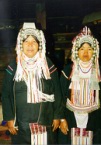
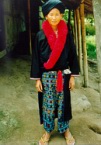
Yunanese, Akha,
Lahu,
Yao,
and
Lisu
locating
at
Doi Mae Salong Chiang
Rai
province
were
conducted.
The
study
aims
at
gethering
material
to
varieties
and
studied
on
their
morphological
characters.
Information
are
obtained
by
interview
and
collect
sample
through
each
minorities
via
interpreters.
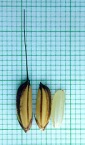
Collected
specimens
were
photographed
for
identification
correctly
to
the
species
and
varieties,
these
by
available
references,
comparison
of
specimens
through
major
herbaria,
and
rechecked
by
specialists.
The
specimens
were
deposited
at
the
Ethnobotanical
Research
section,
Faculty
of
Science,
Chiang Mai
University
and
at
Herbarium,
Queen
Sirikit
Botanic
Garden.
The
result
indicated
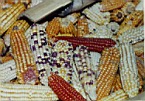
5
major
groups
of
cereals
were
consumed
by
the
minorities;
there
are
39
varieties
of
rice,
13
varieties
of
corn,
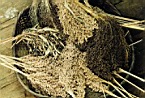
2
varieties
of
sorghum
and
1
variety
of
coix. Twelve
species
of
legumes
were
collected
i.e;
groundnut,
pigeon
pea,
sword
bean,
soybean,
lablab,
common
bean,
pea,
winged
bean,
rice
bean,
yard-long
bean,
and
cowpea.
Moreover
12
species
of
earth
crops
were
also
collected;
i.e;
taro,
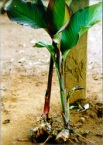
xanthosoma,
edible
canna,
sweet
potato,
dioscorea,
cassava,
arrowroot,
yam
bean
and
2
species
of
sweet
yam.
Many
species
of
these
plants
able
to
develop
to
be
major
food
and
economic
plants,
which
elephant
yam
(Amorphophallus paeoniifolius
Nicolson.
and
Arisaema
sp.)
and
some
species
have
high
potential
to
be
the
materials
for
industry
scale
such
as
sweet
sorghum
(Sorghum
bicolor cv.
group
bicolor)
for
comercial
sugar
and
starch
such
as
edible
canna (Canna edulis Ker-Gaw.)
of
which
their
starch
is
good
for
making
celophane
noodles.
Wild
varieties
of
these
plants
are
urgently
needed
to
be
conserved
before
the
valuable
indigenous
knowledge
disappear
due
to
the
present
environmental
situation
and
the
advancement
of
technology
factors.