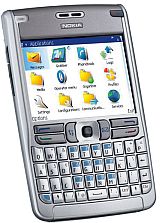
Introduction / Preview The Nokia E61 - the first of the new Nokia Eseries - are distinctively different in design and allow businesses of all sizes to mobilize their workforce. Nokia Eseries models combine attractive and easy-to-use designs that appeal to individual business users with new underlying technologies that allow IT departments to effectively manage security settings, corporate applications and data. Each of the devices is designed to accommodate must-have mobile applications needed in today's business world like mobile email and advanced voice calling functions. The Nokia Nokia E61 will be available in the first quarter of 2006 worldwide. The Nokia E61 support today's most popular and newly announced corporate mobile email solutions like BlackBerry Connect, GoodLink from Good Technology, Inc., Nokia Business Center, Seven Mobile Mail, Seven Always-On Mail and Visto Mobile. The new Nokia E61 is built on the latest edition of the Series 60 Platform, the world's leading smartphone software platform. Series 60 3rd Edition together with Symbian OS v. 9.1 provide an identical application environment for the Nokia E61. They include a variety of GSM frequencies and 3G (WCDMA) cellular network support for seamless roaming across different countries, as well as a range of local connectivity options such as WLAN, Bluetooth and Infrared and are USB 2.0 compatible. The Nokia E61 also feature superior voice functionality and quality when compared to other devices that combine PDA-like features with a mobile phone. The device support advanced voice services, such as Internet (Voice over IP) phone calls, Push to talk, and other SIP-based rich call services giving businesses a variety of ways to make it easier for employees to collaborate or respond rapidly in or out of the office. Companies deploying an Avaya or Cisco IP PBX can connect the new Nokia devices directly to their corporate phone networks, enabling functions employees have come to expect from a corporate network like four-digit dialing and assisted call answering. The new business-optimized device is the first in the industry to support remote device management based on OMA DM* giving the IT manager powerful tools to remotely control and protect corporate data on the device and configure devices via device wipe, device lock or task management, application management and customization, for example. Nokia's well established competence in network security addresses strict corporate requirements covering information stored on devices, back-office systems and transmitted over networks The Nokia E61: Built for mobile email The Nokia E61 is designed in the familiar style of today's most popular mobile email devices. Yet it is incredibly slim and packed with powerful new functionality. A cinch to use with either hand, the device has a four-way joystick and full keyboard combined with a wide 16 million color screen making mobile email easier than ever before. Supporting multiple mobile email clients like BlackBerry Connect, GoodLink, Nokia Business Center, Seven Mobile Mail, Seven Always-On Mail, and Visto Mobile, the Nokia E61 provides seamless and encrypted mobile connectivity. Full attachment handling (documents, spreadsheets, presentations, PDF viewer and ZIP manager) and an editing function (document, spreadsheet and presentation) are included. The Nokia E61 also includes the same advanced business call features and IP-based telephony functions as the Nokia E60 and Nokia E70. The Nokia E61 can send and receive emails, even when on a phone call. The Nokia E61 operates in GSM850/900/1800/1900 and WCDMA2100 networks.
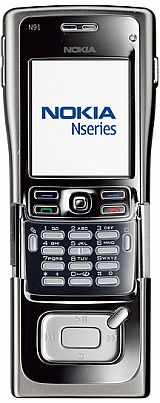
Introduction / Preview Nokia N91, a device optimised for mobile music consumption. With room for up to 3000 songs on the integrated 4-gigabyte hard disk, the Nokia N91 delivers a premier music experience. In addition, the industry standard 3.5mm stereo headset jack and easy transfer of music files from your PC help make the Nokia N91 a connected mobile jukebox. Encased in stainless steel, the Nokia N91 has dedicated music keys on its face, which slide down to reveal the phone keypad. The Nokia N91 is a part of the new Nokia Nseries range, bringing you the latest multimedia technologies and smartphone functionalities. The Nokia N91 serves up to 12.5 hours of great sound via the included stereo headset with remote control. Enjoying your music collection has never been easier, as the Nokia N91 supports a wide range of digital music formats including MP3, M4A, AAC and WMA. Nokia N91 is compatible with a number of accessories from industry leading brands Bose, Harman Kardon, JBL, and Sennheiser. In addition to using their favourite audio accessories with the Nokia N91 through its standard 3.5mm jack, consumers can maximize their audio experience by choosing products from a line-up of Nokia tested and recommended audio accessories. The Nokia N91 includes WCDMA, WLAN and Bluetooth wireless technology, and you can quickly and easily find and purchase music over the air to your device from your operator’s music store. Drag and drop your personal music collection from your PC to your Nokia N91 or synchronize your recent music purchases with your PC via USB 2.0. You can also create and manage your playlists directly on your Nokia N91, or shuffle songs around to build your optimal listening experience. A revolutionary feature of the Nokia N91 is the possibility to share your playlists with friends by multimedia message, email or Bluetooth. Proudly show off your musical taste or simply share the latest songs that have been stuck in your head. The Nokia N91 also includes a 2 megapixel camera for print-quality photos, email support, a full web browser and video sharing. The Nokia N91 is expected to become commercially available worldwide by the end of 2005.
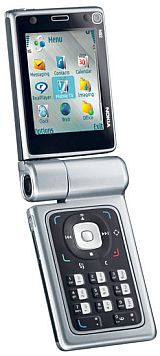
Introduction / Preview Nokia N92, the world’s first integrated DVB-H mobile device in the Nokia Nseries range for watching broadcast TV programs. The Nokia N92 offers easy access to TV programs without having to sit in front of a television set. Users can set reminders to watch their favourite TV programs, create personal channel lists and subscribe to TV channel packages. The outstanding new form factor offers a highly ergonomic user-experience. The usability is further enhanced by the large 2.8” anti-glare QVGA screen with 16 million colours and the dedicated media keys that deliver a rich viewing experience. The Nokia N92 has four different modes for simple and easy usage. The new view mode is especially designed for watching TV and video. To start watching mobile TV, users simply need to open the Nokia N92 in view mode and press the Multimedia key. The Electronic Service Guide (ESG) contains information about the available TV channels, programs and services. Other mobile TV features include watching time of up to four hours, recording and 30 seconds replay. The cellular connectivity means people can interact with the TV, through services such as voting, program feedback and additional web discovery. Further, the Nokia N92 supports the new Nokia Web Browser with Mini Map, which provides a semi-transparent zoomed-out view of a web page that enables users to quickly orient themselves on a small screen. With an overall view of the web page, users can intuitively navigate to all corners of it as well as see the web page as it was originally designed. The Nokia N92 is also an XpressMusic device, with up to 2 GB memory card support, offering storage for up to 1500 songs delivered through the built-in stereo speakers or a stereo headset. The entertainment experience is further complimented by FM radio with Visual Radio support. Additional Nseries features include 2 megapixel camera for print-quality photos and email attachment support. The Nokia N92 provides a rich range of connectivity options such as Wi-Fi, infrared, Bluetooth wireless technology as well as USB 2.0 (Mass Storage Class), which allows users to connect the Nokia N92 directly to a compatible PC for quick and convenient file transfers or downloads. The Nokia N92, which is based on S60 3rd Edition and Symbian OS, is planned to be commercially available in mid 2006 in Europe, Africa and Asia, in countries where DVB-H services are available, with an estimated, unsubsidized sales price of approximately 600 Euros (RM 2720).
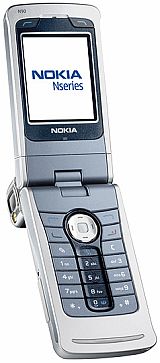
Introduction / Preview Nokia N90 multimedia, an advanced and inspirational multimedia device. Starring Carl Zeiss optics and a full set of advanced digital camera features, the Nokia N90 is targeted at high-technology enthusiasts who value the ultimate in connected mobile photography. The Nokia N90 boasts a 2 megapixel camera with autofocus and 20x digital zoom, integrated flash, macro mode for sharp close-ups, and high quality video capture with on-phone editing capabilities. Facilitated by its two screens, the Nokia N90 features two ergonomic modes for instant photo and video capture. Simply twist the unique rotating camera barrel, and automatically the 2 megapixel camera is ready to shoot high quality photos, in a snap. A dedicated capture key and the cover 128 x 128 pixels displaying 65,536 colours as a viewfinder make the snapshot experience ever more effortless. Unfold and twist the main display with 352 x 416 pixels, and the Nokia N90 is ready to shoot high quality video in MP4 format using the high-resolution 262,144 colour landscape display as a viewfinder. Dedicated record and zoom keys, including up to 8x digital zoom for video capture, provide for very convenient one-hand operation. The Nokia N90 is packed with advanced camera features that ensure high quality photos and videos every time. With autofocus, pressing the shutter key halfway automatically focuses in on the target, after which pressing the key all the way captures the image with amazing clarity. Furthermore, the macro mode feature provides for striking accuracy when taking close-ups. The Nokia XpressPrint printing solution includes a range of mobile printing options, including PictBridge, where the handset is connected directly to a compatible photo printer with a USB cable wireless printing over Bluetooth wireless technology or by extracting the Reduced Size Dual Voltage MultiMediaCard (RS-MMC) from the side of the phone and inserting it into a compatible printer. Photos and video clips taken with the Nokia N90 can conveniently be stored on the phone’s internal 31 MB memory or the 64 MB in-box RS-MMC. Users can also easily store captured content at full resolution using the Nokia PC Suite Image Store, which, when connected, automatically saves images and video clips to the PC. Images and video clips can also be instantly shared via MMS, email or by uploading them to web albums directly from the new improved rotating Gallery, which also allows on-handset editing of captured images and video clips. In addition, video clips can easily be trimmed further on the PC with the in-box Adobe Mobile Video Editor software. The Nokia N90 capitalizes on the convergence of imaging, smartphone features and 3G. 3G-enabled features, such as two-way video calling, video sharing and push email. This is complemented by an organizer, video streaming, Internet browser and add-on software. Based on the leading Series 60 Platform, the Nokia N90 is a tri-band phone for GSM 900/1800/1900, EDGE and WCDMA networks, and is expected to be available in the second quarter of 2005.
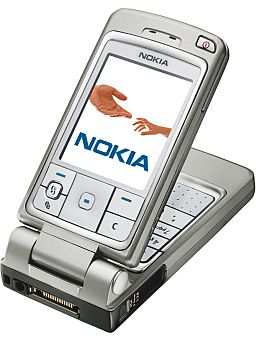
Introduction / Preview Review by David Keppler (Guest Contributor) The last review system I had was a HP Ipaq, which turned up in a box the size of a small car, so it was quite refreshing to see the Nokia arrive in a box not much bigger than a couple of paperbacks. Once unpacked, the most obvious thing you notice is that, for the first time, Nokia have gone for a flip style phone, but true to its quirky design roots, the 6260 has a few tricks up its sleeve. The lid not only flips, but with a quick twist, it swivels round and folds back on itself, to form a mini tablet. This is nothing new in PDAs and Laptops, Sony have been doing it on high end Clies for years, but it¡¯s the first time I have seen it on a phone. You can also stop the swivel halfway, and with the camera lens being on the side, the 6260 can be used like one of those mini video cameras with a flip out screen. Closed, the phone is almost exactly the same size as an Ericsson T68, so it fits easily into a pocket, and doesn't make too much of an unsightly bulge. Opened, the flip is dominated by the bright 65k screen, which is the standard 176*208 pixels. Just under the screen, still on the flip are the standard soft buttons, the Menu and Edit keys and the navigation D-Pad. The base is taken up by the normal phone keypad and a large area that looks for all the world like the sort of wrist rest you see on a laptop. With all that spare space, its a shame the keys weren¡¯t made a bit bigger, but it does give you a button free area to hold when in the camcorder mode. On one side of the base is the camera lens, and the other has the call volume controls and a dedicated shutter button. Along the top is a standard Nokia Charger socket and the hands free plug. Under the battery cover on the back we find another first for Nokia, the reduced size memory card is hot swap-able, no more removing the battery to change cards. The phone is supplied with a 32mb memory card, and although Nokia only specify up to 128mb cards can be used, it swallowed my 512mb card and worked perfectly. The SIM card slides neatly under the memory card, but you do have to remove the battery to change this. On the subject of the battery, Nokia have excelled themselves here, unlike any other Series 60 phone, this one switches off the screen when the flip is shut which means that the battery life is much better than, say, a 6600. In the three weeks I have had the phone I have got up to five days use before needing to charge it! Obviously this rather depends on what you are doing, but even for reasonably heavy use, charging every three days is quite feasible. When you do need to charge it, any standard Nokia charger will work and only takes about an hour from almost flat. In common with other Series 60 phones, the 6260 has only 6mb of memory built in, which, initially looks to be a bit sparse, but Symbian applications tend to be very small, and as long as you have a memory card to install extra applications and data such as multimedia files onto, it's not a problem. Everything can be installed to a card, Ring tones, MP3 files, Video files, Images and Applications, so the internal memory can really be left well alone. The phone is running the latest version 2 of Series 60, and looks almost identical to every other Series 60 phone I have used. There are obviously some differences internally though, as some third party software doesn't seem to work, most notably Active Desk and Active Today, which interfere with the call terminate and screen switch off when the flip is closed. Also I have heard of some camera or call related applications misbehaving or not even starting. My advice would be to check before investing in any add-on applications that they are compatible. Most authors are working on updates though, so this shouldn't be a problem for long. According to TaskSpy, a neat free app that gives all sorts of details about what¡¯s going on on the phone, the 6260 uses a ARM 1040 processor running at 123MHz. Whatever, it is plenty fast enough, there is never any lag in opening applications, searching contacts is instantaneous and even rendering web pages is pretty nippy. Note that the web browser is Nokia¡¯s own, and not Opera as on the 6600. As far as video playback performance goes, the PC based conversion software does a good job, I was able to playback some recorded TV shows without any dropped frames, and the file size for an hour long show, shrunk from 577mb to a much more manageable 22mb on the phone. A few more details for you, the phone has Bluetooth 1.1, IR, a VGA camera that supports up to 30 seconds of video, an FM stereo radio and MP3 and video playback (sadly not stereo!) using the Real Player Client. It comes with all the standard Series 60 applications, plus PowerPoint and Word viewers and a VPN client built in. The viewers are especially useful as it allows any documents sent via e-Mail to be opened for viewing, fire up Quickword or Quickpoint and any e-mail attachments show up in its browse list for reading. If you have a Bluetooth equipped projector you can even run a full scale presentation from the phone, or just check over changes someone has made to a slideshow. There are also a few network dependant utilities such as Presence, Chat, Push to Talk and Positioning which I have not been able to try out. A copy of Nokia¡¯s latest PC Suite is included in the box, which has improved beyond all recognition from the last time I used it. Now it¡¯s a very slick application that controls everything from syncing PIM information with Outlook or Lotus Notes, to converting Multimedia files. It connects over Bluetooth, Infrared or cable and makes managing the data on your phone a very simple affair. All my contacts and Diary entries came over from Outlook without any problems, and even notes in Outlook were copied across, something Microsoft can't do on their Smartphone yet. The only glaring omission is that your Inbox can¡¯t be synchronised, something I have found useful on Windows Mobile devices via Activesync. In day-to-day use the phone is as good as you would expect any Nokia to be, placing and receiving a call is simple, Bluetooth headsets work well, supporting voice dialling, and even playback of MP3s through the headset, though I can¡¯t think why you would want to, as the quality is pretty bad. Another good point is that signal reception is far better than my XDA II or MPX200. Call volume is very loud at maximum and the speakerphone works well. Battery life, as I have said before is very good, and the PDA and multimedia functions of the phone work really well, navigating your calendar or to-do list is quick and intuitive and always having a FM radio and camera available is quite handy. With the installation of Quick office and using my Stowaway Bluetooth keyboard, I can see this as direct replacement for my XDA II. Nokia make a big fuss in their promotional literature about the flip and swivel form factor, and with good reason. At first I thought it was a bit of a gimmick but the more I use it the more convinced I am that it¡¯s a good idea. Fold the screen to its tablet mode and reading e-books or web pages becomes much easier, you can carry it in your pocket like this, and a quick glance shows you the phone status, tilt it up slightly and you can sit it on a desk to watch a video or, using the Bluetooth keyboard, enter lots of data. Swivel it into camcorder mode and you can take self-portraits or use it as a camera. Then spin the lid round and close the flip to protect the screen. All it really does is give the device a little bit more versatility, but I can't see any downside, so why not? Going back to the camera, whilst only being VGA quality, it does produce some good results, at least as good as the competition, and has a 2x digital zoom in both still and video mode. It won¡¯t replace your stand-alone camera, but for quick snaps it¡¯s more than adequate. Over the past three weeks I have used this as my main phone and PDA and it has performed faultlessly, I have used it to play music and video, read e-Books, surf the Web and catch up on RSS feeds. It has managed my schedule, organised my tasks and allowed me to keep up to date with the news on the radio. I have taken pictures, and videos, kept my expenses up to date and checked some documentation in Word files that were e-mailed to me. I have also written this review on it using the Bluetooth keyboard. In short it has done everything my XDA can do and more, but in a much smaller package. Is it better than any other Smartphone out there? Well it¡¯s certainly the best Series 60 phone I have used, and, although it pains me to say it, it's far better than the MPX200 (not as stylish though). The Calendar and To-Do applications are streets ahead of Microsoft¡¯s offerings, and the inclusion of viewers for Word and PowerPoint caters for business users straight out of the box. I haven¡¯t tried the new Motorola or the SPV's yet, but from what I have read there doesn't seem to be anything there to worry the 6260. It can also hold its own as a multimedia device and a stand-alone PDA. The breadth of applications available for Series 60 means there is unlikely to be anything this phone can't do in the near future and gets my full recommendations as the best available at the moment.
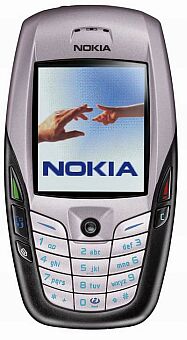
Introduction / Preview Nokia 6600: The new camera phone features advanced enterprise functionality plus a large color screen, digital zoom and video recorder. A sophisticated imaging device which strikes an ideal balance between advanced business features and a stylish, compact form. Packed with compelling features, this tri-band (GSM 900/1800/1900) phone meets the ongoing demands of the multitasking, mobile workforce with personal information management (PIM) applications, secure email access, seamless file downloads, and access to richer mobile content via the XHTML browser. With the latest features in mobile imaging, the Nokia 6600 has an integrated VGA camera for video recording and still image capture with 2x digital zoom, as well as a large 65,536 color display with an enhanced graphical user-interface. Users can create, send and receive multi-picture multimedia messages with Synchronized Multimedia Integration Language (SMIL) technology*, which allows users to compose messages that display text, sound and images in a pre-determined order. The Nokia 6600 also makes it possible to capture, send and receive video clips with audio, as well as receive streaming video content in both RealVideo and 3GPP video streaming formats. A convenient media gallery application makes access to and organization of multimedia content easy. For users requiring reliable data connections, the Nokia 6600 offers both HSCSD and GPRS support in addition to local Bluetooth and infrared connectivity. Integrated TCP/IP technology** enhances both the ease and speed of over-the-air file downloads. Enterprise users can access email and other corporate servers through the public Internet with increased over the air security via SSL and the mobile VPN (Virtual Private Network) client, available for corporate customers. For fast access to mobile services and information, the advanced XHTML browser can be activated with a single click. The wallet application makes online payments and the storage of encrypted personal information easy, reliable and convenient. Users can shape their mobile environment by adding applications compatible with either the Symbian 7.0s operating system or applications based on the latest Java(TM) technology, MIDP 2.0. Applications can be stored either in the phone's 6MB internal memory or on the 32MB MMC card included in the sales package. The new Nokia phone is based on the Series 60 Platform, the world's leading terminal software for smart phones. Though a powerful business tool, the Nokia 6600 creates a new form of mobile personalization with user-able themes. They allow users to renew the look and feel of the user interface from colors to graphics and wallpapers. Polyphonic ring tones and music-like True Tones complement the customizable user interface. Optional enhancements available for the Nokia 6600 include the new Nokia Wireless Clip-on Headset, Nokia Wireless Car Kit, Nokia Image Viewer and Nokia Digital Pen all using Bluetooth technology. Key Features Triband (GSM 900/1800/1900) 65K colour TFT screen (176x208 pixels) Integrated camera with 640x480 resolution and 2x digital zoom Symbian 7.0s Operating System GPRS and MMS functionality with XHTML browser SSL and VPN (Virtual Private Networking) Nokia Mobile Wallet 2.0 Bluetooth and Infra-red Java MIDP 2.0 Technology Polyphonic ringtones 6MB internal memory and 32MB MMC card Polyphonic ringtones 5-way joystick navigation Personalize your phone with able themes Photo phonebook Build-in handsfree POP3/SMTP email client
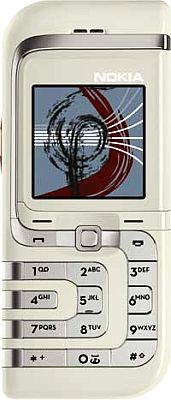
Triband phone Camera: VGA (640 x 480pixels) Display: 65,000 colours, 128 x 128pixels Messaging: MMS and SMS Connectivity: Infrared, GPRS, EDGE Phone memory: 1MB Expansion slot: None. Battery type: Lithium ion 760mAh Standby/talk time: 350/ three hours Other features: Integrated image editor Weight: 92g Dimensions (w x d x h): 105 x 45 x18mm Price: RM1,299 Website: www.nokia.com Review unit courtesy of Nokia (M) Sdn Bhd, 1-300-88-1600 NOKIA cellphones have become fashion accessories, so much so that functionality is often sacrificed to (supposedly) improve aesthetics. Last year’s 7600 is a prime example of a funky phone that was quite a chore to use. (For those who do not know the model, it’s the one with the keypad spread around both sides of the screen). Fast forward to 2005: Nokia still makes fancy phones, so I was curious to see if the 7260 would actually be user-friendly. The 7260 is the most basic and plain-looking of Nokia’s recently-launched “fashion phone” line, which includes the clamshell 7270 and the lipstick container-like 7280 (see In.Tech, Jan 4). The 7260 has two rounded corners and two sharp corners – a form factor we’ve seen in the 7610 – but its most distinguishing feature has to be the metal pieces covering the keypad. As you can see from the accompanying picture (top right), the keys are all part of some fancy shape – you’ll know the 7260 is a fashion phone just by looking at it. This Nokia may be fancy, but as far as the positioning of the screen and keypad is concerned, the Finnish company’s designers decided to let the 7260 look and feel like any candybar phone. That means all the keys and accessories are where you expect them to be. It may look strange, but I like the brick-like dimensions of the phone – yes, I’m one of those who like their phones amply-proportioned so I can type my messages with ease. The VGA camera is positioned behind the phone, while the power button is right above the screen. As far as the overall physical appearance is concerned, I’d give the 7260 a B+, since it looks funky and the dimensions are nice and comfortable. Moving on to actual use of the 7260, I have to say that the keys are less responsive than some of the other phones I’ve tried. While their size is sufficiently large for my man-sized fingers, I had to get used to pressing a little harder than usual. (It’s a “Manly-Man” test for your man-sized fingers, my man. – ED). The toggle takes a little getting used to as well. I found that it helps if you’re forceful when using it, since it’s not as responsive as other phones’ toggles. For comparison’s sake, Sony Ericsson phones have flawless toggles – gentle movements are sufficient. Still, I got used to the 7260’s keypad and toggle after several days of use. The interface is identical to that in older Nokia phones. The main menu options include Messages, Call Register (this is where you check for missed calls and calls made), Contacts, Settings, Gallery, Media, Organiser and Applications. All its features are pretty similar to those in older and current Nokias, so I’ll just comment on the more distinguishing features (and the occasional shortcoming). Being a fashion phone, the 7260 is not exactly chockfull of high-end features. The connectivity is limited to infrared (no Bluetooth), while the camera is a VGA one (that means the camera resolution is 640 by 480pixels), which puts the Nokia in the midrange. Its basic features should please most intermediate users, as the phonebook stores up to 1,000 contacts, and you can assign an image to each contact (limited to 100 images) – standard stuff that. You can also shoot pictures, although the images are only so-so, IMHO. I like the bundled ringtones on the 7260 though – at least, there are more “normal” sounding ones, and fewer of the cheesy tunes that South Korean phonemakers love (and that we In.Tech-ers love to make fun of). Games bundled with the 7260 are Backgammon and Glamour Pinball – the latter is cool but a bit annoying to play since the screen zooms in to a smaller section of the pinball, and my head was spinning halfway through the game. The 65,000-colour screen is quite nice, IMHO, and enhancing the user experience are the fancy wallpaper schemes available. There’s one for everybody, so even the most conservative of you will definitely be pleased with the selection. The build of the 7260 impressed me, as it was hardly scuffed by the time I returned the phone to Nokia. Plenty of phones today tend to “chip off” after several weeks of use. Yes, I’m a serial phone abuser (by virtue of constantly having too many keys and coins in my pockets), but the 7260 survived all that. And as for the battery life, the 7260 did moderately okay – a full charge lasted 48 to 72 hours, with fewer than 10 calls and 15 to 20 messages sent out daily. It’s quite far off Nokia’s 350-hour standby claim, but this is a review unit (which would have been used for quite awhile by the time we got our hands on it). The price, at RM1,299, is a bit steep for the average bundle of features, but I’d wager that fashion fanatics will be willing to go the extra mile (and cough up a little more cash
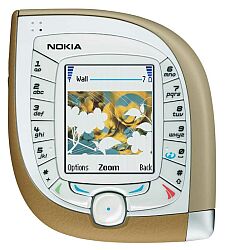
Introduction / Preview Nokia 7600 phone combining 3G capability with the latest mobile imaging features in a futuristic exterior. Taking Nokia design to a new level, the device incorporates a 65,000 color screen as the heart and soul of its front face. The Nokia 7600 enables people to capture pictures and videos, send and receive multimedia messages* and mobile email and listen to music. With this phone, people can also take advantage of the increased speed of the next generation of mobile networks by watching good quality live video content directly from their handsets. Weighing a mere 123 grams and measuring 87mm x 78 mm x 18.6 mm, the Nokia 7600 is one of the lightest and smallest GSM/WCDMA phones in the world. Operating in GSM900/1800 as well as WCDMA (Wideband Code Division Multiple Access) networks, the Nokia 7600 is expected to be available in volume in Europe, Africa, Middle East and Asia-Pacific in fourth quarter of 2003. WCDMA is a third-generation mobile wireless technology offering much higher data speeds and better quality of service to mobile and portable wireless devices than current mobile networks. Enhancing the exclusive design of the Nokia 7600 The Nokia 7600 phone opens a new door to the world of multimedia communications. People can view pictures taken with its VGA camera on an illuminated display with over 65,000 colors, as well as capture video clips, with audio, of up to 2,5 minutes each. In a WCDMA network, it is possible to send and receive video clips and pictures even during a phone call. The device also allows people to enjoy high-quality audiovisual content, such as real-time music videos or television news, as they are downloaded via the mobile Internet. The integrated MP3/AAC music player can play up to 50 minutes of near CD-quality music saved on the internal memory of the device. Music and other content can be downloaded using mobile services while on the move or locally from a compatible PC via infrared, Bluetooth or USB connection. With the XHTML browser, users can browse graphically rich mobile services. Other features of the phone include polyphonic ring tones, support for Java applications and a data connection speed of up to 384 kilobits per second in WCDMA networks. The phone has talk time of up to 4 hours in GSM networks and up to 2,9 hours in WCDMA, and stand-by time is up to 12,5 days in both networks. Key Features Digital camera & video recorder TFT, 65K color graphic WCDMA/GSM 900/1800 Dual Mode MMS Music player for MP3 and AAC files XHTML browser Multimedia Player Gallery - multimedia file storage Infrared Bluetooth wireless technology USB with Pop-Port™ WAP 2.0 over GPRS data in both GSM and WCDMA mode JAVA MIDP 29 MB dynamic memory for contacts, video clips, images, tones, messages, music files Music files as ring tones Xpress-on™ Sleeves with new mater
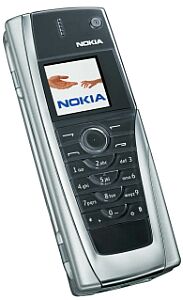
Introduction / Preview BY CHARLES F. MOREIRA Triband smartphone Camera: 0.3-megapixels (640 x 480pixel image size) Display (internal): 65,536 colours (640 x 200pixels) Screen (external): 65,536 colours (128 x 128pixels) Messaging: E-mail (SMTP, IMAP and POP3), MMS (multimedia messaging service), SMS (short message service), fax Connectivity: WiFi (802.11b, 2.4GHz), EDGE (Enhanced Data rate for GSM Evolution), GPRS (General Packet Radio Service), HSCSD (High Speed Circuit Switched Data), GSM (Global System for Mobile communications), CSD (Circuit-Switched Data), USB 2.0, Bluetooth, infrared, IPv4 (Internet Protocol version 4) and IPv6 dual-stack support Phone memory: 80MB Expansion slot: MultiMedia Card (MMC) Battery type: 1,300mAh lithium-ion Standby/talk time: 300/10 hours Operating system: Symbian OS v7.0s (Series 80 version 2.0 user interface) Other features: Opera 6.0 web browser, document, spreadsheet and presentation editor and viewer, SyncML device management, Java MIDP 2.0 Weight: 222g Dimensions (w x d x h): 57 x 24 x 148mm Price: RM3,988 Website: www.nokia-asia.com Review unit courtesy of Nokia Malaysia Sdn Bhd, 1-300-88-1600 THE Nokia Communicator has come a long way since the company first unveiled the 9000 Communicator at CeBIT in Hanover, Germany, in 1996. The latest Communicator – the 9500 – launched locally in December last year, boasts a 150MHz Texas Instruments OMAP Arm-9 dual-core RISC processor plus many new features (see specs box for list) over its predecessor, the Symbian OS 6.0-based 9210i Communicator. I took the 9500 with me on trips to Penang, Ipoh and Singapore while I was reviewing it. The smartphone gave me the exhilarating freedom to surf my favourite websites and to send and receive e-mail anywhere, anytime over EDGE, GPRS or WiFi networks
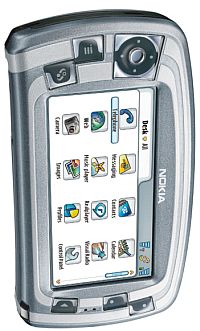
Introduction This is a review of the Nokia 7710 and is based on a retail unit as sold by Nokia Asia (manufactured in 2004). The system information for this unit indicates that the firmware version is 02.08.1, dated 08-12-04, and the unit type is RM-12.