Sridhar's
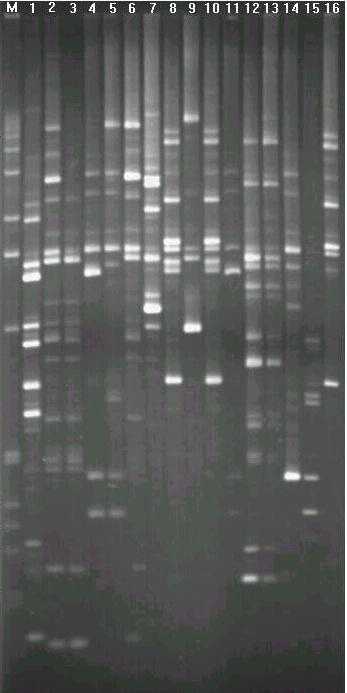 << Finger
prints of bacterial blight pathogen isolates generated
with IS 1112-based primers (JEL1/JEL2)
<< Finger
prints of bacterial blight pathogen isolates generated
with IS 1112-based primers (JEL1/JEL2)Usefulness of some of the major blast resistance genes and two-gene combinations in target areas covering five eastern states became known through a mini-network program organized under this program which involved ICAR institutes/SAU's research stations/NGO organizations.
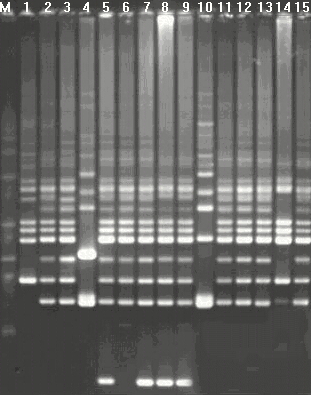
Finger prints of blast pathogen isolates generated with Pot2-based primers (Pot2-1/Pot2-2). >>
Parental survey for the selected bacterial blight and blast resistance genes was undertaken with a set of popular rice varieties for facilitating their use in the maker-assisted breeding.
Breeding materials were generated with the recurrent parents, Swarna popular in rainfed lowlands and IR 64 in irrigated lands but susceptible to bacterial blight for developing two/three gene pyramids (xa5, xa13 and Xa21) and with Vandana and Kalinga III popular in rainfed uplands but susceptible to blast for pyramiding two genes, Pi-2(t) and Pi-9(t).
New rice genetic material developed in rice biotechnology programme at CRRI
Finally, 50 lines in the background of IR 64 and 45 lines in the background of Swarna were selected employing
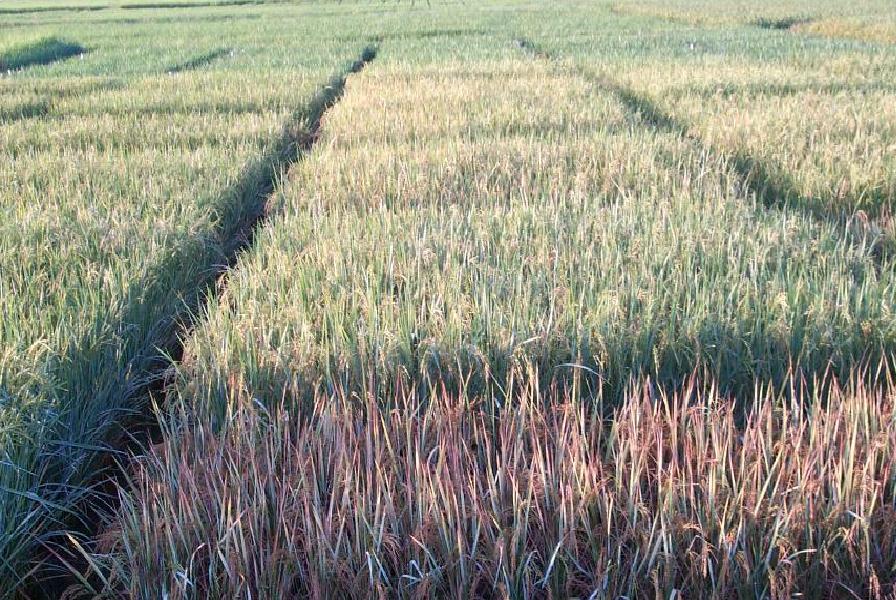 << IR 64
lines in field trial at CRRI (2002 WS).
<< IR 64
lines in field trial at CRRI (2002 WS).marker-assisted selection. These lines carry the genes of interest either singly or in different combinations. The IR 64 lines (BC4F6 in 2002 WS) were field evaluated for their resistance to the disease under both natural infection in trap nursery
Swarna lines in field trial at CRRI (2002 WS). >>
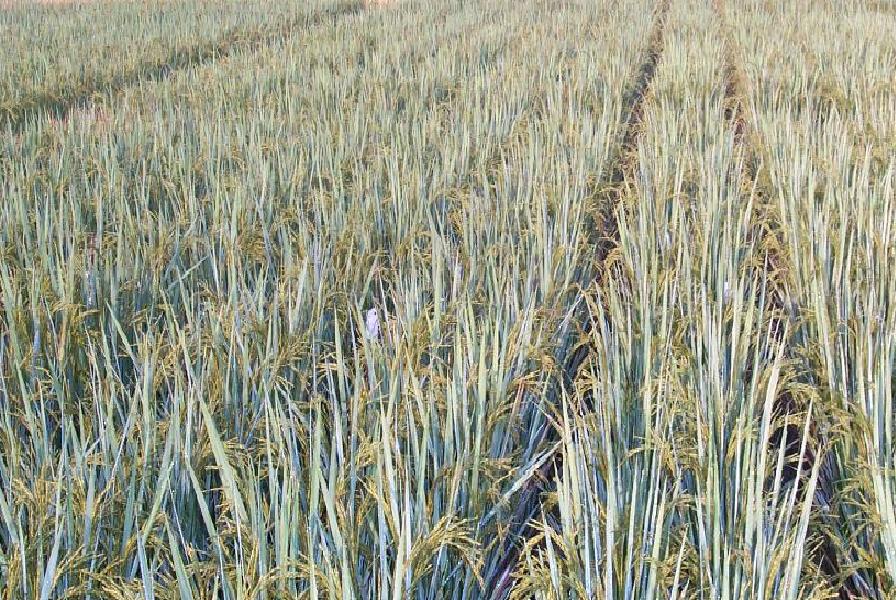
and under artificial inoculation with six pathotypes, and for yield under field conditions. Most of the gene combinations in the background of IR 64 expressed their resistance to all the six pathotypes used in this study. Currently (2003 WS), the entire set of IR 64 lines is being subjected to multilocation trial for assessing their reaction to bacterial leaf blight in collaboration with the Directorate of Rice Research, Hyderabad. The Swarna lines (BC4F4 in 2002 WS) are under field evaluation at the Central Rice Research Institute, Cuttack.