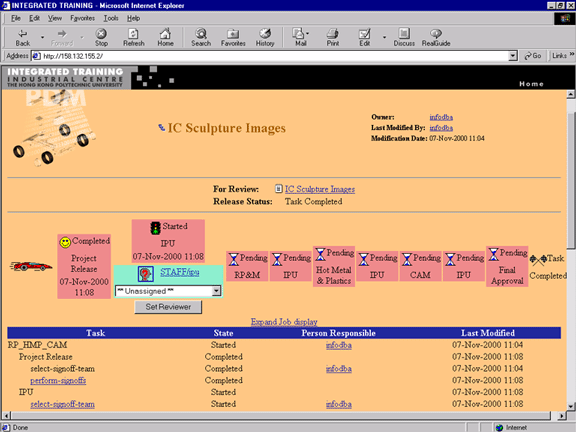
With Workflow and Process Management, a PDM system can interact with people, working according to predefined engineering releasing procedures. The benefits of doing this are:
In PDM systems, workflow can be represented in a graphical way. See here for an example of engineering release procedure.
| Draft | When data is created, it is in the ‘draft’ status. The owner of the data should be able to editing and updating. Senior member should not necessary have full access options to data with ‘draft’ status, but viewing may be allowed. |
| Check | When data is submitted for checking, the status flag is changed to ‘check’. Even the access of the owner should be reduced to ‘read-only’. |
| Approve | The data will proceed to a stage where approval is granted for its general use. It is to be approved by one or more persons with appropriate authority. This is called as the voting procedure. if approved, the status is promoted to ‘release’. On the other hand, if rejected, then the status is revert to 'draft'. |
| Release | Once in this stage, the status of the data is changed to 'released'. The data is frozen (i.e. read-only) and should remain protected unless a engineering change is required. |
Engineering documents usually undergo a series of status changes as they proceed through different departments in an organization. Since PDM systems have to replicate the way these documents operate, Document status flags are used as a tool to mark these status changes. With the status changed, the access control may also change accordingly.