Animal Hide and Seek
1
Do you enjoy going to the zoo and watching the animals? If you do, you would probably also enjoy watching animals in the wild, where they naturally live. To see wild animals close up, all you have to do is ask an adult to take you to an area where animals live at a time when they are active, and then disguise your presence so they will not know you are there.
2
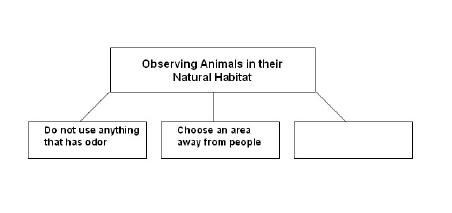
Animals live almost everywhere, even in your own neighborhood. You could choose to go to a vacant field near your own home and see animals such as birds and squirrels, and maybe even a possum or a raccoon. You will see more animals, however, if you go away from towns and cities and into areas where there are few people. That is because wild animals usually avoid people.
3
Try to go to your watching place at a time when animals are most active. Most animals are active in the morning and around sunset. They feed and move around during the first two hours and the last two hours of daylight. That is a good time to watch them, not only because they are moving but also because you can see them clearly. The light is good for taking photographs of them.
4
But if you want a bit more of an adventure, go animal-watching at night. Nocturnal animals are active after darkness falls. While it may be harder for you to see animals at night, it is also harder for them to see you, so they are more likely to come close to you. To make seeing them easier, you can use a spotlight with a red filter. Night animals do not see red light easily, but the light will help you see them.
5
Lastly, do everything you can to keep the animals from knowing you are around. Most animals have keen senses of hearing, sight, and smell. Find a spot, settle down and do not move very much so you will not be noticeable and the animals will not be warned of your presence by the sounds of your movement. Wear clothing that is green or brown, to blend in with the trees and grasses around you and make you harder to see. And even though you may not think you have an odor, to an animal, you do! Mask your scent. Do not use perfume or lotions that have an odor prior to going out into the wild. Get downwind of the animal - that means you should sit with the wind or breeze blowing in your face, so your scent is not carried by the wind to the animal you want to watch.
6
If you choose your place and time carefully, and do what you can to keep the animals from detecting you, there is a good chance you will spot some wildlife. Keep a journal of the animals you identify, and see how many different kinds you can discover.
Calling the Wild
1
Think for a moment about times someone has called to you. Maybe someone called to you to come home and eat dinner. Maybe a friend called out your name on the playground to get your attention and ask you to come over.
2
You can call wild animals in the same way. Often, animals avoid people. They will not come near you if they are aware of your presence. But if you are not conspicuous, and if you call to animals in a way they are listening for, they will come.
3
Try it! Ask an adult to take you out into the country, away from areas where there are people. Take your equipment with you. If you want to call deer, you can get a bleat, which is a kind of whistle that makes a sound like deer make. If the deer is within earshot, it will hear the sound and probably come to see if another deer is around.
4
If you want to rouse a turkey, learn to imitate the sound of a crow, an owl or a coyote. Turkeys often respond with a gobble when they hear the sound of a crow, owl or coyote. Their gobble will tell you where to look for them.
5
If you want to attract and animal that hunts, make the sound of its prey. Hunters such as
coyotes, raccoons, hawks and eagles often come to the sound of a rabbit. You say you cannot make the sound of a rabbit? No problem! There are cassette tapes made just for that purpose. Just take your tape player and the rabbit-sound cassette into the wild, start it, and wait to see what comes.
6
Or, go natural. Learn to mimic the sounds that birds make, and then use that call to get their attention. There are all kinds of ways to immitate animals' sounds and make creatures come near you as they answer your calls of the wild.