|
Girls' Day, known as Hina
Matsuri (literally, "Princess Doll") in Japan, occurs on March 3rd
(third month, third day). It is centred in Okinawa, and can be traced back
to the Heian Period* over a thousand years ago. During this festival, parents
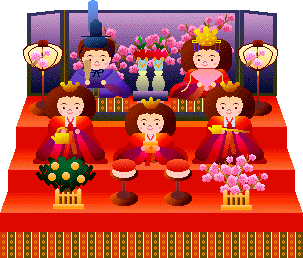
erect a step display covered in red carpet and set with little dolls representing
the Emperor and his court. The Emperor and Empress sit on the highest step,
followed by their nobles in decending order on the descending steps, ending
with guards and servants. Poor families may only have one step (the one
with the Emperor and Empress), but the very elaborate ones may display
minature furniture, plants, and dolls of their daughters. Parents set out
the step display to bring good fortune, health and life to their daughters.
Please follow the links to learn more about Girls' Day and the Doll Festival: Hina Matsuri (Doll Festival): a very good picture of a large step display 2Camels.com: a short, easy-to-read description of the festival for travel research Japanese Childrens' Festivals by Yuko: A page with short descriptions of all the childrens' festivals in Japan. Check out Yuko's other links to read more on other Japanese festivals *Japan traditionally marks their years by eras, or "periods". Even today on their coinage the year is written as the current year number in the current era (i.e. "Heisei 15" meaning 15th year of the Heisei era, or 2003). Eras are changed after the end of a dynasty (when the Emperors change). Since it's against Japan's constituition to mix religous matters with matters of state, their government uses this system, called "Gengo", on all their documents, since the Gregorian calendar we use is based off the birth of Jesus Christ and is therefore religious. Commonly, though, both systems are used on a day-to-day basis. To find out more about this, go here. |
 A
short note on Girl's Day...
A
short note on Girl's Day...