Permaculture Samples
These photos were taken at the Permaculture Institute of Northern California unless otherwise noted. Since Permaculture is a design process, it can't really be captured in a picture. However, these pictures illustrate some of the elements you might find in a permaculture.
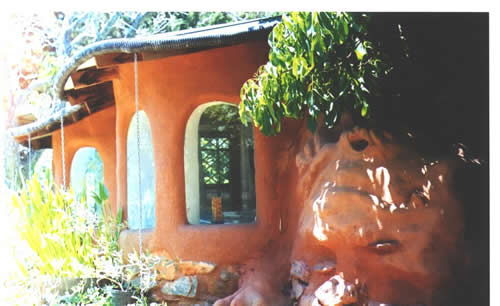
Cob Cottage Cob (clay,
sand, and straw) building with rainwater catchment off metal roof and cob
dragon oven
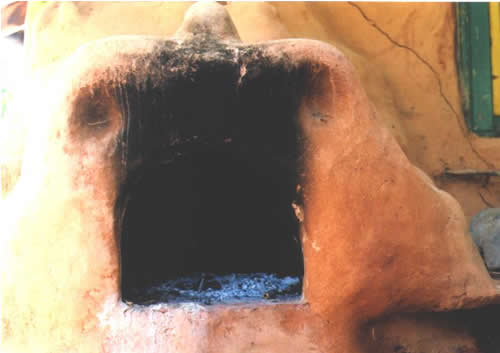
Cob Dragon Oven The dragon's mouth is where the fire is built and where the bread is baked.
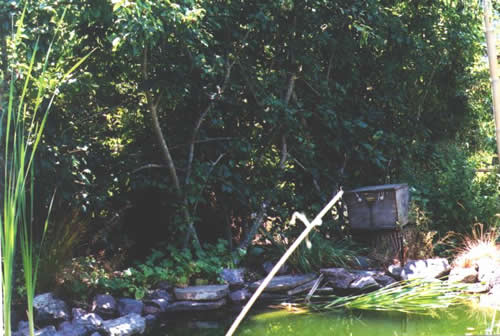
Pond with Living Fence Greywater pond with pear and apple living fence
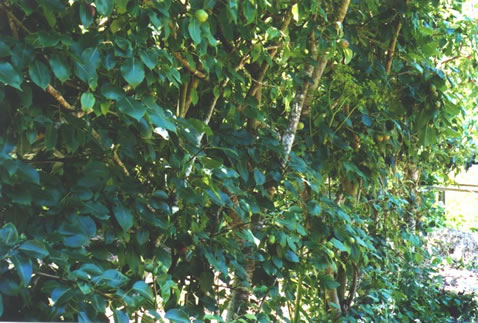
Pear and Apple Living Fence Notice the fruit.
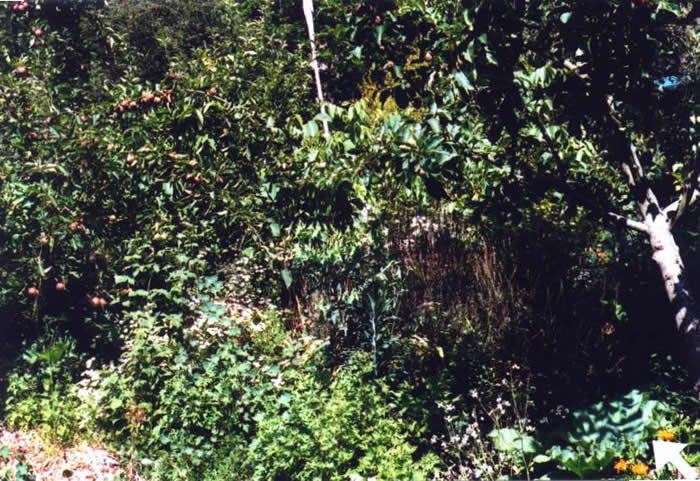
Food Forest Here is a food forest showing
the numerous layers. Notice the arrow in the bottom right corner pointing
out the rhubarb which functions as a living mulch for the plum tree.
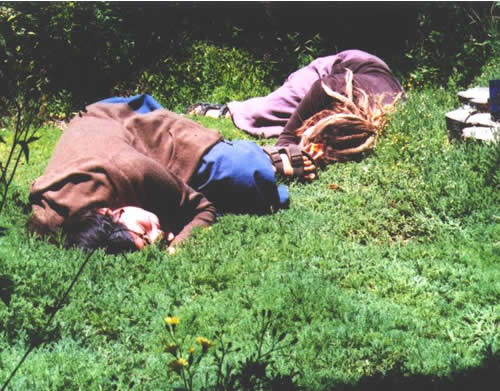
Chamomile Lawn Chamomile makes a great lawn, with low maintenance and a soothing fragrance.
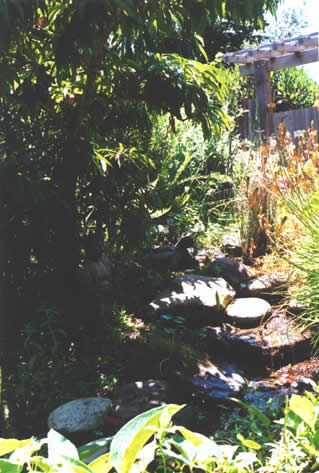
Graywater Stream This stream originates from the house, flows through a small marsh and three tiny ponds and then empties into a larger pond. Notice the duck and the peach tree.
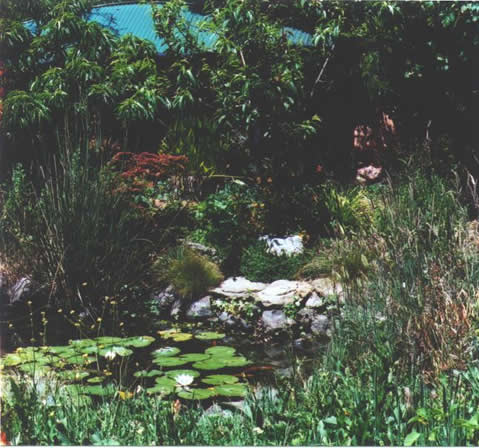
Graywater Pond This pond hosts ducks, fish, and water plants.
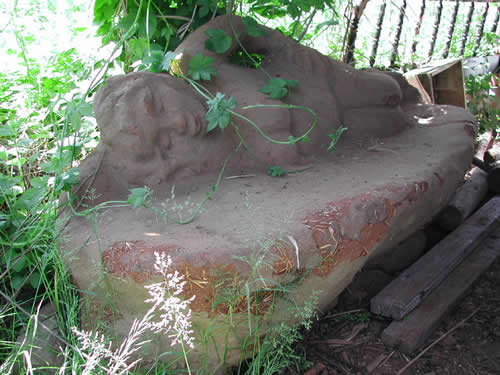
Cob Goddess Bench I helped create this cob bench at Lost Valley Educational Center (near Eugene)using local clay.
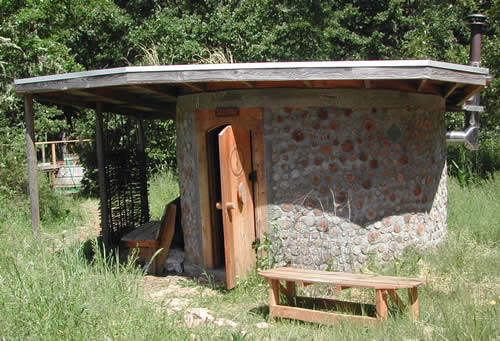
Cordwood Sauna While this technique uses cement (which is very energy-intensive), all the wood was sustainably harvested on-site. There is a layer of insulating sawdust on the inside of the cement mortar. Currently, a layer of cob is being added to the inside to increase the sauna's ability to hold heat. Also at Lost Valley (I helped build this one, too).
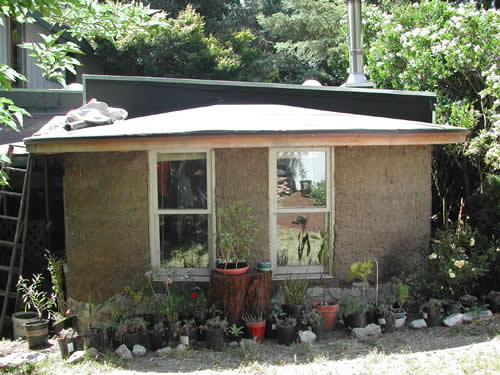
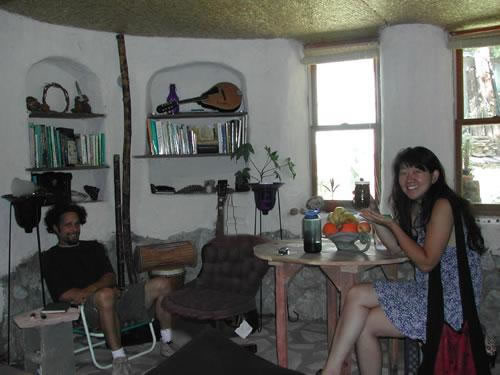
Cob and Light Clay/Straw Addition I helped construct this room near Santa Cruz. The ceiling is made out of a fiberboard from the Willamette Valley composed of pressed straw from agricultural waste.
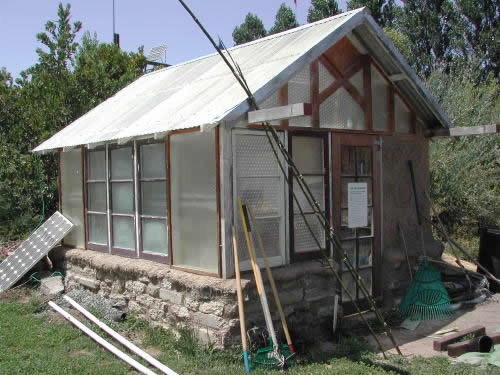
Eco-greenhouse This greenhouse was built at the Real Goods Solar Living Center in Hopland using cob, wattle (from fruit tree prunings) and daub, lightclay/straw, lightclay/woodchips, and recycled materials.
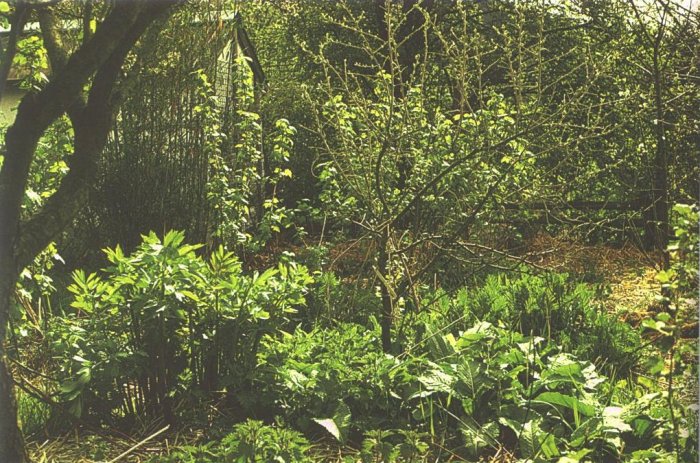
A Corner of Robert Hart's Forest Garden Robert Hart was the founder of temperate food forestry. This is a part of his garden in Spring. Notice how the understory comes out before the canopy.
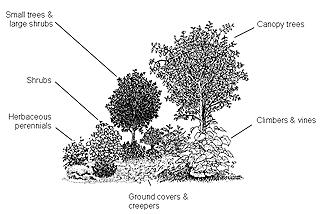
Food Forest Layers The seven layers of a food forest, minus the root layer.
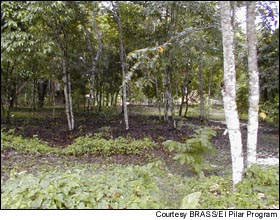
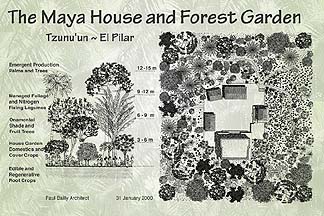
Mayan Food Forest The two images above show the plans and the reality of a reconstructed traditional Mayan food forest.
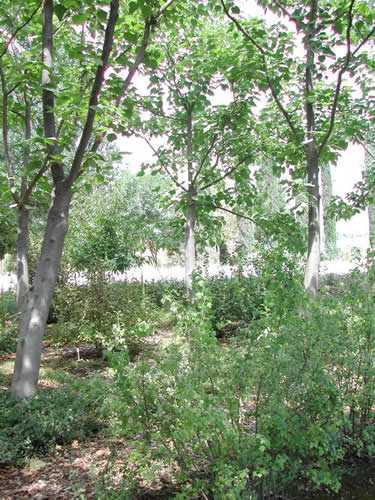
Agroforest Here is an example of an agroforest, at Real Goods Solar Living Center in Hopland. The canopy is of quick-growing empress trees, while the understory is of currants and gooseberries.
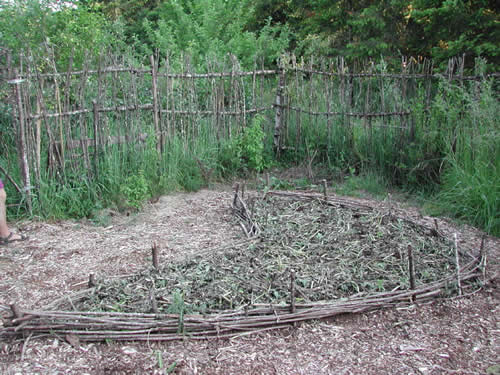
Raised Bed This raised bed and fence were built using locally harvested wood at Lost Valley Educational Center. Notice all the mulch!
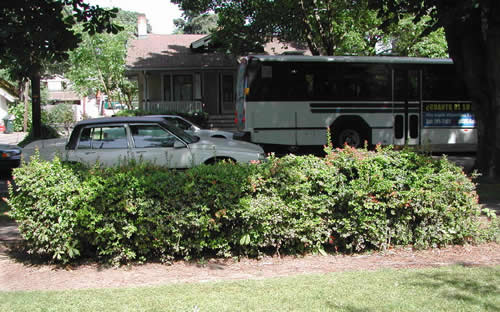
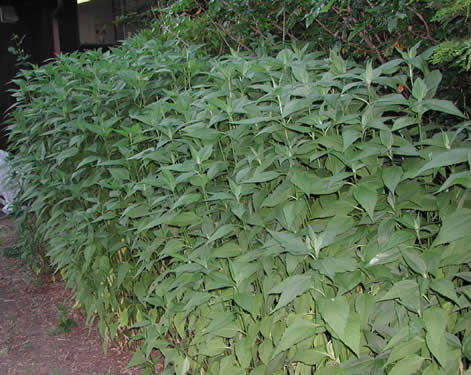
Edible Hedges Two hedges made of food plants in Eugene: evergreen huckleberry on left and sunchoke on right.
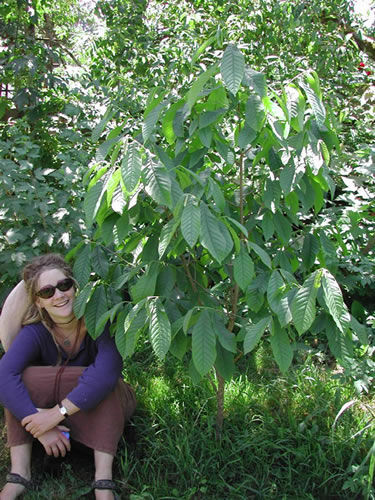
Zephyr and Pawpaw Two of my favorite beings, Zephyr (my partner) and a pawpaw tree. Pawpaws are native to the eastern US, produce a very nutritional custardy fruit with a banana/mango/guava flavor, and grow in the shade! They grow very slowly, but it is worth the wait.
Back