|
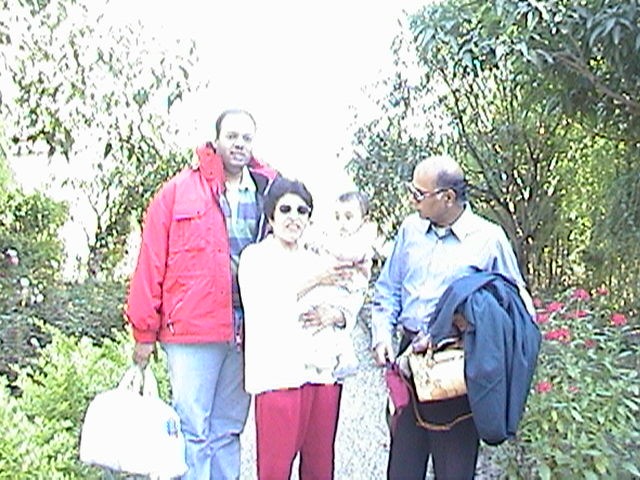
It was a road trip plagued by car trouble. Two punctured tires, a jammed window and an over packed car. There were good reasons for all, of course. The punctures were because the road was in such bad shape that it would've been suitable only for an SUV and we were in a luxury car. The window jammed because we were rolling it down and ran over a pothole causing the window to be dislocated from its frame and jamming it diagonally. And we were over packed not because of the four adults taking a 3-day trip to Jim Corbett National Park in Northern India, but because of a 10-month-old baby accompanying the adults. We had to pack everything for her. Warm clothes, her bedding and comforter, her baby food and of course her toys. Plus there were be at least a dozen other things that were needed to ensure her comfort in her first road trip ever. I might mention though that we had to leave her stroller behind because it just wouldn't fit in the boot with all the other luggage.
|
|
|
|
Nevertheless, we were on our way. A 6-hour journey from Delhi to a place called Dhikala in the state of Uttaranchal was the plan. Followed by two nights at the Tiger Camp resort on the outskirts of one of India's most popular national parks once famed for being home to as many as 45 man eating tigers.
|
|
|
|
We planned to get in an early start and leave at 7:30 am but left instead at 9:00 am. The trip was eventful but the countryside beautiful enough for us to put aside all these small problems and watch the changing landscape as we left behind Delhi's magnificent highways and settled instead for the rough patches of what could hardly be called a road running through small towns and villages. My husband and I bragged to my parents about how we once did a 14 hour drive from Bangalore to Goa non stop, so they ought to be prepared to just sit on through the entire 6 hours except for one bathroom break. Instead we ended up with 4 stops and a delay of over an hour.
|
|
|
|
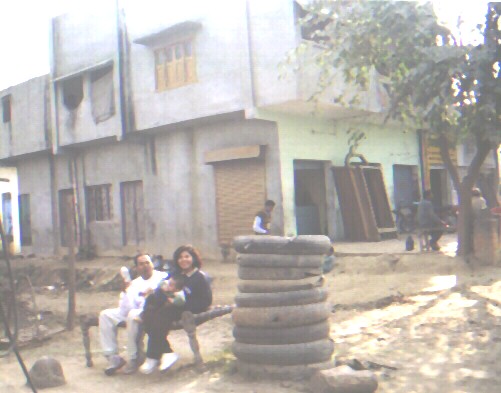
The first stop was because the window jammed. My mom decided to look around for a bathroom and next thing we know she's being invited into a villager's house. Not only did all of use their bathroom, but also we were even given a bowl each of 'sevayian', which is an Indian dessert. We came out of there amazed at their hospitality and of course wiser now that the smaller the town, the nicer the people. The next two stops were first to change the punctured tire, then to get it repaired. We stopped at an intersection called Ramnagar Doraha and got it repaired by an amicable young man who took a measly amount from us for a job that would've quite easily cost double in Delhi.
|
 |
|
|
|
After this, for about 50 kilometers we could hardly manage to go 20 kilometers per hour. The bullock cart alongside us seemed to be going faster than we were as my husband tried to maneuver past each pothole in the road.
|
|
|
|
As evening drew we finally reached the Kumaon hills area where the air seemed to get chillier as the forest cover began. We soon started seeing some animals too - monkeys mostly, a few deer as well. Tiger Camp turned out to be as rustic as promised. Trees all around, a pebbled path to take us to our room, no phones or television sets. Beautiful and relaxing in every way.
|
|
|
|
At 5:30 the next morning, we wrapped ourselves in every piece of warm clothing we had and proceeded to get into an open Gypsy (that's an Indian 4 wheel drive) with a driver and a guide who took us into the National Park itself. Now Corbett is divided into 3 zones - the core zone which is the densest part of the jungle, the tourist zone where most of these open Gypsy's are allowed and a buffer zone, which is the area everyone hopes the animals do not cross out of. Mind you, many a leopard are known to cross this area and actually come towards the villages where they are likely to find easier prey such as cattle or sheep. Of course, the residents of Jim Corbett national Park neither know of these man made zones, nor care about them so there's always an off chance of seeing a tiger in the buffer zone itself.
|
|
|
|
The last census put the number of tigers inhabiting the part at close to 150 but we'd heard that in the Bijrani gate area, where we entered there were about 4-5 tigers, a couple longer than 8 feet.
|
|
|
|
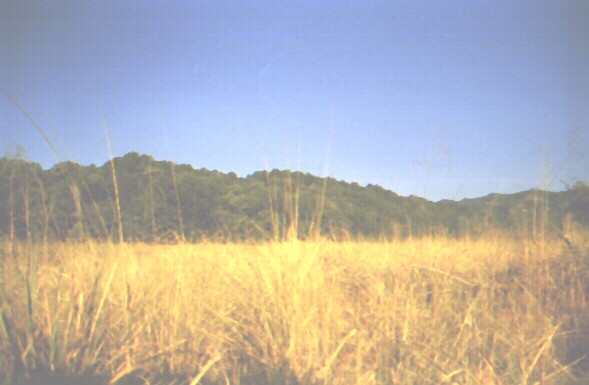
Our expectations were high as we drove through some very shallow streams and into the grasslands towards the forest where we hoped to see as many animals as possible. We mostly saw deer, some with antlers, some without, the Sambar deer, the spotted deer, the barking deer. I believe I can finally tell them apart now. We also saw many kinds of monkeys; especially the black faced ones, which had a really long tail. Then there was an odd peacock and peahen, a black stork and a white one and several other species of birds.
|
 |
|
|
|
Finally we saw it. A huge tiger pug mark which seemed to be quite recent as it was undisturbed by the many tire marks made by the Gypsy's. Now it seems that if you draw lines around the pugmark of a tiger then if it turns out to be square, it's a female whereas if it turns out to be a rectangle, it's a male. This one seemed to be male though no one really wanted to get of the jeep and draw around the pugmark. We decided to follow it. Soon we began to hear the call of some Sambar deer. Our guide told us that it was a warning call made by them to warn others that a tiger was lurking around. We followed these calls wildly. Driving to one location, waiting, then driving off again. We were very very close. All eyes in the jeep looked around in different directions, searching for the black stripes on this magnificent animal, which is said to be nature's ultimate hunting machine. We looked around and then drove some more. Finally we saw some more pugmarks and fresh droppings of the tiger and it now seemed that he'd crossed a stream and gone into the more open area across so as to bask in the sun. After about three hours inside the park, it seemed a trifle disappointing to not have spotted the tiger, but well, we'd been forewarned that all visitors aren't that lucky.
|
|
|
|
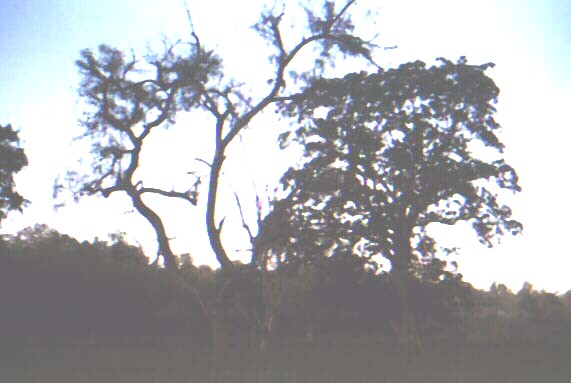
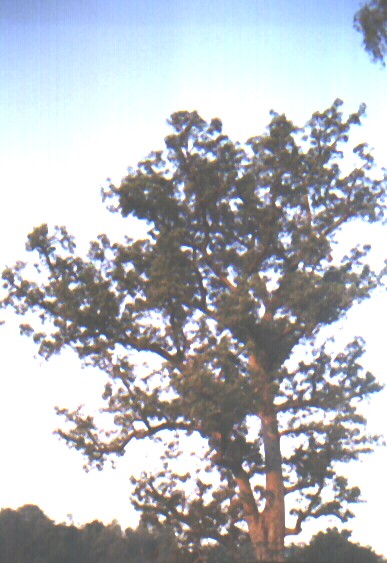
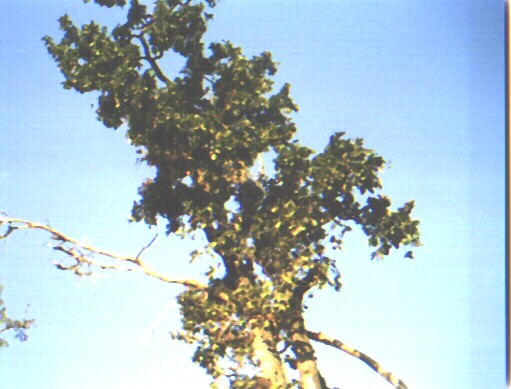
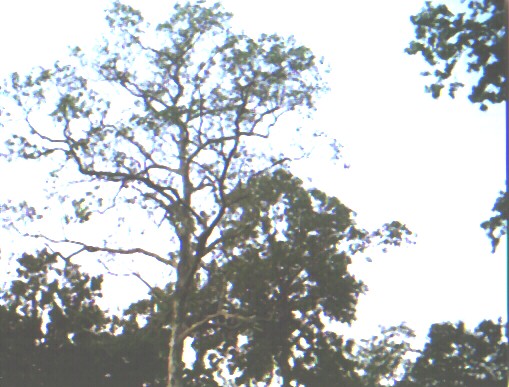
I mostly clicked photographs of trees that day. When I was asked why I shrugged and replied that that was all there was to see, so there really wasn't any option. Now many of the trees in the jungle were hundreds of years old. In fact the roots of some had actually become so thick that it looked like the tree had multiple trunks. Then there were photographs of monkeys playing on these trees, deer grazing below them and of course of the streams that run through the park which really looked more like a couple of buckets of water had been thrown over a whole lot of rounded stones.
|
 |
|
|
 |
 |
 |
|
|
|
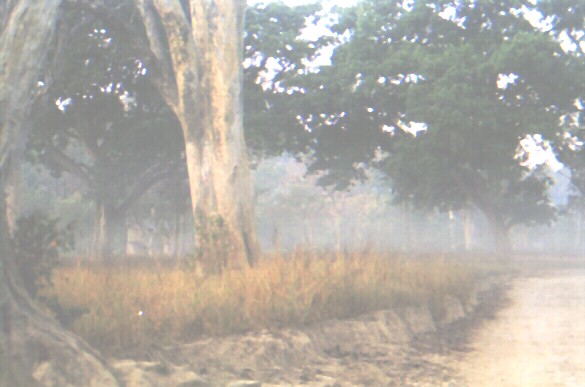
Nevertheless, it was all extremely beautiful. Nature in all its glory seemed all around us, and it was a breathtaking sight to see the mist floating over the grasslands as we drove through it. In our endeavor to find the tiger we had completely missed the sunrise, which is also said to be an awesome sight.
|
 |
|
|
|
Back at the lodge we had a hearty breakfast while basking in the sun ourselves, and each one of us seemed to sigh and think, "This is life".
|
|
|
|
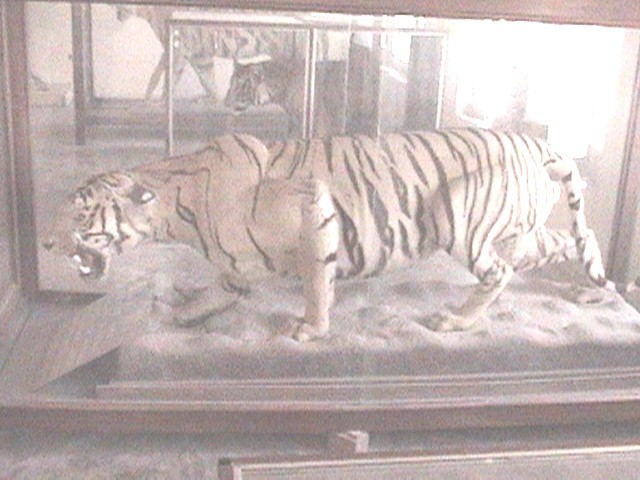
Post breakfast, we went to see the Corbett museum which had several stuffed animals - some tigers (one of them 10 feet long), a few cubs, a couple of panthers and a skeleton of a gigantic elephant head with its tusks still in place. We left the museum again wishing that we'd managed to spot a tiger that morning.
|
 |
|
|
|
We also stopped momentarily to see a temple built on top of a natural rock that stood several meters high in the middle of a river, then drove back to the lodge for another hearty meal followed by a long post lunch nap that had everyone in high spirits by the time the evening came in.
|
|
|
 |
 |
 |
|
|
|
Around the bonfire for the second night, camaraderie began to brew among the 12 odd couples that were staying at the lodge. Each came out with their own stories of the safari and even how an elephant safari was so much more fun than a gypsy one except for the fact that you'd keep getting hit on the head with the branches of the trees. Soon some of the guides joined in and began telling us about the things they'd seen over the years. How a tiger had crept up to a deer hunched on all fours, then finally leapt up and grabbed the deer by its neck, breaking it in an instant. How the man-eating tigers had killed over 300 people before Edward James Corbett, a world famous hunter was called in to hunt them down. How he'd wait on a tree or 'machan' for days and days before he'd spot a tiger, and how he'd never shoot a tiger if it were sleeping - only when it was about to attack. I had goose bumps while listening to some of the stories whereas some other people seemed to get inspired and soon a plan was made to go towards the jungle for a night safari.
|
|
|
|
"You must zig zag while driving the car. That's the only way you can see both sides so you don't miss anything. It's a good time to go out and see some nocturnal creatures".
|
|
|
| "Is it safe?" one of the men asked. |
| "Only if you don't have a puncture." |
| My husband and I retreated quickly to our room not even thinking of making an attempt to go out at midnight knowing our luck with punctures.
|
|
|
|
The staff was so courteous when they said goodbye the next morning that the road back to civilization didn't seem very inviting. On top of that a couple came in excitedly after their morning safari just as we were leaving and they couldn't stop telling everyone they saw that they had seen a tiger and it was the most magnificent creature in the world, and they had clicked tons and tons of snaps. The road back seemed even less inviting now.
|
 |
|
|
|
Nevertheless we packed our bags, said our goodbyes to the jungle and began a mostly uneventful journey home, talking mostly about how we'd soon be back in the peak season of March - April and how we were just unlucky this time, but would definitely spot a tiger the next time.
|
|
|
|
It's difficult to say right now if there would actually be a next time. And besides tigers are an endangered species, so it's likely that it would be more difficult to find one as the years go by. Do you know that a tiger actually only lives for about 15 years and that as they grow old, they are unable to hunt for their food, so many just die of starvation? A ruthless killing machine dying of starvation. What a poignant thought.
|
|
|
|
Another thought then crosses my mind. Of my daughter and how she didn't understand any of this right now. How she neither new nor cared about what a tiger was, right now. And how important it was for her to have the opportunity to see one, learn about it and appreciate all that is a part of nature. As we neared Delhi, the thought uppermost in my mind was that yes, I would be coming back.
|
|
|