|
|
|
|
|
|
|
|
|
|
|
|
|
|
|
|
|
|
|
|
|
|
|
Talk Radio:
An American Political Phenomenon |
|
|
|
Throughout the first half of the Twentieth Century, many radio stations were a haphazard mix of clashing music genres, brief political or news coverage, and a smorgasbord of programs ranging from instructions on farming to religious services. "Talk Radio" was not the buzzword that it is today, with the largely conservative hosts ranting partisanly about politics and talking regularly to callers "on the air." |
|
|
|
Discussion and debate of politics and social issues during the first few decades of radio was sporadic. Many networks may have assumed such heavy programs would be unentertaining and unprofitable. A few programs during this time successfully attempted to engage in political discourse over the airwaves, notably "The University of Chicago Roundtable," first aired in 1931.
In 1926 a Roman Catholic priest named Charles E. Coughlin began delivering weekly sermons and covered a variety of political topics, praising FDR during the president's early years in politics and coining FDR's campaign phrase "Roosevelt or ruin." Coughlin's weekly political discussion proved to be surprisingly quite popular, until over the course of the 1930s as Nazism was on the rise in Germany Coughlin's messages became increasingly anti-Semetic and hateful in tone. In 1940 Coughlin was ordered off the air and into retirement by Catholic Church authorities. |
|
|
|
 |
|
|
|
|
|
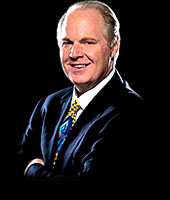
The idea of "all talk" radio grew in popularity during the politically turbulant decade of the '60s. Highly partisan political ranting arguably wasn't the rage in American radio up until the dissolution of the FCC's "Fairness Doctrine" during the 1980's and a short time later Rush Limbaugh's rise to fame (or infamy, if you like).
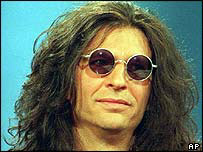
Howard Stern is one of radio's best-known "shock jocks" whose programming throughout the late '80s and following decades featured more discussion of the host's perverted sexual fantasies than politics. However, Stern's penchant for pushing the limits place him in the center of political debate regarding censorship and First Amendment Rights to Free Speech. |
|
|
 |
|
|
|
|
|
|
There is disagreement about whether neo-conservative talk radio has a large political impact, because demographically the ultra-conservative listeners regularly tuning into Limbaugh's program are already very politically involved. Although in the 1970s research was conducted which concluded talk radio can have an influence on political events, this was well before the stark partisanship erupted in the industry during the mid-'80s and '90s.
However, even some moderates and liberals acknowledge that the ability to recieve a constant conservative opinion through daily right-wing talk shows helps the conservative base to come to a consensus on the positions their political party is generally taking regarding current events, helping the Republican Party for one establish a clear set of positions more quickly and efficiently than the less collectively vocal Democrats and left-wing bunch. |
|
|
|
 |
|
|
|
Many liberals argue that the overwhelming number of conservative radio talk show hosts like Limbaugh, Michael Savage, Ann Coutler, Sean Hannity and G. Gordon Liddy is not necessarily reflective of mainstream American opinion but instead is largely a result of the radio industry's push to capitalize on the ultra-conservative niche market, discovered when Rush Limbaugh was first heavily promoted by ABC to national radio stations. |
|
|
|
|
|
Conservatives on the other hand largely view the current success of right-wing talk radio as a rejection by many in the American public to what they percieve to be a liberal bias in the mainstream television news coverage.
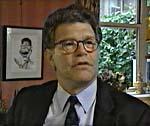
Many liberals feel that radio programs catering to an audience from the political left could prove just as commercially viable, if networks would make an effort to promote and air them. One such liberal radio venture, "Air America," debuted in 2004 to be broadcast in a few major US cities. Star hosts include liberal comedians Al Franken and Janeane Garofalo and rapper Chuck D. Time will tell whether Air America survives, thrives, dies or results in a change in public political discourse or participation. |
|
|
|
 |
|
|
 |
|
|