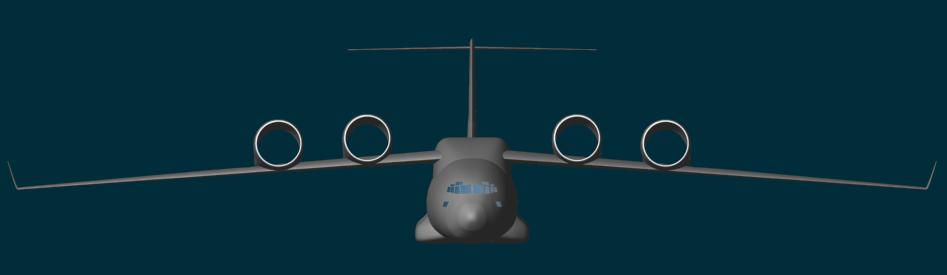
Large STOL transport
This transport was designed to serve as a replacement for the C-141. It bears a resemblance to the C-17 Globemaster III, and is in roughly the same class.
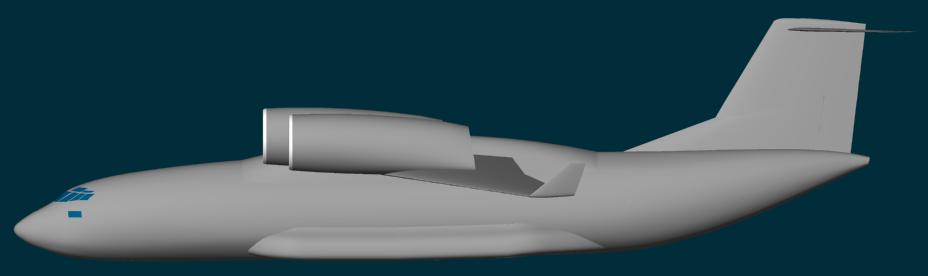
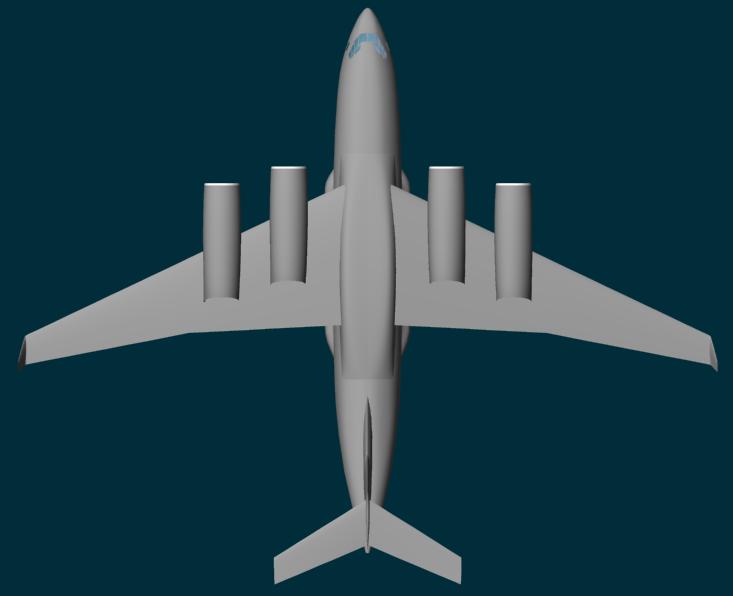

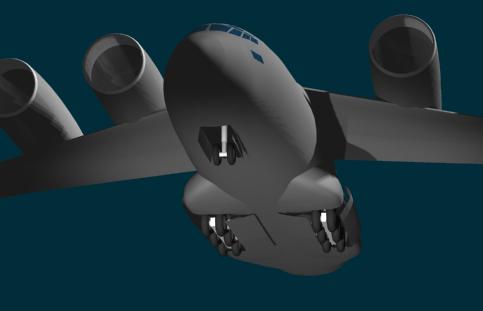
Clearly visible in the above shots are the overwing-mounted engines, a key component of the STOL system. Abovewing mountings are able to take advantage of the coanda effect, which uses the flaps to redirect some of the thrust downwards, increasing the effective lift.
The tail ramp is enclosed by clamshell doors at the rear of the aircraft. The doors can be opened in flight, though doing so invokes a severe drag penalty.
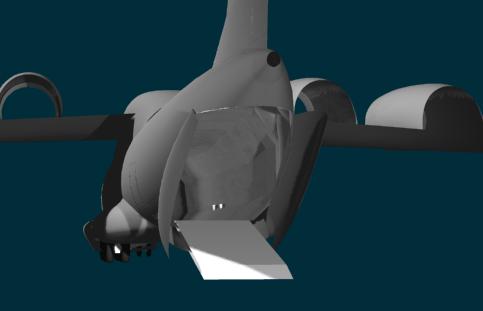
The aircraft's landing gear consists of a twin-wheel, forward-retracting nosegear, and two six-wheel main gear assemblies. Tire pressures can be adjusted in-flight to accommodate different landing surfaces.
An APU unit in the tail provides fully-autonomous engine start-up and ground running.
The cockpit of the aircraft, still in development, is fully glass and computerized, though a full set of backup instruments is retained. Pilots have access to a heads-up display, which can display a full range of information, from navigation and ILS data to a wind-corrected air-drop indicator, similar to bomb delivery systems. Military versions also include full RWR equipment.
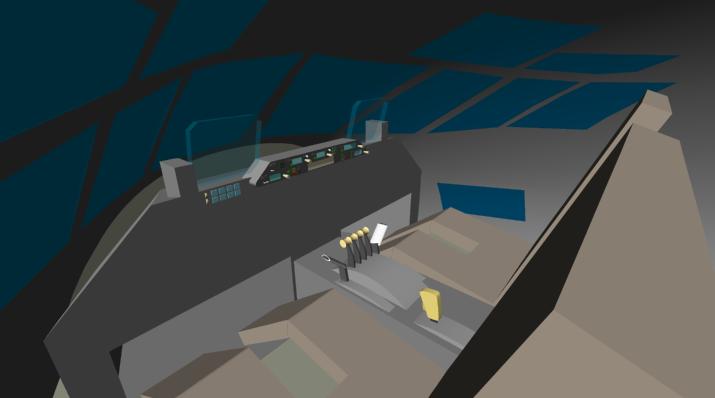
The cockpit. Heads-up displays are visible, as well as throttles, flaps (white handles) and spoilers (yellow handle).
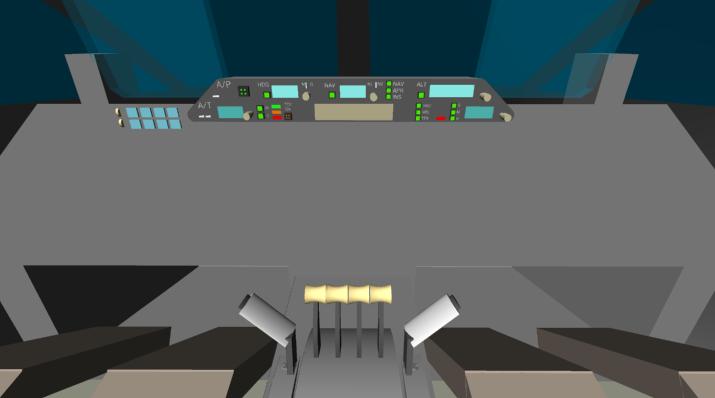
Second shot, showing the autopilot control panel, UFC, throttles, and flap handles.