STOL tanker/transport
Designed to fill the role of the KC-135 and KC-10, this tanker is also capable of STOL operations.
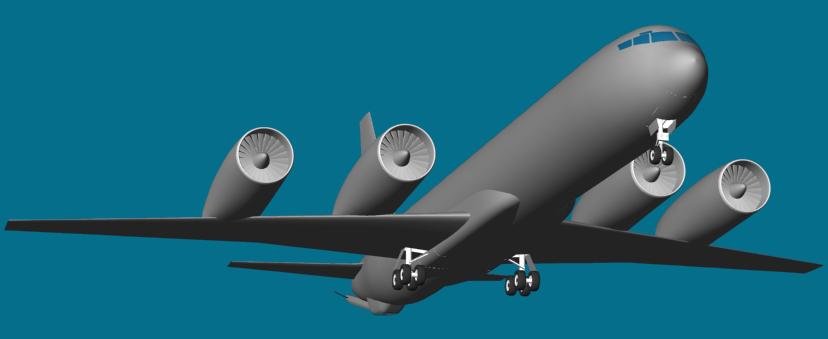
Two views showing the landing gear. Note the refueling boom in second rendering.

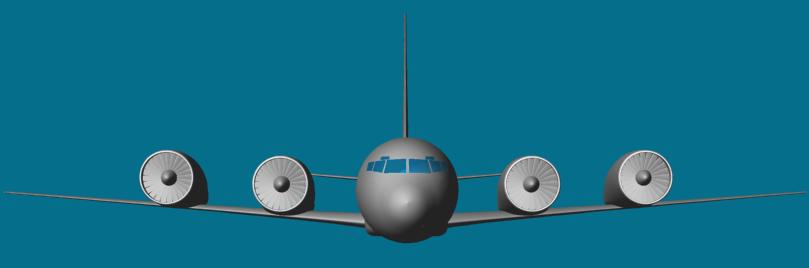
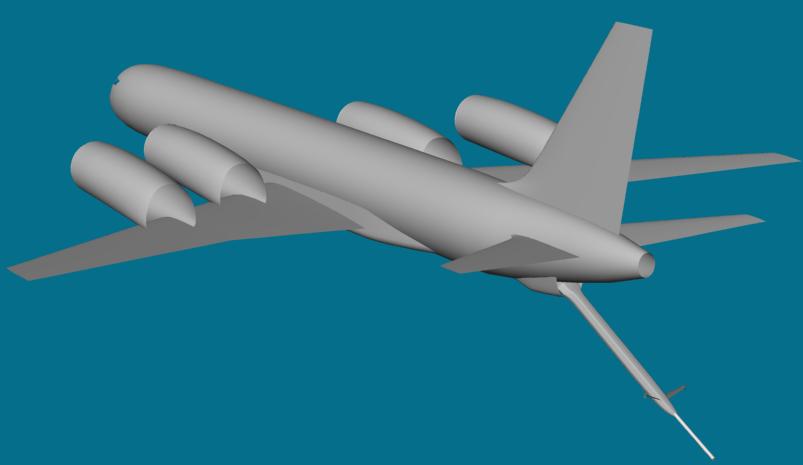
The engines are mounted above the wing to take advantage of the Coanda effect. Except for the placement of these engines, the fuselage design is standard "airliner", with low wing and conventional tail surfaces.
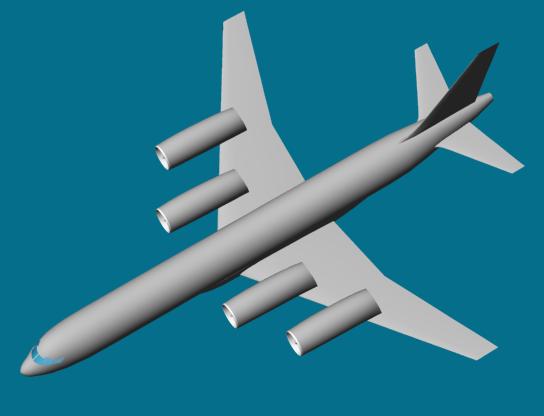
Nearly vertical view. Notice close spacing and location of engines.
The USAF's "flying boom" refueling system is in its normal position under the tail. The operator is seated in a chair instead of lying prone, and looks out a large window just forward of the boom. A NATO-standard drogue hose is also carried in the aft section, and is reeled out from a hatch just to the right of the boom.
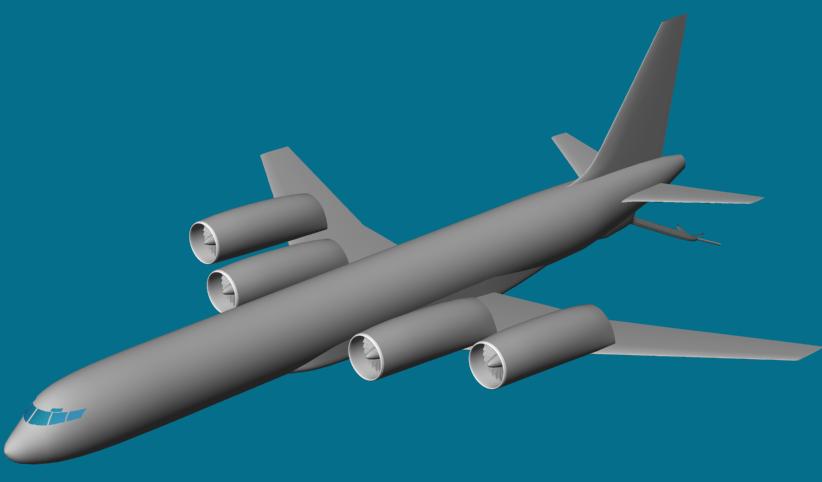
Two views showing the refueling equipment.
Each wing has four hardpoints. The two inboard ones (stations 3, 4, 5, and 6) are mounts for external fuel tanks. Stations 2 and 7 can mount Sidewinder rails or additional ECM pods/expendables (chaff and flares) for self-defense. The outermost points (1 and 8) carry additional drogue hoses. Each pod has a small closed-circuit television camera, allowing the refueling director to monitor the refueling of the aircraft at that station. Up to three aircraft can be refueled at once using the drogues.
The aircraft also has a non-tanker version, to serve as a personnel or light-cargo transport. Additional variants being considered include AEW, satellite-launch, and ELINT.