|
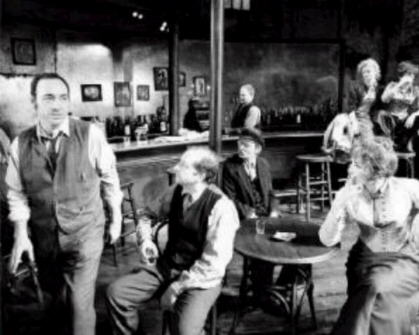
Throughout the play, O'Neill maintains a relatively pessimistic tone, and often is sarcastic. Because of the time period that this was written in, specifically during and towards the end of World War II, it would make sense that O'Neill would maintain such a tone in such dark times. He also offers a dry sense of humor in the persona of Hickey, a salesman-like Christ figure who ultimately ends up confessing to the murder of his own wife. Even the name of the bar proprietor, Harry Hope, offers a certain sense of humor suitable for the times, perhaps suggesting that Hope, itself, is a dream.
Of course, in his attempt to deviate from theatrical norm, O'Neill may certainly have felt the need to offer such a mood, and incorporated his own personal politics into the play during a time when speaking against such institutions, such as segregation of whites and blacks, was somewhat taboo. For example, a patron by the name of Joe Mott frequently gives speeches on racism, despite his pipe dream of passing as white, possibly to gain some sort of edge in the world that he feels he isn't receiving. |
|