Written and compiled by Ramona Roberts & Robin Perelle
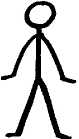
- Sex:
- Category assigned at birth, based on primary sex organs (penis, vagina). Comes in "male"
and
"female."
A person's sex is serious business in our society, because it tells us their gender which, in
turn,
tells us what kind of behaviour to expect (see gender below).
When a baby is born without a clear sex (see intersex), surgeons are dragged out of bed to
operate so the baby can get a birth certificate marked "M" or "F."
- Intersex:
- Having been born with sex organs of more than one biological sex. Preferred to
"hermaphrodite,"
which is felt to carry more pathological and "freak" connotations.
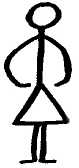
- Gender:
- Socially defined role, either "masculine" or "feminine," usually assigned according to
perceived
sex at birth.
Gender rules define every aspect of our lives, from pink and blue diapers to how to sit,
stand,
walk, speak, and cut your hair -- not to mention what work you do and how much you'll earn.
People who break gender rules, by walking, talking, or dressing the "wrong" way are
punished
by being called queer, stared at, beat up or fired.
Overt gender rule violations like cross-dressing, changing genders, or not expressing any
gender
at all, are punished most harshly of all.
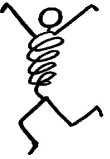
- Gender identity:
- Personal feeling about one's own gender role or roles. (Eg. "I identify as "masculine,"
"feminine,"
"androgynous," "genderless," etc.)
- Femme:
- "Feminine" or "effeminate" expression, through dress, behaviour, etc., regardless of sex or
gender identity.
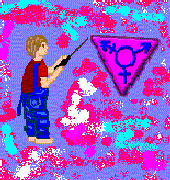
- Butch:
- "Masculine" or "macho" expression, through dress, behaviour, etc, regardless of sex or
gender
identity.
- Androgyny:
- The quality of simultaneously expressing some "masculine" and some "feminine"
characteristics.
Or the quality of expressing a combination of characteristics while refusing to be categorized as
M or
F.
- Transsexual (person):
- Someone who changes their physical sex, so that their body fits better with their own sense
of
self.
For example, someone who identifies as a woman and was born with a penis may choose
to
have her penis removed, and/or to have it replaced with a vagina.
Changing one's physical sex can include any combination of sex reassignment surgery (to
change
primary sex organs) and treatments for secondary sex characteristics, like hormone therapy
(affects
breast growth, facial hair, pitch of voice) and electrolysis (hair removal).
Getting approved for a medicare-covered sex change usually involves lots of counselling,
long
waits and the requirement of "living full-time" in the gender you want to be. Trans people
commonly call
this process "jumping through hoops."
- Transvestite:
- Someone who cross-dresses, ie. sometimes dresses in clothes usually associated with a
different
gender from the one he or she usually expresses. This could be for a public "drag" performance,
quietly
"passing" on the street, or for private happiness.

- Transgender:
- Umbrella term encompassing people who don't fit neatly into our society's chosen gender
role/sex boxes.
Transgendered people can break gender rules by living as the "opposite" gender or sex
from the
one expected of them, getting sex reassignment surgery and/or hormone treatments, expressing
more
than one gender at a time, alternating between M and F, or refusing to be pinned down as either
M or
F.
- F2M:
- Female to male. Describes the direction of a sex or gender role change.
An F2M transperson may be a transsexual man who has changed his biological sex from
female
to male.
Or it might be a person who has changed his gender expression without changing, or fully
changing, his biological sex. He might use a masculine name and dress to be seen as a man,
and/or get
his breasts removed but not choose further surgery.
Whatever his body looks like, someone who identifies as F2M is not a woman, and
will
really hate to be referred to as "she." See also M2M.
- M2M:
- Male to male, or "masculine" to male. Preferred by some trans men to F2M, because it
doesn't
imply that they ever felt female or "feminine."
- M2F:
- Male to female. Describes the direction of a sex or gender role change.
As with F2M, an M2F transperson may have changed her physical sex to female, or
changed her
gender expression without changing, or fully changing, her physical sex.

- Ze:
- Gender-neutral pronoun.
"Ze" (rhymes with "he") can be used instead of "he" or "she," when talking about someone
who
doesn't identify as either male or female, or someone whose gender identity you don't know. See
also
"hir."
- Hir:
Gender-neutral pronoun.
"Hir" (pronounced like "here" or "her" can be used instead of "him"/"her," or "his"/"her,"
when
talking about someone who doesn't identify as either male or female, or someone whose gender
identity
you don't know. (Eg. "Leslie Feinberg says in hir book that ze doesn't identify as either male or
female.")
- Sexual identity:
- How one thinks of oneself in terms of attractions to others. Often preferred to "sexual
orientation" or "sexual preference." Some feel that "sexual orientation" implies an inability to
control
one's own attractions, while "sexual preference" implies that attraction is entirely a matter of
choice.

- Bisexual:
- Having significant sexual and/or romantic attractions to both men and women.
- Gay:
- Having romantic and/or sexual attractions primarily to members of the same sex.
May refer specifically to gay males, or to both gay males and lesbians.
"Gay community" is often used to refer to all sexual minorities, but lesbians, bisexuals, and
others
often feel excluded by it.
- Homosexual:
- Formal or clinical term for someone who is primarily attracted to members of the same
sex.
Coined in the late 19th century, the term "homosexuality" was added to psychiatric manuals
under the
category of mental illnesses. It was only removed in the 1970s.
Today, the terms "homosexual" and "homosexuality" are still associated with the idea that
same-sex attractions are a mental disorder, and are often the terms of choice of religious
homophobes.

- Lesbian:
- A woman who has significant sexual and/or romantic attractions to women.
Bisexual women often do not feel included by this term, or may identify as bisexual
lesbians.
- Two-spirited:
- English translation of a concept common to many aboriginal cultures, meaning a balance
of
masculine and feminine energies and orientations within one person.
Spans the non-aboriginal concepts of sexual orientation and gender identity, and may be
more
like one or the other for a given two-spirited person or a given culture.
- Queer:
- Often reclaimed, originally derogatory, slang for people who aren't straight and
traditionally
gendered. Preferred by some people who use it as an umbrella term for gays, lesbians, bisexuals,
transpeople, and people who don't identify with any of these labels.
- Heterosexual:
- Having romantic and/or sexual attractions primarily to members of a sex other than your
own.
- Straight:
- Common slang for heterosexual. Because straight has connotations of "correct" and
"pure,"
many people object to the implication that those who aren't heterosexual are "bent" or "impure."
- Biphobia:
- The oppression or mistreatment of bisexuals, especially by lesbians and gay men.
Some biphobes resent what they see as bisexuals getting the advantages of same-sex
relationships without the stigma of being gay. Others reject bisexuality as an identity by claiming
that
everyone is really either heterosexual or homosexual.
- Homophobia:
- Originally, a fear of sexual attraction to the same sex. Now developed into a term
describing
hatred and hostility of all degrees toward lesbians, gays, and bisexuals.
- Heterosexism:
- 1. The assumption that everyone, or almost everyone, is heterosexual.
2. The assumption that heterosexuality is the normal or preferable form of human
sexuality.
- Come out:
- Short form of "come out of the closet."
1. To come to terms with one's own sexual or gender identity as different than one
previously
assumed.
2. To tell someone else about it.


Home