 What is electricity?
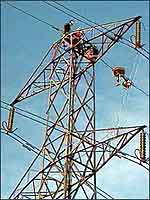
Electricity is a form of energy. Energy at work, or power, makes things move. The energy to run your body comes from food. Cars get their energy from the gasoline or natural gas they burn, some may be powered by electricity, too. But, most of the energy that powers living things on Earth comes from the Sun.
Electricity is used in homes, schools, businesses, and cars. People come up with new uses for electricity every day, electricity powered CD players bring music along with you.
What makes electric power
possible?
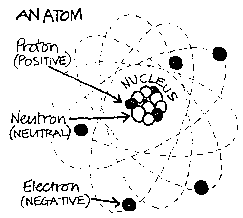 Everything on Earth is made
of very small particles called atoms. Atoms are made of protons, neutrons, and electrons. The protons and neutrons are packed together
to form what is called the nucleus of the atom. Whizzing around outside of the nucleus are electrons
(electric charges or –ve charges) that can roam from atom
to atom. The movement of these tiny
electrons is electricity.
Everything on Earth is made
of very small particles called atoms. Atoms are made of protons, neutrons, and electrons. The protons and neutrons are packed together
to form what is called the nucleus of the atom. Whizzing around outside of the nucleus are electrons
(electric charges or –ve charges) that can roam from atom
to atom. The movement of these tiny
electrons is electricity.
Forms of Electricity
When many electrons collect on a surface, they crowd
together. Eventually some of them can
jump off its surface, it is called electric discharge. Sometimes you can get shock from electric 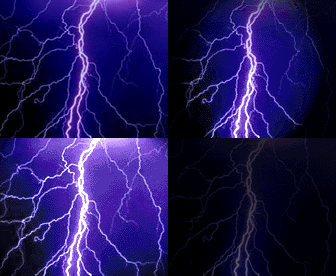 discharge. It happens as you walk across a rug in dry
weather, electrons rub off the rug and collect on you. When you get close to an object like a doorknob or a person, the electrons can jump
to it. Ouch! You get a zap, sometimes
even you can see a little spark. It is
called static electricity.
You could see a big one when it is lightning. That is when the thick cloud collects lots of electrons in one
side, then jump off to the highest point on Earth surface.
discharge. It happens as you walk across a rug in dry
weather, electrons rub off the rug and collect on you. When you get close to an object like a doorknob or a person, the electrons can jump
to it. Ouch! You get a zap, sometimes
even you can see a little spark. It is
called static electricity.
You could see a big one when it is lightning. That is when the thick cloud collects lots of electrons in one
side, then jump off to the highest point on Earth surface.
Have you ever heard of a volt? When you buy a battery, you might look to
see how many volts it has. A volt is a
unit of electrical pressure. As
electrons flow through a path steadily, this constant stream of electrons is
called current electricity.
The Electricity and Magnetism Connection
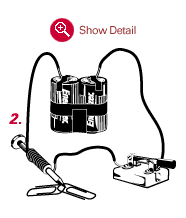
Scientists learn that when
electricity flows through a wire, the wire attracts other metals, such as iron
and steel. In other words, the wire
become magnetized. When the current is
turned off, however, the wire no 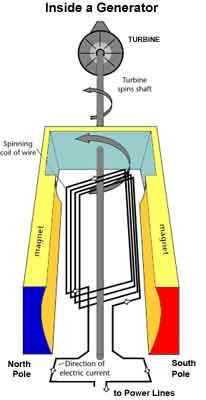 longer
acts like a magnet. In this case, when
a metal is magnetized by electricity, it is called electromagnet.
longer
acts like a magnet. In this case, when
a metal is magnetized by electricity, it is called electromagnet.
If electricity could make wire and metal act like a magnet, could a magnet be used to make electricity flow in a wire? Yes! In 1831, Michael Faraday moved a strong magnet past a coil of wire to get electrons to flow through the wire. He discovered that the magnet could produce electricity. That was the first electric generator, a machine which uses magnet to produce current electricity.
How an Electric System Works
All electrical devices, from a
flashlight to the airplane electrical system, operate on the same principle, a 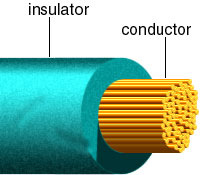 circuit. A circuit is a continuous loop or pathway
through which electricity can flow. The
parts that allow the flow of electricity are called conductors. The most common conductors are metals, such
as copper, aluminum, or steel. But when
these metals are painted or laminated, covered a layer of non-metallic
material, they become insulators. They are materials with poor conductivity, which limit the flow of
electrons. Common insulators include
glass, rubber, dry wood, and most plastic.
circuit. A circuit is a continuous loop or pathway
through which electricity can flow. The
parts that allow the flow of electricity are called conductors. The most common conductors are metals, such
as copper, aluminum, or steel. But when
these metals are painted or laminated, covered a layer of non-metallic
material, they become insulators. They are materials with poor conductivity, which limit the flow of
electrons. Common insulators include
glass, rubber, dry wood, and most plastic.
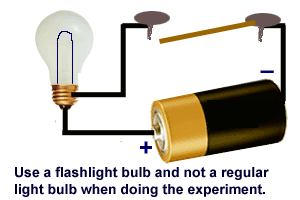 It’s
hard to see how electricity moves from a power source and into a light at
home. But you could make a model that
shows how this works. In the activity,
you connect a light bulb, a switch (using thumb pins and a thin iron rod), and
the battery in the circuit path, which contains three wires as shown. A switch is a device
that opens or closes a circuit. When
you open the circuit, as shown, the light goes off. When you close the circuit, the bulb will be lighted.
It’s
hard to see how electricity moves from a power source and into a light at
home. But you could make a model that
shows how this works. In the activity,
you connect a light bulb, a switch (using thumb pins and a thin iron rod), and
the battery in the circuit path, which contains three wires as shown. A switch is a device
that opens or closes a circuit. When
you open the circuit, as shown, the light goes off. When you close the circuit, the bulb will be lighted.
Why My Bulb Is Not as Bright
as His?
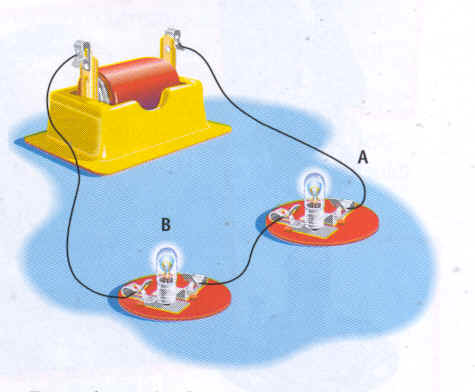 When
you connect more than one light bulbs in the single path, as shown at
left. This is called a series
circuit. In a series circuit,
all of the parts are connected one after the other in a single loop. Therefore, electrons flow to the first
light-bulb then to the other. Some
electrons will be blocked and used to light up the bulbs, which limits the
amount of electrons flow back to the battery.
The more light-bulbs in the loop, the dimmer the light-bulbs appear in
the circuit. In addition, if any one of
the bulbs goes wrong, it will stop the electrons flow resulting an open
circuit. Both light-bulbs will go off.
When
you connect more than one light bulbs in the single path, as shown at
left. This is called a series
circuit. In a series circuit,
all of the parts are connected one after the other in a single loop. Therefore, electrons flow to the first
light-bulb then to the other. Some
electrons will be blocked and used to light up the bulbs, which limits the
amount of electrons flow back to the battery.
The more light-bulbs in the loop, the dimmer the light-bulbs appear in
the circuit. In addition, if any one of
the bulbs goes wrong, it will stop the electrons flow resulting an open
circuit. Both light-bulbs will go off.
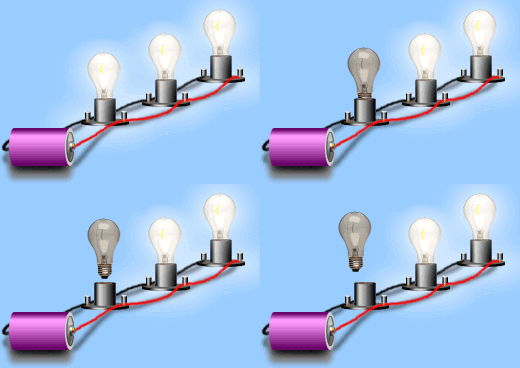
But if the circuit has more than one path, a parallel circuit is being created. Electrons will flow in its own path. When both bulbs are in place, current will flow both paths, and both bulbs will be lighted. However, if either bulb goes wrong, electrons will still follow the path through the other bulb, which will remain lighted.