http://en.wikipedia.org/wiki/Chow_Chow
Chow Chow Information
The Chow
Chow is a square balanced arctic type dog with a beautiful outstanding double
coat. The hallmark of the breed is the blue tongue and stilted gait. The Chow
was bred to hunt and guard. They are an aloof, independent character.
|
Other names |
Chow,
Chowdren |
|||||||||||||||||||||||||||
|
Country of
origin |
||||||||||||||||||||||||||||
|
||||||||||||||||||||||||||||

Chow chow is a breed
of dog that was developed
in China where it is referred to as Songshi Quan (Pinyin:
sōngshī quǎn 鬆獅犬), which literally means
"puffy-lion
dog".
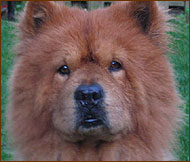
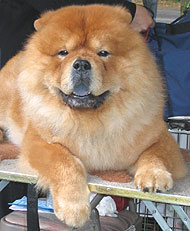
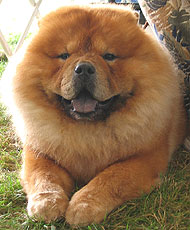
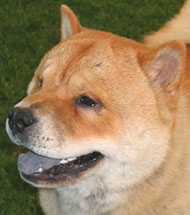
The chow is a
sturdily built dog, square in profile, with a broad skull and small,
triangular, erect ears, rounded at the tips. The breed has a very dense double coat
that can be either smooth or rough. The fur is particularly thick around the
neck, giving the distinctive ruff or mane appearance. The coat may be one of five colors including
red, black, blue, cinnamon/fawn, and cream.
The eyes should
be deep set and almond in shape. Chows are distinguished by their unusual
blue-black/purple tongue and very straight hind legs, resulting in a rather
stilted gait. The bluish color extends to the chow's lips; the chow is the only
dog breed with this distinctive bluish appearance in its lips and oral cavity
(other dogs have black or a piebald pattern skin in their mouths). One other
distinctive feature is the curly tail. It has thick hair and lies curled on its
back. The nose should be black (except the blue which can have a solid blue or
slate colored nose). Any other tone is disqualification for showing in the
United States under
The
blue-black/purple tongue gene appears to be dominant, as almost all mixed breed
dogs that come from a chow retain the tongue color. This is not to say,
however, that every mixed breed dog with spots of purple on the tongue is
descended from chows, as purple spots on the tongue can be found on a multitude
of pure breed dog.
 Chows of different coat
colors
Chows of different coat
colors
 A close-up of the chow's
characteristic blue-black tongue
A close-up of the chow's
characteristic blue-black tongue
Favorite Chow Chow Comments
Dont
leave them unsupervised they are wandering dogs.
- Posted by
Esha from
Additional Chow Chow Comments
I don't
know if this is a breed thing or just mine but he loves hiding his treats
before he eats them...in my bed. It would be annoying if his pitiful look when
you find them and yell at him wasn't so cute.
- Posted by
Amanda from
provide
a soft bed for your chow chow for they are typically a lazy breed a require a
whole lot of comfort
- Posted by
timm from
Don't
neglect Skin problems
- Posted by
Jill from
http://www.canismajor.com/dog/chowchow.html
Introduction
"What kind of dog is that? It looks like
a bear!"
"Mom, that lady's got a lion on a
leash!"
"How did that dog get a black
tongue?"
Definitely one of the most impressive of all
dogs, the Chow Chow is an awesome creature with his lion-like appearance and
regal manner. With puppies that look like walking teddy bears, it's no wonder
that the Chow is one of the most popular breeds today.
More than 2,000 years old, the Chow was bred
to be an all-around working dog capable of surviving in a hostile environment.
Hunting, herding, guarding, pulling sleds the Chow could do it all. First kept
by fierce Mongolian tribes in
How the Chow got his blue-black tongue is
also a mystery. A delightful old fable provides an answer: When God was
painting the sky blue, He spilled a few drops as He worked. The Chow followed
after, licking up the drops of paint and from that day forward, the Chow Chow
had a blue tongue!
The Chow's first appearance outside of
Chows make exceptional house pets. Despite
their size (17-21" at the shoulder, 45-85 pounds), they are very quiet,
naturally well-behaved, not diggers or barkers and aren't destructive. They're
one of the easiest breeds to housebreak. Chows do, however, have a very
different personality than other dogs. They are cat-like in their attitudes:
aloof, reserved with affection, independent, dignified and stubborn. Although
their soft fur is ripe for hugging, they don't always enjoy being fussed over
by children or strangers. For people who want a cuddly lap dog that will
instantly love all their friends, the Chow is likely to be a disappointment.
Temperament and behavior
The Chow Chow is very intelligent but not
always easy to train. They don't have the strong desire to please their masters
as do breeds like the Golden Retriever. They seem to please themselves first
and don't respond to the average methods of training and motivation. They do
not tolerate physical punishment and can't be forced into anything. Hitting or
beating a Chow will either result in viciousness or a broken spirit. Like a cat,
a Chow is only willing to do what suits his mood at the time. He's an
independent thinker and will make his own decisions if you don't stay a step
ahead of him! The Chow is a powerful, regal, beautiful animal and he knows it.
He expects to be treated with dignity and respect respect that he will return
if you show you're worthy of it.
From this description, I think you can see
that the Chow Chow is not a breed for everyone. Its temperament is often
misunderstood and many people mistakenly believe that Chows are vicious dogs.
This breed is naturally suspicious of strangers and very territorial. They take
their homes and family very seriously as well as their responsibility to
protect what they love. On his own property and especially without his owner present,
the Chow can appear to be quite fierce. He will seldom let a stranger pass
unchallenged. People used to the warm welcomes of other breeds are unprepared
for the seriousness of the Chow; guests must be greeted by the owners before
the dog accepts them.
he Chow's appearance also contributes to the
myths about his temperament. The scowling, sometimes wrinkled face, small
deepset eyes, and lionlike ruff are intimidating. Some people complain that
they can't "read" a Chow's expression as easily as other breeds'. The
Chow's natural aloofness, dignity and indifference to people outside his family
is often misinterpreted by people who expect most dogs to be outwardly friendly
and affectionate. The Chow saves his affections for those he loves dearly and
finds little reason to seek attention from anyone else. He minds his own
business and simply doesn't care what other people think of him!
The strong-willed Chow needs an equally
strong-willed owner. They have definite minds of their own and can easily
become your master if you allow it. Chow puppies are naturally well-behaved,
more so than most breeds. They're seldom destructive or disobedient. Because of
their good behavior, many people fail to train them properly. When an untrained
Chow reaches adolescence, that dreadful teenage stage all dogs go through, he
may refuse to accept your authority. We've found that most people who've had
behavior problems with their Chows failed to train them and earn their respect.
Although the Chow adjusts well to being alone
during your working hours, he prefers to be with you when you're home, not kept
as an outside dog. He loves to spend time outside but tied up or confined away
from people, he'll become very anti-social. Because of their hunting instincts,
Chows without training don't always get along with cats or tiny dogs. They
aren't "pack" dogs either and seldom get along with large dogs of the
same sex.
The dangers of
popularity
In all honesty, some Chows do have
temperament problems. The breed went through two periods of dramatic public
popularity, once in the 1930's and again during the 1980's. In a rush to cash
in on this popularity and sell puppies quickly for a profit, unscrupulous or
inexperienced breeders and pet owners often used Chows with unsuitable
temperaments for breeding. Believing the myths that Chows were supposed to be
unfriendly or aggressive, they didn't know or didn't care that this kind of
disposition is not acceptable in reputable circles. Experienced, responsible
breeders with a sincere interest in what's good for Chows and the people who
buy them refuse to use stock that is aggressive or shy.
Coat care
The Chow's thick coat requires a lot of care.
Puppy coat is very dense and soft, easily tangled and can take several hours a
week to groom. The transition period from puppy to adult coat may take several
months and your Chow needs to be groomed almost daily during that time. Adult
coat is easier to care for but will still need at least an hour or two a week
to look its best and prevent matting. Chows shed seasonally, not daily. Once or
twice a year they shed their coats and you'll literally be filling trash bags
full of hair at that time! Although the smooth coated variety would seem to be
less work, it, too, sheds seasonally and needs regular, thorough grooming.
You'll need to train your Chow to cooperate and lie on his side during the long
hours of grooming. Most Chows would prefer to be groomed by their owners rather
than suffer the indignity of going to a professional groomer.
Chows come in five colors: red, black, cream,
blue and cinnamon. There's no such thing as "champagne,"
"silver," "lilac," "chocolate" or
"white" Chows -- these "exotic" colors are just creative
interpretations of the regularly accepted colors. Colors other than red are not
rare and shouldn't cost more.
Red varies from a deep mahogany to a light
golden red with light shadings on the tail, breechings and ruff. Red puppies
are born a "mousy" brown, often with a black mask. This mask will
eventually fade is usually gone at maturity. The fluffy baby coat will start to
grow at three months of age and often is not what the adult shade of red will
be. To get a clue, look at the adult hair beginning to grow on the face and
feet. The nose should be black with no pink spotting. Eyes on all colors of
Chows should be as dark as possible.
Black is self-explanatory but some black
Chows have silver shadings in tail or breechings (or both). Black Chows
sometimes turn "rusty" when kept outside or in the sun. A
"chocolate" Chow really is a rusty black! Black Chows are born black.
Cream varies from ivory to a very pale fawn.
They are cream from birth and sometimes have tan ears and legs. Light red
puppies are often mislabeled as creams by inexperienced breeders. Creams are
seldom seen at dog shows because their noses, which may be black as puppies,
always turn brown by maturity, and a brown nose is a disqualification.
Blue is a steel gray color, sometimes with
silver shadings as in the blacks. Poor quality blues may have brown shadings
and blues can also "rust" in the sun. The muzzle and legs have a salt
and pepper mixture of light and dark hairs. Noses on blue Chows are often gray
or slate-colored. This is the only color of Chow where a black nose is not
required, but the nose must not be brown.
Cinnamon varies from a light tan or fawn to
almost red. Very light red puppies are sometimes mislabeled as cinnamon. Like
the blues, a true cinnamon has a salt and pepper mixture of light & dark
hairs on its muzzle. The coat color sometimes has a pinkish cast. Cinnamons may
be grayish at birth and have even been mislabeled as blues! This gray cast is
usually gone within a few weeks. Cinnamons must have a black nose, not brown.
Chows' tongues are pink at birth and
gradually darken. They should be completely blue-black at the age of eight
weeks. Some tongues don't change completely. This fault disqualifies the Chow
from the show ring and it shouldn't be used for breeding.
As with any breed, Chows can be prone to
various health problems. Hip dysplasia and entropion are probably the most
common. The chances that your Chow will become dysplastic are reduced if you
buy your puppy from a breeder who x-rays hips of breeding animals and certifies
them free of dysplasia before breeding. Ask for a warranty against crippling hip
dysplasia for a period of at least two years. It has been estimated that as
many as 50 percent of all Chows have hip dysplasia. This percentage would be
greatly reduced if more breeders would x-ray their stock before breeding.
Entropion is a condition where the dog's
eyelids turn inward toward the eyeball rather than outward as they should. This
causes irritation to the eye and if left untreated, can lead to blindness.
Entropion is usually inherited but can also be acquired later in life as a
result of eye injury or infection. Entropion isn't always apparent in young
puppies. When you're shopping for a puppy, you should expect to see, clear, dry
sparkling eyes on the parents of the litter. Runny, inflamed eyes or crusty
eyelids are not normal for a Chow and should be treated by a veterinarian.
Skin and hormone problems are also seen in
Chow Chows. These, too, are often inherited and seldom apparent in a young
puppy. Ask questions about the parents of the puppy you have in mind. If you're
not satisfied with the health, appearance or temperament of the parents, do not
buy the puppy!
Good temperament in Chows is partly inherited
and partly made by good training and socialization. Almost all Chow puppies are
friendly and irresistible. Your puppy won't be little for long and you want to
be happy with the adult dog who'll share your life for many years to come.
Start out on the right foot by choosing a puppy from parents who have the kind
of temperament you want! You should be able to touch and handle the parents of
your puppy. They shouldn't be overly shy nor aggressive toward you with their
owner present. If you don't like the disposition of the parents or can't handle
at least one parent of the litter, do not buy the puppy!
Another source of healthy Chows with good
dispositions is through Chow rescue adoption programs. Most homeless Chows
became that way through no fault of their own. Their owners had to move,
divorced, or met with family tragedies that forced them to give up their dogs.
Experienced Chow rescue volunteers screen dogs for good temperament and health
and look for families especially suited to each one. These dogs are usually
young adults although puppies and older dogs are sometimes available. Despite
the Chow's reputation as being a one-family dog, rescued Chows are adaptable
and adjust well to a new home. Many of us are just too busy to raise and train
a puppy. An older, rescued Chow may fit into your busy lifestyle much easier.
Those of us who know and understand Chow
Chows cherish their quiet dignity, proud aloofness and their deep loyalty to
those they love. To be loved by a Chow is like no other experience. After that,
anything less is just another dog.

DOG BREEDS: see different pictures of dog breeds
http://en.wikipedia.org/wiki/List_of_dog_breeds
Dogs have been
selectively bred for thousands of years, sometimes by inbreeding dogs from the
same ancestral lines, sometimes by mixing dogs from very different lines. The
process continues today, resulting in a wide variety of breeds, hybrids
and types
of dogs. Dogs are the only animal with such a wide variation in appearance
without speciation,
"from the Chihuahua to the Great Dane".
 This Chihuahua
mix
and Great
Dane show the tremendous variety of dog breeds.
This Chihuahua
mix
and Great
Dane show the tremendous variety of dog breeds.
http://www.terrificpets.com/dog_breeds/ Detailed information
on over 195 different dog breeds
PRICE: or see http://www.nextdaypets.com/directory/dogs/sale/1100078/
Or http://www.puppyfind.com/for_sale/?breed_id=41
BREED: Chow Chow
Puppies
PRICE: $750.00
LOCATION: Texas
http://www.faqs.org/qa/qa-11505.html
If you buy from backyard breeders in newspapers then $200-$500. In a
shelter/rescue maybe $100-$200.
I am a chow breeder and never suggest buy from a puppy mill, backyard
breeders or newspapers. You may run in to many unexpected and expensive
problems with this breed. If you are serious about buying a chow you should
expect to spend around $500.00 + for a pet quality dog which doesn’t mean you
have a bad dog it just may have some small problems that wouldn't allow it to
do well in a show. You should never breed a dog like this because we want to
always strive to improve the breed we love. If you want a nice show quality dog
you can expect to spend $1,200.00 and up. look for breeders in your area and
find out what a good chow is supposed to look like and be careful of any one
trying to sell you a dog with rare qualities. This usually means there is a
problem. the only rare chow is the smooth coat and it is becoming more and more
popular and we are seeing allot more of them out there. hope this helps you.
enjoy your new puppy.
A chow chow will cost $500.00 to 800.00 according to their quality and
bloodline.
http://www.faqs.org/qa/qa-11629.html
A chow-chow can be 200.00-1000.00. It all just depends on the pedigree,
temperament, registration,etc. I have seen chows for as cheep as 200.00 that
are not registered.
Chows can cost as much as $2000.00 - If you are looking for an excellent
dog with good temperament and bloodline expect to pay between $1200 - $2000
http://dogs.about.com/cs/rescue/a/aa031503b.htm
The Price of a Purebred Puppy
You Should Get What You Pay For
The price of a purebred puppy depends on if you are buying a
"show or working quality" puppy, or a "companion only"
puppy. Puppies sold on a spay/neuter contract usually average around $800.00 in
price. Puppies sold for working or competing can be as high priced as $1500.00.
http://answers.yahoo.com/question/index?qid=20091102161718AAhqpWi
Why same breed dog usually few hundred dollars more expensive from pet
store compare with private sale?
I don’t mind spend more money to get a better quality pet but can anyone
tell me why they sell so expensive?
Quality..in a petshop? No. Those
two words should never bee used in that same sentence.
Supply and demand...I guess, its a "business" of scamming people into
buying poorly bred dogs but for more money then what they are actually worth.
It's all about "money" no concern to the people that buy these dogs
and certainly no concern for the dogs themselves. It's about profit. Nothing
more. Same goes to the back yard breeders.
Even back yard breeders are not as cheap either. They sometimes breed MUTTs and sell them for more money then a purebred..Cheap
isn't always better. As in a cheap puppy from a back yard breeder could end up
spending lots of money in veterinarian bills.
It's saves you money, in the end, of buying a quality pup from a reputable
breeder...then buying one from a pet shop
or irresponsible breeder.
Don't rule out an animal shelter/rescue. They are reasonably priced and include
shots and spaying/neutering.
http://www.dogsindepth.com/nonsporting_dog_breeds/chow_chow.html
|
|
|||||||||||||||||||||||||||||||||||||||||||||||||||||||||||


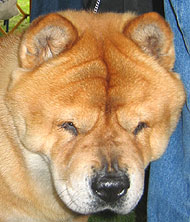

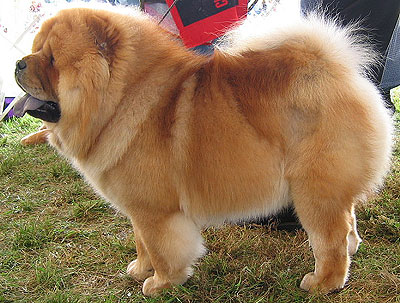
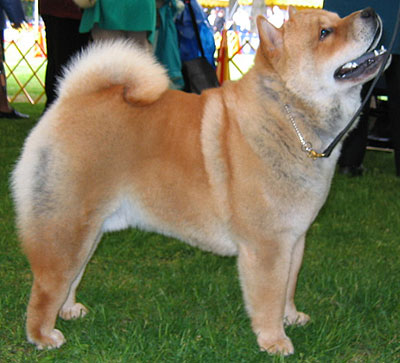


http://www.dogsindepth.com/nonsporting_dog_breeds/chow_chow.html
Non-Sporting
/ Large Companion Dog Breeds
|
||
|
o
also
a Spitz Breed Dog •Bichon Frise o
also
a Molossoid Breed Dog o
also
a Spitz Breed Dog o
also
a Molossoid Breed Dog o
also
a Spitz Breed Dog |
o
also
a Spitz Breed Dog o
also
a Spitz Breed Dog o
also
a Spitz Breed Dog |
·
•Lowchen o
also
a Spitz Breed Dog o
also
a Spitz Breed Dog •Tibetan Spaniel ·
|
INSURANCE
http://www.bankrate.com/finance/insurance/11-dogs-that-could-raise-your-insurance-costs.aspx
11 dogs that
could raise your insurance costs
By
Kay Bell • Bankrate.com
Insurers say
when they identify dog breeds that tend to bite, it helps bring down the cost
of homeowner policies. Dog owners say their pets should be considered as
individuals and the insurance approach amounts to ineffective canine profiling.
Some states are
considering barring "breed discrimination" by insurers. Even the
American Kennel Club has weighed in, arguing that some dogs save insurance
companies money because the animal is a natural alarm system whose bark deters
intruders and prevents potential theft.
While the
debate rages on, many major insurance carriers continue to limit coverage to
dog owners. Large dogs that can inflict a lot of damage are prime
"no-insure" targets. Other considerations that influence a company's
willingness to cover a breed include the frequency of dog bites for the breed,
the breed's reputation as well as research conducted by the Centers for Disease
Control and individual insurance companies.
Will your
family pet cost you more in insurance premiums? Here, listed alphabetically,
are 11 pooches that regularly make insurance companies' "bad dog"
lists. Breed information comes from the American Kennel Club and various breed
Web sites.
Breed
information
|
|
|
|
|
|
|
|
|
|
|
|
|
|
|
|
|
|
|
|
|
|


Read more: Dogs that could cause homeowners insurance rates to rise
http://www.bankrate.com/finance/insurance/11-dogs-that-could-raise-your-insurance-costs.aspx#ixzz1O8rq8zgv
http://www.beeson4law.com/CM/LegalArticles/Dog-Bite-Insurance-Coverage.asp
Insurance Companies Balk at
Covering Dangerous Dogs
Dogs that bite people can cause
disfigurement, broken bones, amputations, emotional trauma and even death.
While the psychological aspects of dog bites are significant, the economic
costs are also high. Injuries from dog bites and attacks may require surgery,
hospitalization, physical therapy and counseling.
If the dog owner owns a home, there may be
homeowners insurance that may provide dog bite victims a source of recovery for the injuries
and damages they have endured. Additionally, if the dog owner is a renter, a
renter's policy may also provide a source of recovery for the victim.
The purpose of the insurance policy is to
help make the victim whole for their physical and emotional pain and suffering,
and the economic losses sustained as a result of the dog bite and attack.
Another purpose of the policy is to make sure that dog owners do not lose their
personal assets because of the attack and bite of their dog. The recent trend
of insurance companies refusing to insure so-called dangerous dog breeds,
however, makes it more difficult for victims of dog bites and attacks to secure
compensation for their injuries and losses and also exposes the dog owners to loss
of their personal assets.
The Impact of Dog Bites on the Insurance
Industry
Approximately one-third of all homeowner's
insurance claims are related to dog attacks, according to the Insurance
Information Institute. Insurance companies pay over $300 million a year for dog
bite claims.
In response to figures like these, many
insurance companies have reevaluated their coverage of certain dog breeds. Some
companies now require prospective clients to sign liability waivers for their
dogs. These waivers result in the dog owner being uninsured for the damage the
dog does in the event of a bite or attack. The personal assets of the dog owner
become at risk to loss. Other insurance companies refuse altogether to offer
homeowners insurance to the owners of certain dog breeds. In such cases, pet
owners have several choices:
- Search
for alternative insurance providers
- Secure
expensive, separate insurance for the dog
- Give
up the dog to a shelter
- Go
without insurance for the dog
- Run
the risk of being personally responsible for damage done in a bite and
attack and losing personal assets
Paying out of pocket rather than relying on
insurance after a dog bite could be financially devastating for a pet owner.
Not having insurance or adequate insurance limits will require the victim to
proceed against the personal assets of the dog owner.
The dog breeds that insurance companies have
identified as dangerous or vicious
vary, but many lists include:
- Chow chows
- Rottweilers
- Doberman
pinschers
- Akitas
- Wolf
hybrids
- Presa
Canarios
- Staffordshire
bull terriers
- Pit
bulls
- German
shepherds
Working With Insurance Companies
Not all insurance companies refuse to cover
certain dog breeds. Indeed, some will cover any dog. Others will request a pet
interview, in which they investigate the dog's training, temperament and
treatment, in addition to whether the dog is spayed or neutered.
Insurance companies will use whatever tactic
is available to attempt to deny and defeat a victim's claim, even if it means
exposing their own insured's personal assets. In a recent
Breed-Specific Legislation
Some states, counties and cities have enacted
breed-specific legislation. These laws identify and restrict certain dog breeds
because of their history of, or propensity for, violence. Some laws ban such
breeds outright; others mandate that owners of dangerous dogs spay or neuter
their pets or keep them muzzled in public.
Many dog owners argue that it is the owner,
rather than the breed of the dog, that determines the dog's behavior, and
proper training, discipline and lifestyle are the most important influences.
Others, however, believe that certain kinds of dogs, especially those that are
bred to fight, must be banned to protect the public.
With the changes in insurers' approach to
certain dog breeds and the prevalence of breed-specific legislation, many dog
owners are feeling the effects of the rising sentiment against dangerous dogs.
Regardless of the dog's breed, all
responsible dog owners should have an adequate insurance policy providing
coverage for the victim and asset protection for the pet owner in the event the
dog bites or attacks another animal or person. Even the most docile and
even-tempered animal can bite and attack.
California
If the dog owner knew that the dog had bitten
before or had a dangerous nature, the owner could also be held liable for
punitive damages. Punitive damages are additional money paid to the victim, designed
to punish the dog owner for his or her actions.
Because California's dog bite laws are so
strict, homeowners insurance or renters insurance for dog owners is all the
more important — both for the protection of the dog owner's assets and
compensation for the victim of the attack.
http://www.dogster.com/forums/Dog_Laws_and_Legislation/thread/410484 List of 75 Banned or Restricted Dogs
|
For anyone reading this outside the |
|
|
|
|


Push for Ban on Dogs Likely
to Bite
On Friday last, Rep. John Lesch, DFL-St. Paul, stated that he
plans to push for a state ban on 5 particular breeds of dogs that are deemed a
threat to the safety of the public. Included in the list of dogs that have a
likelihood of attacking are: Wolfhybrids, pit bulls, akitas, chow chows, rottweilers or any mixed-breed dog with the
above traits.
http://therealowner.com/dogs/the-six-most-dangerous-dogs/
The Six Most Dangerous
Dogs
This is not an Anti-Breed link, although some breeds
are mentioned. It is a link to bring attention to many realistic factors
involved in making a dog dangerous, and breed is one of them, a large dog is
naturally able to do more harm than a small one.
· American Pit Bull Terriers
I know there are a lot of people
who own, and love Pit
Bull Terriers, but these dogs are on this list for two good reasons, the
first being the fact that these dogs were bred for a purpose, to fight (other Bull Terriers
were bred to hunt and kill, these were selected and bred to create the American
Pit Bull
Terrier). American Pit Bulls
were bred for generations to be tenacious, aggressive, and to have a killer
bite, a jaw that can hold very strongly. The other reason is that their very
name elicits fear, making this dog a choice of criminals or people who want to
appear “tough“. This is not the right reason to get a dog. These people
often mishandle the dog intentionally to make it mean or aggressive, or they
get a dog to be “cool” and are not properly familiar with how to correctly
train and discipline such a dog. A dog raised like this is a dangerous thing.
While Pit Bull Terriers may make wonderful pets when owned by a
knowledgeable person, and handled correctly, this is one dog
that if a person makes mistakes, they can cause serious problems.
· Chow Chow
Again, there are many wonderful Chow Chow
dogs, and I do not want to take anything away from those dogs, or their owners.
The problem with Chow Chow dogs is simply that they have a reputation
of being unpredictable. They will turn on somebody without warning.
Chow Chows are one breed that some dog groomers will actually refuse to handle,
simply because of their unpredictable nature. This nature may be due to the
fact that this is an very ancient breed, being closer to wolves than the newer
breeds. Chows require a handler that knows about dog psychology.
- 4 more… (see link above)