| The Games and Sports of Steelrelm |
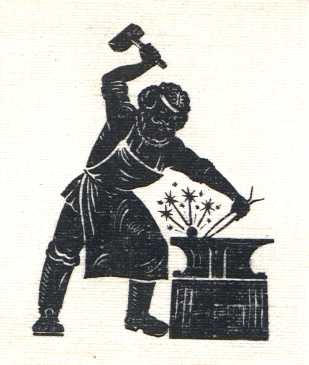
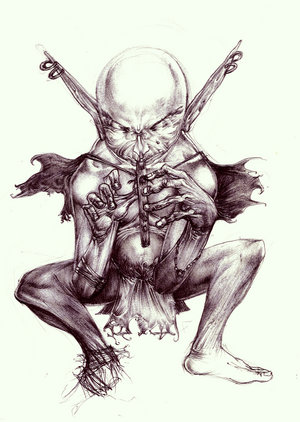
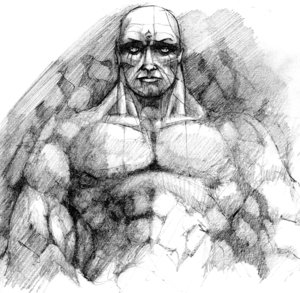
| Games Cards The traditional deck of playing cards in Steelrelm has 4 suits, each consisting of 13 cards. The order of these cards, from high to low, is King, Queen, Knight, 9, 8, 7, 6, Knave, 5, 4, 3, 2, Dark. Some regions play the Dark card as high; if unsure if Dark is high or low, the question is typically asked, "does Darkness reign?" The four suits of the deck are as follows, in order of typical ranking: Gods: The highest ranking suit, Steelrelm's pantheon is represented in this suit. It is associated with the Isle of the Gods, the Or-Algid Slopes. This suit symbolizes knowledge, divinity, immortality, and fear. Its symbol is a steel hammer. Ghosts: This suit depicts ghosts of various emotional states and personalities. Agnomen, Land of Giants, characterizes these macabre cards. This suit symbolizes perseverance, humanity, the inevitability of death, and sorrow. Its symbol is an iron chain. Golems: The stoic, tragic golems make up the third suit of cards. The Metal West is well-known for its mechanical prowess, and thus the Crucible is paired with the golems. This suit symbolizes strength, machinery, dependence, and apathy. Its symbol is a steel gauntlet. Goblins: As goblins are thought by many to be the lowest of sapient beings, they are the lowest suit. In Oriensolum, the Beautiful Danger, goblins have situated themselves at the edge of the world, so this suit belongs there. This suit symbolizes cunning, bestiality, insanity, and anger. Its symbol is an iron rack. |
| Gods King - Rhodes Queen - Decima Knight - Drevix 9 - Ked 8 - (Aaron?) 7 - Kalu 6 - Yuki Knave - Sindarius 5 - Reid 4 - Novita 3 - Ayre 2 - Elaadon Dark - Dark God |
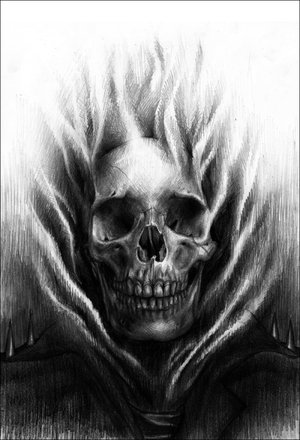
| Ghosts King - Damned Queen - Redeemed Knight - Noble 9 - Angry 8 - Hungry 7 - Loving 6 - Thinking Knave - Suicidal 5 - Screaming 4 - Kissing 3 - Laughing 2 - Weeping Dark - Dark Ghost |
| Golems King - Mithril Queen - Diamond Knight - Steel 9 - Platinum 8 - Gold 7 - Silver 6 - Copper Knave - Iron 5 - Glass 4 - Ice 3 - Clay 2 - Flesh Dark - Dark Golem |
| Goblins King - Cacbac Queen - Yakpak Knight - JackShack 9 - Cac 8 - Yak 7 - Shack 6 - Mutant Knave - Feral Goblin 5 - Burned Goblin 4 - Drowned Goblin 3 - Starved Goblin 2 - Hanged Goblin Dark - Dark Goblin |
| Card Games Unlike the individual games of Steelrelm, which strongly vary between regions, the card games are essentially universal. Depending on the game, symbolic significance is placed on different suits (pitting man against god, for example, or beast against machine). In addition, the cards are a popular medium of divination. Various events/meanings/actions are associated with each of the cards; these meanings are vague enough to be applied to nearly any person or situation. Depending on the reader, different amounts of cards are drawn, and each card receives a particular assignment (to the subject, his environment, friends, enemies, luck, etc). As with most mysticism in Steelrelm, there are those who can truly see with the cards, but there are also many charlatans. There are also those who place real-world significance in the cards, saying that each card represents a being or location that can be found in Steelrelm. The suit symbols (hammer, chain, gauntlet, and rack) are believed to describe long-lost artifacts from the days of Ironrelm. While all this is possible, there are four cards that defy this rule: the Dark Cards. In particular, the mysterious Dark God is regarded as terrible knowledge, and a bad omen. It is whispered that it symbolizes a dead god, or (in well-educated circles) Tek, or, perhaps, a god whose time has not yet come... Betrayal- This 4 player game is played with all the cards. Each player receives a hand of 13 cards, and each player secretly assigned a suit (usually by being dealt a token or something similar). It is a simple trick-taking game with no trump, where each player scores two points for each card of their assigned suit, and loses one point for each card of the same metal (the player with Gods, for example, would lose points for getting Golems, the other steel suit). Play continues until a certain number of hands are played, or a player reaches a certain point total. Power Struggle (or just Struggle)- A 3 to 6 player game, which uses most of the cards (depending on how many players there are). After the deal, each player bids on the number of tricks they think they can take; highest bidder gets to name the suit that is trump that round. In the case of a tie, the player who plans to name the higher suit (see previous section on suits) wins. After the suit is named, the remaining players re-bid, based on what the named trump is. Players score one point for each card bid if they make or exceed their bid; otherwise, they score nothing. Rebellion- A 3 or 4 player game, Rebellion pits the most powerful gods against the rest of creation. Players are dealt all the cards, resulting in hands of 8 cards (some amount of cards are removed from the main deck, depending on the number of players, starting with the 2s and going up) and a 'cache' of 2 extra cards in the middle. Starting with the player to the left of the dealer, each player has a chance to declare himself on the side of the Gods. If he does this, the player takes the cache and replaces those 2 cards with any 2 cards in his hand, if he wishes. This player uses the King, Queen, Knight, and 9 of Gods as trump (the other players do not). The other players, the usurpers, are on a team, and use the Dark cards as trump (the player on the Gods' side does not). Whichever team wins more tricks wins a point that round; ties go to the usurpers. (Note: if trump from both teams is played on the same trick, the Dark God is the highest trump in the game, followed by the Gods, then the remaining Dark cards) Slag- Each player is dealt 6 cards; all cards are used, the rest are placed in the center as a draw pile. Players take turns drawing a card, and discarding a different card of their choice. If the draw pile is empty, the discard pile is shuffled and becomes the draw pile. The goal is to collect cards of the same suit, or of the same rank. When a player believes he has the highest score, he 'claps' on his turn to announce such (and also skips his draw/discard for that turn). Each player gets one more turn, and then scoring commences. Each players selects a suit or a rank to score; each card of a suit is worth one point, each card of a rank is worth two points; these scores are compared, and a winner for the round is determined. If the clapper wins the round, he gains two points. If the clapper ties, he earns no points. If the clapper loses the round, he loses one point. If someone besides the clapper wins the round, he wins one point. Brain Poker- An unusual game, Brain Poker combines betting, bluffing, chance, and guesswork into a single package. The gameplay is similar to 5-card draw (though many variations exist), with one exception. In addition to betting on a winning hand, players who have folded can also bet on what the nature of their opponents' hands is. Betting on basics, such as who will win the hand, is usually worth small odds, whereas guessing more extensive details, such as 'three 4s' or '2s and knaves with a side queen' can be worth very large returns. An old Steelrelm idiom refers to one who can read people very well as a "brain poker", and thus a player who wins a substantial amount on such side bets is called the "brain poker". Individual Games Metal West Games in the Metal West tend to have more strategy than luck, and are seen as a way of honing and sharpening one�s mind. Certain Westerners have been known to spend days at a time on one particular game, so intense is their fascination. Progress- Players take turns placing one token on grid intersections of a gameboard, (usually black vs white), attempting to create complete structures, such as squares, circles, spirals, etc, or block the opponent�s incomplete structures. More complex structures are worth more points, and also more difficult to complete. In Agnomen, there are additional rules detailing the ability to destroy and/or corrupt the opponent�s structures, and the game is referred to as Suffering. Alloys- This game involves adding tokens to the pot, called the �ingot�, without adding too many and �spoiling the alloy�. Players take turns adding tokens (usually small gold vs larger silver pieces) into the ingot. Before gameplay begins, each player rolls a set of dice beneath a container of some kind; these values remain hidden from both players. These rolls represent the maximum amount of tokens a player can individually add to the ingot without losing the game. In addition, a set of dice is rolled in view of the players, which represents the total maximum tokens which can be added to the ingot- this number cannot be exceeded (the amount of dice rolled for each maximum value varies, depending on player preferences). Each player takes turns adding 1, 2, or 3 tokens of their metal into the ingot. The game ends when neither player wishes to add anymore tokens or the total maximum has been reached. The player who added the most tokens without spoiling the alloy wins. If both players spoil the alloy, the one who went over their limit by the least wins; if this is a tie, it is a draw. Variations include: having a hidden total maximum, or having a third, more expensive metal (usually platinum) that is able to be played by both players and that has a separate (also unknown) maximum value. Agnomen More than anything, Agnomian games emphasize direct competition, where the players pit their will and patience against each other. Visitors to Agnomen should be cautious when participating in anything, even something as deceptively innocent as a game. Cruelty- Players start with one token (referred to as the Blind) on opposite sides of a grid (usually 9x9). The objective is to get the token to the other side of the grid (which is the opponent�s starting place). Players take turns performing one of two actions: move their own token one square (tokens move from square to square), or place an obstruction (referred to as a Wall of Weeping; players usually start with 10) on the board (obstructions are placed either vertically or horizontally on grid lines, and are two squares long; obstructions block movement; the two rules concerning obstructions are 1) that they cannot overlap or cross, and 2) a player cannot completely block the grid vertically or horizontally). A four-player variation exists, where the 2 additional players sit on the remaining two sides of the grid, and each player has a pool of 5 obstructions. Agnomenian Fortune- This game is frequently played by the more fatalistic of the Agnomen population. A number of wands (usually between 5 and 20) are placed on a table, and the players take turns selecting a wand, and activating it upon themselves (traditionally by pointing it at their head). There is one �losing� wand, and the rest are �neutral�. Depending on the stakes of the game and the particular tastes of the players, the neutral wands can range from blank, to something pleasant (such as healing), to something only moderately painful (inflict wounds); similarly, the losing wand can range from something simple (inflict wounds, or a bright flash) to something much more severe (phantasmal killer, finger of death, disintegrate) and everything in-between. Or-Algid Slopes Opposite to the ever-strategizing Westerners, Slopers much prefer games that lean heavily towards chance. Knowing that life is short and the gods are fickle, they find entertainment in gambling on coin flipping, dice rolling, and the like. Fate- Each player takes turns rolling 2 six-sided dice. The dice are blank on every side except one, which is marked by a slash, a skull, or whatever the owner desires. When a player rolls both symbols simultaneously, the game is over, and that player wins or loses, depending on the particular variant being played. In a high-stakes variant, more dice are added over time (with still only 2 symbols needing to be rolled), with the stakes doubling, tripling, quadrupling, and so forth, until the game ends. Miracles- Players take turns rolling 6 dice at a time. Points are scored for 1s and 3s, as well as a �small slope� (a run of 4) , a �steep slope� (run of 5), a �god slope� (run of 6), a 'sulfur smile' (3 of a kind), and a �miracle� (six of a kind). The game ends either after a set amount of turns, or a player meets/exceeds a given score. Oriensolum Games in the East center around interaction between players, in the form of bluffing, trading, and politicking. They usually combine skill and luck. Ambush- A 2 player game of luck, skill, and bluffing. The gameboard consists of four quadrants of 6 spaces each. One player moves clockwise around the board, and the other player moves counter-clockwise. The tokens (20 total) begin in play in a specific configuration. Lone tokens can be captured if landed upon. In addition, different tokens (differentiated by colors on the facedown side) interact/attack in different ways (green is the most powerful, brown is second, etc) The object of the game is to get all tokens to the player�s final quadrant, and from there, conduct an attack on the opponent�s base. Tempest- Played with 4 or more players, Tempest is a game of order amongst chaos. Tiles, carved on the top with runes representing different elements (one element for each player, 9 tokens per element; with more than 4 players, elements such as astral, shadow, light, spirit, mind, etc are used) are distributed facedown to each of the players. The goal is to acquire a full set of one element. This is accomplished by trading smaller element sets (such as 2 fires, or 1 earth, or 4 shadows) facedown to other players, until one player gains a full set and shouts �Tempest!� to win the round. There are variants which include non-elemental tiles that change the rules (such as the Wizard, which counts as any element, but loses a player points if in a non-winning hand at the end of a round; or the Dragon, which prevents a player from winning a round until it is traded away). Sports Steelrelm The Steelman- Sports typically do not take place on an inter-realm scale, owing to the danger of travel, even during the most peaceful of times. The exception to this rule is the Steelman, which only takes place as a competition between the lands. The Steelman takes place in Lost Rhizu, for its central location and neutral status as a 'no man's land'. Every 5 years, each realm sends 4 Champions to Rhizu, who compete on the games. The Steelman consists of eight individual events, falling into one of four categories: stealth, strength, skill, and sense; two events are brought by each realm, consisting of one solo event and one team event. The 4 Champions each correspond to one of the four categories. Stealth events rely on trickery and silence; they can be hunting games, illusion contests, or even faux assassinations. Oriensolum typically excels in stealth. Strength events require raw power of one kind or another; they can involve lifting, magic duels involving evocation, or wrestling. The Or-Algid Slopes do well here. Skill events test dexterity, finesse, and training; they range from swordsmanship and martial arts to acrobatics and horseriding. Agnomians specialize in skill events. Sense events challenge the eyes and the mind; puzzle-solving and riddle contests, as well as detail-finding and pattern-breaking events abound. Westerners reign in sense. The future Steelman events are announced at the end of the current one, giving each team a full 5 years to assemble a new team (or keep members of the old team) and practice. In addition, after the new events for the next Steelman are announced, the event-organizers for the Steelman after the next are also announced; that is, each realm is randomly assigned one solo event and one team event to organize for announcement in 5 years time (for example, the Metal West may be assigned to organize the solo stealth and the team strength events for annoucement in 5 years' time). Though the 4 realms each have an area of specialty, there is almost always at least 1 or 2 instances each Steelman where a team other than the favorite wins an event. Typically, there are prizes for the winner of each contest, provided by the organizers of that contest. More importantly, the prestige of winning a Steelman event is equal to that of being a war hero, or a member of royalty. Metal West Ledstrike- This sport involves a heavy (but hand-sized) lead sphere. The object of the game is to get the ball past the opponent's Defender, who guards the Castle (usually consisting of 2 metal posts about 15 feet apart). The field is approximately 200 feet in length and 75 feet in length. 4 field players, plus the Defender, make a full team of five (no subsitutions allowed). Depending on the team and the level of play, players are equipped with a certain amount of gear: this includes protection (ranging from light to heavier armor) as well as ultility (most players have a gauntlet or two, and many have ladle-shaped add-ons that aid in ball handling) Defenders are equipped with two shields. Two major leagues exist: the Cold League and the Forged League. The Cold League focuses less on armor and more on acrobatics; though skill is required, it is a combination of show and sport. The Forged League is much more serious; armor is a necessity, competition is fierce, and attacking other players with the ball is allowed (though it is limited by the rules). Truesmithing- Scrounging made sport, Truesmithing has a simple premise: two teams are given a scrapyard to share, a set of tools, and a challenge. The challanges range from 'make the strongest, tallest tower you can in 2 hours' to 'create a machine that turns water to ice in the least amount of time'. Naturally, artifice reigns in the arena; magic is stricly prohibited. Truesmithing is not as popular as Ledstrike, but those who do follow it are very avid fans. Agnomen Dance of the Giants- In its most traditional form, Dance of the Giants involves teams of 6 that make up the 'body' of a giant; that is, the teams form a human pyramid that consists of two legs, two arms, a torso, and a head, each of which is represented by one of the team members. Two forms of the Dance exist: one is more of an artform, where teams perform intricate dances which require great strength and finesse; the other is more combat-oriented, yet still graceful, where opposing teams wrestle each other in an attempt to force their opponents out of a ring (typically between 30 and 50 feet in diameter). In less traditional circles, the Dance may be composed of fewer parts (even as few as two), to allow less skilled participants to play. Pyre Running- Pitting man against nature, Pyre Running (or Swamp Running) involves Runners sprinting through locations in the swamp prone to combustion. More extreme competitions intentionally set fires after the race has begun, to ensure some amount of danger. Even if no fires happen at a given race, the swamps of Agnomen still offer the very real chance of death. Or-Algid Slopes Oriensolum Prey- A magical duel of sorts, Prey involves two opponents: predator and prey. The arena is a large (usually a square mile) enclosed space that takes the form of whatever the surrounding environment is, be it jungle, desert, mountain, or swamp. The predator, using offensive spells and locating spells, tracks the prey through the arena, and attempts to incapacitate him. The prey, meanwhile, uses defensive spells and cloaking/misdirection spells to stay safe and hidden. In addition, both players use their natural skills to aid their hunt/evasion. The game ends after the prey is incapacitated or a certain amount of time elapses. Depending on the arena, certain spells are prohibited. Painchain- Another field game, similar to Ledstrike, but, instead of involving armored opponents handling a heavy lead ball, Painchain involves nearly-nude competitors battling for control of an iron chain. The chain, known as the painchain, is enchanted to cause terrible pain to those who hold it; the nature of the pain ranges from scorching heat to icy cold; from crackling electricity to stinging acid; some chains are even combinations of these types, while others inflict pure pain (similar to a symbol of pain). The home team's chain is used, a distinct advantage, but most teams practice with a variety of chain types to ready themselves for away games. The Painchain field is 85 feet in length and and 40 feet in width, with a large hook (usually connected to a tree or a pole) positioned at each end, which is 10 feet in the air. The objective is to score points by either 1) throwing the chain at the hook in such a manner that it loops around it, or 2) leaping up and suspending one's self from the hook via the chain for 5 consecutive seconds. |
 |
 |
 |
 |
 |