
Usually by the end of the second week the extra light fixture is not necessary.

|
|
|
|
|
|
|
|
|
|
|
|
|
|
|
|
|
|
|
|
|
|
|
| Brooders | ||||||||||||||||||||||
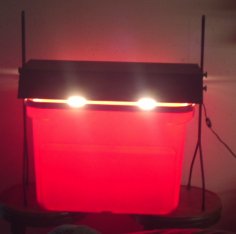
| Brooders can be as simple or as complicated as you care to make them. When I incubate eggs, I wait until the chick is completely dry in the incubator before moving them to a brooder. Sometimes, however, they have to be moved before they dry (like if they floping around and rolling the other eggs all over the incubator). When this happens, I set up a temporary brooder for them until they're dry. This type of set-up is also very useful for when you have chicks mailed and they are a bit weak. That extra special care and a watchful eye can be the difference between life or death with some weaker chicks. | ||||||||||||||||||||||
|
||||||||||||||||||||||
| A large Rubbermaid-type container works well as a temporary brooder for weaker chicks. The most important things are to keep the chicks in a warm, dry, draft free area. Line the floor with a burlap sack or paper towels to absorb moisture and give the chicks a good footing. Newspaper is not suitable for chicks because of it's slippery surface. Any type of light will work as a heat source, use an accurate thermometer and keep the temps at 95-98�F for the first 3 days. | ||||||||||||||||||||||
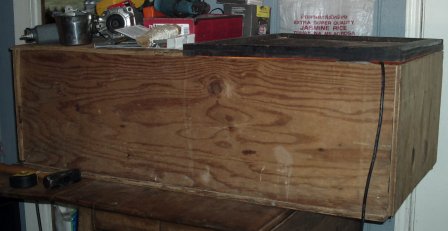
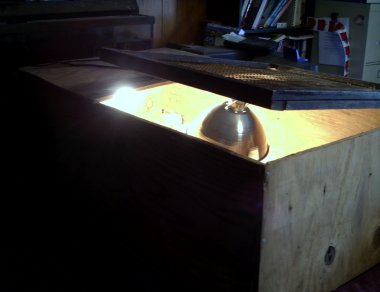
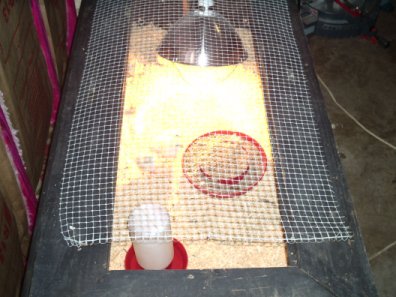
| This is our big brooder. It is basically a big wooden box. The left side of the top has a regular household ceramic light fixture installed, and the right side of the top is the door. We use a regular light bulb (60-100W) in the fixture, depending on the temps. When it is really cold we'll use a reflector-style light with either a 100W or 250W heat bulb. It is 48" X 24" X 18" tall. | |
|||||||||||||||||||||
|
||||||||||||||||||||||
| This is where it is so important to have an accurate thermometer. Depending on weather and the age of the chicks, the amount of heat (or bulb wattage) can change from week to week. Usually by the end of the second week the extra light fixture is not necessary. |
||||||||||||||||||||||
|
||||||||||||||||||||||
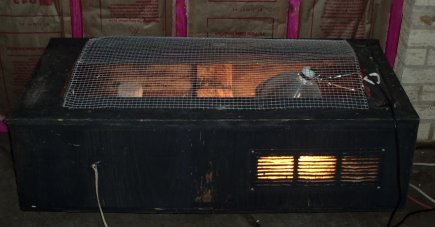
| This is the brooder we use mainly during the summer months. It has a vent on the side and open on top to allow excess heat to escape. It also has a regular ceramic household light fixture built in. It is 48" X 24" X 12" tall | ||||||||||||||||||||||
|
||||||||||||||||||||||
| It is also handy to have for weaker chicks or if we need the extra room. We simply add the reflector light w/ heat bulb, and use a tarp on the top to adjust the temperatures. | ||||||||||||||||||||||
|
||||||||||||||||||||||