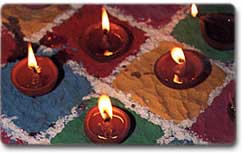
Shubh Deepavali
Deepavali - The biggest festival in India. Deepavali or Diwali is an occasion for the invocation of the Gods of prosperity and plenty, is celebrated with great pomp and splendour all across India. The word Diwali is the shortened version of "Deepavali', which means a cluster of lights or an array of lamps. 'Deep' means Light, and 'Aawali' means row. The festival is celebrated 20 days after Dussehra that is on the 15th day of second fortnight of the month Ashwin (Indian calender) which comes sometime in October/November.
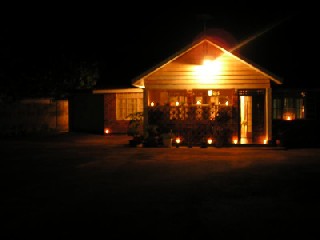
A glowing house. Ready for Diwali !
Diwali is a 4 day festival. The days are NarakChaturdashi, Laxmi Poojan, Bali Pratipada, Bhaubij (YamaDwitiya). The importance behind each day is as follows.
Narak Chaturdashi - Actually Diwali begins on Vasubaras, which is a day to worship the Cow. India is an agriculture based country. For the purpose of successful agriculture, cows and bulls are very much needed. Hence many legends behind Indian festivals relate to agriculture. On this holy day, people worship cow and her calf. But real Diwali celebration begins on Narak Chaturdashi. It is the fourteenth lunar day (tithi) of the dark forthnight of the month of Ashwin and the eve of Diwali. On this day Lord Krishna destroyed the demon Narakasur and made the world free from fear. People get up early in the morning and perform the holy bath called as 'Abhyang Snaan'. All dress up in new clothes, and go out to greet friends, relatives, burst crackers.
Laxmi Poojan - The new moon night, "Amavasya", of Ashwin, is a big celebration, known as Laxmi Poojan. King Bali had taken Laxmi as a slave. Vishnu, in his fifth avatar as Vaman, defeated Bali and liberated Laxmi. On this day the liberation of Laxmi is celebrated by worshipping Laxmi. Shopkeepers and merchants worship their account books and their merchandise. Light overcomes darkness and night becomes like day. It is believed that on this day goddess Laxmi which symbolises wealth, visits each and every house stops to bless the homes that are shiny and sparkling clean. So as this festival approaches, all houses go through a thorough spring-cleaning in anticipation of her wealth and blessings. She is welcomed by a beautiful gaily painted Rangoli on the threshold of each home while inside too she is welcomed by an array of sparklers and little earthen lamps that light up and considerably brighten the atmosphere. The pooja for laxmipoojan is performed in the evening. All shops offices are kept open on this day. Bursting crackers, meeting people is the core part of this festival so these things happen on each diwali day.
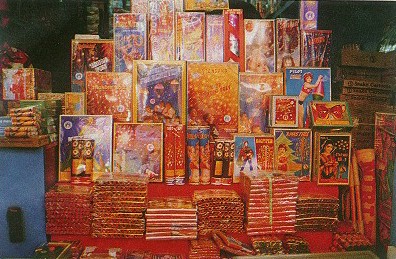
Bali Pratipada or Padwa - It is a very auspicious day. For business community; particularly 'Marwadis' and 'Gujratis', it is the new year day. Their new year, also called as 'Samwat Year' stars on Padwa. It is one of the best times to make big purchases or start new ventures. It is also a day for husbands to give gifts to their wives.
Bhaubij - This day is about the brother - sisterr relationship. Sisters greet their brothers in traditional way. Brothers, in return, give gifts to sisters. Both pray for well being and prosperity of each other on this day. It is said that on this day, every brother, must visit his sisters wherever they are. Yamuna, had invited her brother 'Yama' on this day. Since then it is celebrated as explained above by all the Indians apart from their religions and castes. It is called in Hindi as 'Bhaaiduj'.
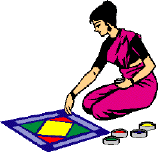
The main purpose behind diwali is the elimination of darkness by lighting lamps, eliminate the evils in the society and spread rays of happiness. The festival of Diwali is not complete without the Rangoli, a decorative pattern made on the floor to adorn the front of the house. A Rangoli is an invitation to guests and is believed to bring good luck. It is also believed to be a border which prevents evils from entering the house.
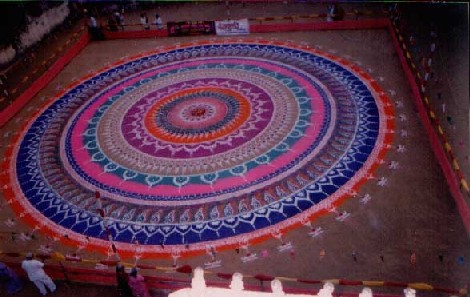
A huge size rangoli made by the members of a club 'Rangavalli' in a ground.(75 ft.)
It is also the season of giving and renewal. Delicious homemade sweets are packed in decorative boxes and sent to friends and relatives along with wishes for along and prosperous life. Many people even prepare meals for the less fortunate, donate a part of their month's earnings to temples and pray well being for their families. Among the business class Diwali is the time of presenting employees with the gifts and bonuses in appreciation for their dedicated service. Shopkeepers closing their occasions or this time of the year, usually place their ledgers in front of Laxmi, the Goddess of wealth. Laxmi is believed to visit homes and shops that are well lit, families decorate their homes with flowers and paper chains. People don their best clothes, or buy new ones, children are given presents and sweets and season's greetings are exchanged through visits or Diwali cards. All in all these Diwali celebrations indicate the socio-religious bond that people share with each other. So celebrate the joy of lights and let the deafening roar of fireworks chase away the demons lurking in the dark.
In short, this is the time to celebrate !
Happy Diwali !