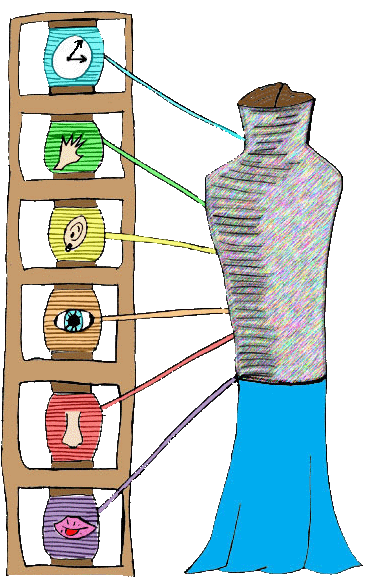
| The dharma of no-thought means: even though you see all things, you do not attatch to them, but always keeping your own nature pure, cause the six theives [the six fields of the senses, i.e. seeing, hearing, etc., plus discerning] to exist through the six gates [the five sense organs]. Even though you are in the midst of the six dusts [six qualities produced by the objects, sight sound, etc. plus ideas], you do not stand apart from them, yet are not stained by them, and are free to come and go. This is the prajna samadhi, and being free and having achieved release is known as the practice of no thought. -Hui Neng, from Mysticism, Mind, Conciousness by Robert K.C. Forman |
 |