| Extracts from the Encyclopædia Qinqe |
 |
|
|
Battle of Small Island Bibae, Randolph, Sr. Bibae, Randolph "Arfer", IV CacikeBo Clontuskert Cocuyo Cocuyo Game Daca Delgapo, Michael duBuyer, Jean Ghent, Treaty of Gilgo, John Guardian Prayer Honor, Twelve Laws of Jalinski Stella Kawani Lake Qinqe Mapstone Massacre of 1878 McMasters, William Mt. Qinqe Mt. Qinqe National Park Nimawi Order of the Guardians of St. Bartolomeo Qinqean National Forest and Wildlife Preserve Rainwater Falls Riots of 1942 Salovega Map Slave Trade Saint Bartolomeo de Qinqe USS Senate Wharkat, Joanna |
Battle of Small Island In retaliation for the Bay of Pigs, Cuba revived an old territorial dispute over Small Island. Using an old Spanish claim as a basis, Cuba invaded Small Island hoping to obtain the oil resources that it offered. Governor William Johns called out the Qinqean National Guard. By the time the US Naval Force and the Marines arrived, the QNG had the Cuban invaders localized to the main Qinoco refinery. Colonel Juan Guevera – no relation to Che Guevera – threatened to blow it up if the American forces did not leave the territory of Cuba, meaning Small Island. At the urging of Qinoco executives, diplomatic means were set in motion. The dispute was settled in December of 1961 by the withdrawal of Cuban forces from Small Island. This peaceful solution was the result of international arbitration between Cuba, France, England, and the United States. The agreement allowed the United States to retain possession of Qinqe but with the understanding that the island would be given full independence before the year 2000. In return Cuba renounced all claims to Small Island.
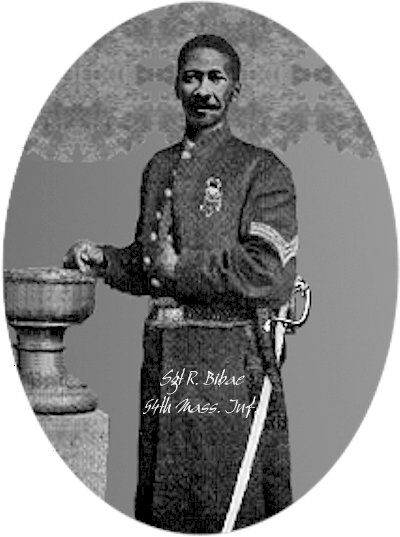
As a squad leader serving with the 27th Franklin Colored Infantry, he fought against the Confederate forces at the Battle of Patterson Fork near Wythe City, Franklin. During the battle when it appeared that the Confederate forces would push the Union troops from the field, Sergeant Bibae rallied his squad and the remnants of another unit and led them to a critical position forward of the front lines. Soon thereafter, they came under an intense artillery barrage that was quickly followed by a ferocious ground attack by some forty Confederate soldiers. Despite the loss of one-half of his men, Sergeant Bibae remained at the forefront, shouting encouragement and directing deadly fire, thereby repelling a very determined enemy. He led his squad in repelling three more fierce attacks but suffered five additional soldiers killed and one wounded. Sergeant Bibae, assisted only by the wounded soldier, halted another attack. During this vicious attack, he suffered multiple wounds including one by bayonet. Reinforced by six men, he reorganized his defensive position in time to halt a fifth enemy attack with devastating small arms fire. On three separated occasions, Confederate soldiers closed to within bayonet range but were killed by Sergeant Bibae. When the attacks subsided and having yielded no ground, over 70 enemy dead were counted around his position. Sergeant Bibae was awarded the Congressional Medal of Honor for conspicuous gallantry above and beyond the call of duty and at the risk of his own life. At the end of the war, the soldier returned home with his cherished Congressional Medal of Honor. Like him, many of his former customers had gone to war. All too many had failed to return. Others, like his in-laws, had packed up their homes and businesses and had moved back to the states. It was readily apparent that the newspaper was no longer a viable entity. He bought out his partner, packed up the press and after a short stay in South Carolina, he immigrated to Qinqe. From its inception in 1868, his new publication, the Qinqean Harbinger, was a thorn in the side of every governor to hold the office. A particularly harsh editorial was blamed for instigating the assassination of Governor Charles Ribbins in 1873. Another editorial, in 1878 is credited with inciting the Uprising. After the Uprising was put down, Bibae was brought to trial on charges of sedition. Because of his newspaper’s strong pro-United States editorial stance, his well-known war record and his popularity and standing in the community, all charges were eventually dropped. Some historians, notably Richard Vlascov, point to evidence that suggests that Bibae may have played a support role in the planning of the Uprising. Comparison of the print type used in the Uprising’s political pamphlets and some later publications by the Harbinger shows they are the same. The Bibae family denied any connection and stated that the type was acquired at auction almost a decade after the Uprising. The fact that type was first officially used by the Harbinger in an editorial commemorating the Uprising was purely coincidental. Shortly after his death in 1903, the small town of Bibaeton was named in his honor. The Qinqean Harbinger, is the leading newspaper on the island today and is still owned by the Bibae family. Bibae, Randolph "Arfer", IV The great-grandson of Randolph Bibae, Sr.. Known by his nickname as Arfer or R4 which stood for Randolph the Fourth. Arfer was an officer in the all-Black 761st Tank Battalion which saw 183 consecutive days of combat with General George S. Patton's army in Europe. The Battalion was credited with killing 6,266 enemy soldiers and capturing another 15,818. During the Battle of the Bulge, the 761st "entered combat with... conspicuous courage and success." Arfer was killed-in-action in Battle of the Bulge just months before the 761st Battalion liberated the Nazi death camps at Buchenwald and Dachau in April 1945. Arfer was posthumously awarded the Distinguished Service Cross which was often referred to as "the Negro Congressional Medal of Honor". On 13 Jan 1997, President Clinton corrected this affront and awarded him the Congressional Medal of Honor. His Sister, Celia, accepted it on his behalf. This is the only known instance where the Congressional Medal of Honor has been awarded to two members of the same family. CacikeBo Great Chief of the Isle Qinqe. This is the title of the native island chief. It is an equivalent title to the later Governor of the Territory of Qinqe or the current President of the Republic of Qinqe. Clontuskert Small mining city on the northeast coast of the Island. Famous for its artist colony and the birthplace of Daka. Cocuyo City in the southeast portion of the Island. Located in the Santa Elena Parish. Population: 65,366.
The equipment needed is a deck of cards of 53 cards (four suites with 13 cards per suite plus a joker), two six-sided dice and two rotating drums. The rules are simple. Prior to the start of the game, players determine what suite, rank and order the cards and dice will be. One time a day, the cards are shuffled and then placed inside the first drum. The drum is rolled several times to insure that the cards are thoroughly distributed in random throughout the drum. Five times the drum is stopped to have a card withdrawn. After each card is removed, the drum is closed and turned several times prior to the next card being removed. The five cards are then placed in the second drum. The dice are then rolled. Cards representing the results are placed in the second drum. The second drum is then rolled several times so that the cards are randomly scattered throughout the drum. Seven times the drum is stopped to have a card withdrawn. After each card is removed, the drum is closed and turned several times prior to the next card being removed. To win, a player must correctly determine the exact order the cards will be removed from the second drum. If no player has correctly picked the exact order of all seven cards, the player with the most correct picks starting from the beginning is awarded 10% of that day’s take. The remainder is divided in half. Half goes to the charity and half remains in the pot to be awarded to the player who eventually chooses the suite, rank and order of the cards and dice. It is said that few win at Cocuyo but those that do, win big.
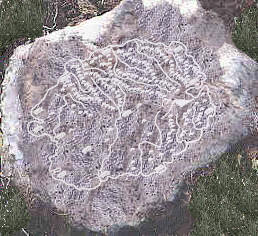
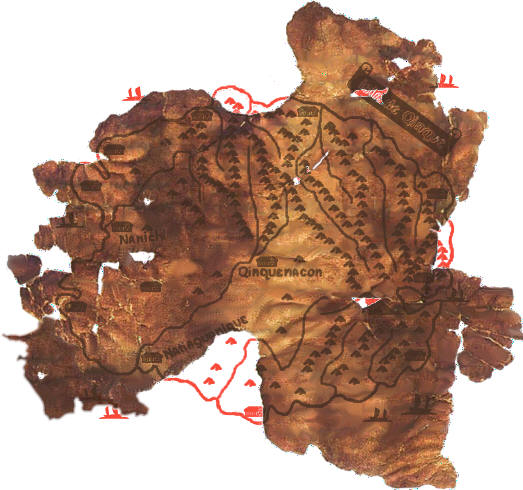
Washington as Janus was his final piece. It was completed while bedridden and just days before his death. When asked why he gave the work that particular title, he replied “From the past he built our future.” Though not considered to be among his best works, an unnamed private collector acquired it in 1999 at a price rumored to be in the seven-figure range. Additional notable works include Mama in Fugue, The Others, and Pale Horse. Daca died in 1969 and is buried in the small city he loved and to which he always returned for inspiration, Clontuskert. Delgapo, Michael A progressive governor appointed in 1963 and serving one five year term. He introduced many reforms to improve the social and economic conditions of the ordinary islander. These brought about some fundamental changes in the Qinqean society, moving the island from primarily a one crop agricultural economy to a more diversified one. duBuyer, Jean Guillaume A member of Cardinal Richelieu’s, “Company of One Hundred Associates”. Under the charter, duBuyer and his fellow Associates were granted full title to all lands in North America from Florida to the Arctic Circle and from the Atlantic to the western source of the St. Lawrence River. Unfortunately for the Associates and ultimately for Qinqe, the British captured the first convoy of four ships, their cargo of supplies and 400 settlers in the Gulf of St. Lawrence. This loss resulted the bankruptcy of the Company of One Hundred Associates. France was forced to look at other means of funding its colonization efforts. The silver mines of Qinqe beckoned to Richelieu in this hour of near desperation. Under Richelieu’s orders, a French squadron under the command of duBuyer sailed from Havre, France in total secrecy. The Qinqeans were caught unaware. duBuyer’s punishing direct assault over ran Natiaguamique’s (now Settlerton) defenders and the island’s leadership capitulated. Brave and impetuous, duBuyer personally led the assault. He survived, in spite of being wounded during the battle by pike, cutlass and bullet. In 1631, the French tri-color flew over the Island, and du Buyer had acquired for Richelieu the financial means to colonize New France. For his actions, duBuyer was appointed by Richelieu as Governor-General of Qinqe. His salary was set at ten percent of all that Qinqe produced for the first ten years. Learning from the Spanish experience, duBuyer brought in blacks as slaves to man the mines. At the end of the ten years, duBuyer returned to France to live out his life. Ghent, Treaty of The Treaty of Ghent was signed on Christmas Eve of 1814, bringing to an end the War of 1812 between Britain and the United States. Article One of the treaty stipulated, “All territory, places, and possessions whatsoever, taken by either party from the other during the war, or which may be taken after the signing of this treaty, excepting only the islands hereinafter mentioned, shall be restored without delay, and without causing any destruction or carrying away any of the artillery or other public property originally captured in the said forts or places, and which shall remain therein upon the exchange of the ratifications of this treaty, or any slaves or other private property.” Qinqe was not one of the excepted islands. Britain apparently did not make a deliberate attempt to regain possession through arbitration as stipulated in Article Four of the treaty for no mention is made of it in the “Decision of the Commissioners under Article 4 of the Treaty of Ghent, 24 November 1817.” There are several theories for this. The most probable theory is that it was a simple oversight. The British were otherwise occupied in Europe with Emperor Napoleon Bonaparte. A small island off the coast of Florida and far away from the major battle grounds may have escaped notice. However, other opposing scholars feel that this theory should be discounted because of the wealth that had been taken from Qinqe in the form of gold, silver, sugar and rum. Proponents counter with evidence that the British felt that the silver and gold production would shortly cease. They point out that the “Convention of 1818 Between the United States and Great Britian” also fails to mention Qinqe. Since both the “Decision” and the “Convention” occurred after Napoleon’s defeat by the British at the Battle of Waterloo in 1815, they believe that the absence of any mention of Qinqe gives credence to their theory. Their detractors point out that the “Convention” deals solely with the borders of Canada and the United States. Whatever the cause, the United State of America retained ownership of the Island. Decades later, using techniques refined in the Californian and Alaskan Gold rushes, the Americans renewed the production of the precious metals at almost double the level as during the period of French and English occupation. If it was a British oversight to not include Qinqe in arbitration, it was a costly one. Gilgo, John In 1963, while on a military training exercise, Sergeant John Gilgo of the Qinqe National Guard discovered a copy of the Salovega map carved in stone. There was much speculation regarding its origin and discovery. Some claimed fraud and but nothing in his background or training pointed to Gilgo as the perpetuator. Gilgo died in 1997, maintaining his version of the discovery to the end. See Mapstone Guardian Prayer A prayer offered at every meeting of the Order of the Guardians of St. Bartolomeo. “Our Father, we thank Thee for the service which make us stronger; for the giving which makes us richer; for the discipline which refines us; for the adversity which give us courage; and for the call of humanity which joins our Sanctuary with Thee in Thy great work. We thank Thee for the Past, because it laid the foundation of all good; for the Future, which gives us the vision and hope of better things to come; but most of all do we thank Thee for the Present, with its needs and its inspirations, with its disappointment and its opportunities; with its service which brings us joy; and with its love which crowns our labors. Our Hope is in God, and in that Hope we do His will. Amen.” Honor, Twelve Laws of Legend has it that even the very youngest of the aboriginal Qinqeans was trained in the concepts of honor. As European and Qinqean cultures merged, various philosophies of honor were integrated into a uniquely Qinqean tradition. With establishment of the Order of the Guardians of St. Bartolomeo, this tradition was codified into The Twelve Laws. The Masters of the Sanctuaries taught that honor was like a diamond. If all of the facets of a diamond are in perfect alignment then tiniest amount of light produces radiance. If only one facet is misaligned, then the radiance is diminished and the diamond is cheapened. Therefore the dishonorable action of even one guardian brought dishonor upon the entire Sanctuary. The only method for a guardian to regain lost honor was through a contrite apology acknowledging the transgression and then providing full restitution. Once the guardian had honor restored, s/he would be allowed back into full congress within the Sanctuary.
Historical
accounts indicate that every enterprise and operation was always carefully
evaluated in light of this code. The Guardians would strive to live their
lives so that they would never violate one of the twelve virtues of honor.
Some UFOlogists offer an opposing opinion, claiming that the Jaliniski Stella represents an extraterrestrial starship headed into space. Kawani The fourth recorded CacikeBo or Great Chief of Qinqe and the granddaughter of Nimawi. Lake Qinqe A fresh water lake found within the caldera of Mt. Qinqe. See Mt. Qinqe
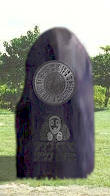
Now most authorities agree that the mapstone is authentic, and that native artisans probably carved it, using the Salovega Map as a guide. Why it was carved is still a matter of much speculation. This photo was taken in 1983 prior to the removal of the stone to the Qinqenacon Museum of Island History. Massacre of 1878 An uprising, now thought by most scholars to have been sparked by a tax by the governor to upgrade the fort at LeHaven. The Qinqean Militia, officered by American Civil War veterans, was ordered to deal with the situation. For three days, without the Governor’s guidance or restraint, units of the militia rampaged through the streets of Qinqenacan, Settlerton and LeHaven. The uprising, initially thought to be organized and lead by the newspaper editor and former slave Randolph Bibae, was quickly and ruthlessly put down. Five hundred eighty-six Qinqean citizens were killed during the short lived uprising. Many were simple merchants, tradesmen, shopkeepers and farmers from outlying areas trying to sell their produce. Many others were well known supporters of the United States. News of the atrocities committed by the militia quickly spread. Members of the United States Congress were sent to investigate. At the hearing, defenders of the militia testified that the militia could not distinguish between the ordinary citizen and the members of the revolutionary rabble. Opponents argued that in the case of males this may possibly have been factual. However, of those killed by the militia, more than fifty were women and about ninety were children under the age of eleven. Hundreds more women and children were wounded. It was also pointed out that the Qinqean Militia suffered less than a dozen casualties and only four deaths. To the credit of the United States, the Qinqean Militia was disbanded and Governor William McMasters was replaced. McMasters, William Governor of the Isle of Qinqe from 1876 to 1878. McMasters was given the less than distinctive sobriquet “The Coward” during the “Massacre of 1878.” The governor and his family retreated to the sanctuary of Fort LeHaven, leaving the citizenry of the island leaderless. It was said that he never emerged from beneath his desk until he was assured that the uprising was put down. McMasters was immediately replaced as governor. Ten years later, he committed suicide in his home. A copy of a Harbinger editorial commemorating the Uprising was found nearby. Cowards Bay, Runaway Creek and McMaster’s Hideout owe their names to his reputedly disgraceful conduct. Mt. Qinqe A dormant volcano on the eastern shore of the Island. Mt. Qinqe is easily the highest and most prominent point on the island. It stands 3,600 ft (1100m) above sea level. The volcano is 7.5 miles (12 km) wide at its base. Many plants cover Mt. Qinqe’s slopes. Thick trachyte lava makes up its slopes. Its caldera is 1.2 miles (2 km) wide and 1,000 ft (300 m) deep. There is a small lake, Lake Qinqe, in the bottom of the caldera. Natives of the island believe that the water from the lake will cure illnesses. The Church of St. Bartolomeo was built on the rim of the caldera in 1693. Mt. Qinqe National Park Located in eastern Qinqe, comprising the area immediately surrounding Mt. Qinqe and the whole of the Qinqe Lagoon excepting the sea entrance to the lagoon. The park is adjacent to the cities of Laguna and Volcan. It is not unusual to observe many wild species of sea turtles, snakes, frogs, iguanas, parrots, eagles, falcons, whales, dolphins, and other many other species. Entrance is available using common modes of transportation.
To help the Guardian order become firmly established, Kawani, the CacikeBo or Great Chief of Qinqe from 1563 to 1579, granted them the high point at the mouth of the Santa Clara River. What became the headquarters for the Order grew into Settlerton though originally it was called Natiaguamique or Land of the Noble Ones. Within the walls of the original fortification, it is alleged that great amounts of treasure were secretly buried, though none have ever been found. The Guardians were organized with a grand master under whom was eight ranks ranging from Prince to Baronet. Legend has it that the first Grand Master was the CacikeBo Kawani. By the middle of the 16th century, the Order was firmly established throughout the Isle of Qinqe. Besides repulsing the Spanish and staging rescue missions to other Caribbean Islands, they were helping to convert the native Qinqeans to Christianity. When not engaged in these various activities the Guardians formed a commercial and trading organization with enterprises in Africa and Western Europe. From these business ventures it is reputed that the Order accumulated an enormous amount of wealth. The Order’s downfall came with its defeat by French under the command of Jean duBuyer. Although the Order was ruthlessly suppressed by both the French and British governments, its traditions continued in secret. Later the Americans tolerated the Order but with some suspicion especially during the anti-Mason years. It took many years of American rule before the Order came out of hiding. Within days of the first public re-organization of a Qinqean Sanctuary, the Guardians of the Qinqenacon Sanctuary were openly at work relieving the suffering of the island’s poor. There was no regular means of collecting dues and the calls for aid were many. It was not unusual during this period, for it to charge a member one dollar ($1US) to attend a meeting. To the credit of the Guardians of the Qinqenacon Sanctuary, they expended over $13,000(US) during the first few months following its organization. Funding became much less chaotic when Cokuyo was adopted as the primary source of revenue. Two years later the Settlerton Sanctuary was established. Shortly thereafter, the LeHaven and Canake Sanctuaries was established. The following year Amajujo Sanctuary was formed. Sanctuaries were also organized in Cloneau and Clontuskert, soon followed by the foundation of the Karis and Arabake Sanctuaries. In Settlerton, a Sanctuary was organized by a British expatriate, George Baldrage. This Guardian published a notice in the “Settleton News” calling on all “Good Men” to gather to organize a relief association. More than 60 individuals assembled on November 15, 1870. Baldrage had no authority to organize and adopt the Order’s name but it was nominated and selected. Baldrage managed to be elected Sanctuary Master; the first and only male to hold the position. The Settlerton Sanctuary enlisted the Masons in establishing the first hospital in Qinqe. Thus was the St. Bartolomeo Hospital and Clinic System begun. Within a few months of its inception, the Settlerton Sanctuary had spent some $17,000(US) for charitable acts. In time, the Order of the Guardians of St. Bartolomeo spread throughout the island. The list of Sanctuaries once included nearly every city, town and village on the Isle of Qinqe. Qinqean National Forest and Wildlife Preserve Located in central Qinqe, adjacent to the capital city of Qinqenacon. There are no roads into this ecologically protected area. Entrance is by the S&L Railroad. The park is famous for its picturesque vistas, sunsets and wildlife. The nature here is overwhelming: rolling hills covered in verdant plant life, bird songs that charms the visitor and chance encounters with a wide variety of animal wildlife. It is noted for its excellent hiking, camping and photographic opportunities. Scenic tours by mule train are a favorite tourist attraction. Rainwater Falls An intermittent waterfall within the confines of Mt. Qinqe. The flow of the falls is entirely dependent on the rain. It is from Rainwater Falls and other similar sources that Lake Qinqe is kept fresh and flowing. Riots of 1942 On May 12, 1942, a seven year old girl stole a loaf of bread from a Settlerton street vendor. A nearby policeman gave chase and caught her just as she about to enter her home. The policeman proceeded to “turn her over his knee and paddle her behind.” The child’s mother vigorously protested this action and was arrested. Neighbors came to her rescue and events escalated from there. Rioting broke out and quickly spread to the other major population centers of the Island. Governor Bart Strong activated the National Guard and quelled the riots. Sentiment over the handling of the riots and the events leading up to it, caused the dismissal of Governor Strong and the appointment of Governor Sean O’Brian, the son of former Governor Patrick (Paddy) O’Brian.
Slave Trade The first record of slaves on Qinqe were brought by the French Governor-General Jean duBuyer in 1732 to work the silver mines. The slave trade in the British Empire was abolished in 1807 and Qinqe was one of the first in the British West Indies to emancipate their slaves. With Qinqe officially a non-slave territory, no further slaves were imported into the island, even after the island was captured by the Americans during the War of 1812.
A disagreement over the treatment of the natives leads him to return to Spain in 1512. In 1513 his request for an audience with the King Ferdinand was granted. He reported on the conditions of the natives but this did not go as he hoped. He went on to Rome and gained an audience before Pope Leo X but this too ended in failure. On his return to the Caribbean, a legend tells that a soldier was going to kill a native when Bartolomeo extended his cross into the pathway of the sword. The cross was bent but the sword was broken and thus the bent cross became the symbol of St. Bartolomeo. There are conflicting stories of how he arrived on the Isle of Qinqe. Some say he was kidnapped by Don Antonio Salovega on one of his rescue missions. Others say he came willingly of his own accord. All agree that after his arrival, he continued as an advocate of captives and the mediator between the natives and colonists, and the protector of orphaned children. He gave special attention to the latter, building schools and educating them with with his own pioneering methods. He was both a tireless missionary, and an intense and genial educator, who invented his own teaching methods, using songs, games and dance. He was ordained Bishop of Qinqe in 1524. He served faithfully in this capacity for almost 20 years and died April 25, 1544, at age 90. Beatified on May 27, 1893, Bartolomeo Montesimos de Cordoba y Qinqe was canonized by Pope Pius X on July 12, 1907. Patron Saint of Qinqe, his feast day is celebrated on the island each May 27. Treaty of Ghent see Ghent, Treaty of USS Senate American ship-of-the-line built at the turn of the nineteenth century. The 44 gun, 1576 ton USS Senate was built in Norfolk in 1800 at a cost of $263,590(US). In its first navel engagement against a British ship, the USS Senate, under the command of Captain Samuel Fielding, USN, captured the 44 gun HMS Quire. Mere months later, the USS Senate set ashore a company of marines at Baguamatun Bay. USS Senate then sailed around to other side of Qinqe to confront and sink the 38 gun HMS Griss. Having accomplished that, it bombarded Settlerton into submission. Meanwhile, the American marines routed the small English garrison stationed at LeHaven and then went on to capture Qinqenacan. For a vessel with such noble history, the grand old ship had a sad and ignominious ending. On 31 October 1859 the USS Senate caught fire, burnt out and sank at its moorings in Boston harbor. Wharkat, Joanna The first native-born Qinqean to be chosen as Governor. Wharkat, appointed in 1968, initiated a far-reaching program of agrarian reform and encouraged mining companies, pharmaceutical companies, manufacturing industries, banking, and other vital enterprises to invest in the island. She served nearly seventeen years and as a final act of office oversaw the first free democratic elections for Governor in 1980. After her term of office, three governors were elected and finished their five-year terms of service. In 1995, the Island was granted its full independence. A democratic form of government based on the parliamentary system used by the United Kingdom and other islands in the Caribbean was adopted. Governor Wharkat declined an offer by both major parties to run as their candidate. She did serve for a several years prior to her death as the Ambassador to the United States under President Matilda “Janie” Janeway. . The Coastal Road (Q1) is now the Wharkat Motorway and Coward’s Bay Marina was renamed the Wharkat Marina in her honor. |
|