My Reading List 2008
1. 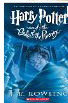 Harry Potter and the Order of the Phoenix (Book 5) by JK Rowling
Having read all the books in the series once, I decided last year to read them all again sequentially. By the end of last year I had finished the first four books and with some trepidation started on Book 5, as I had not enjoyed nor understood much of it when I first read it on a trip through England and Ireland in 2001. Maybe because I now knew how the whole story fitted together, it made a lot more sense to me this time and I enjoyed the read much more. 4 stars.
2. 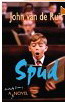 Spud by John van de Ruit
I finished reading Harry Potter 5 while on honeymoon in South Africa and so interrupted my Harry Potter reread with Spud. Taking place in a private boarding school in South Africa and written from the perspective of a 13 year old boy, this novel, written in the form of a diary was a humorous, revealing and brutally honest insight into a teenage boy's way of thinking about himself and his experience. 5 stars
3. 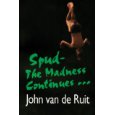 Spud - The Madness Continues by John van de Ruit
More Spud seemed obvious after my enjoyment of the first novel, but this one was a little tedious. The same characters, the same school, but very little of the same humour. It was more like reading a chronicle of events rather than getting into the mind of Spud, as the first novel had allowed me to do. It was well written, but a disappointment. 2 stars
4. 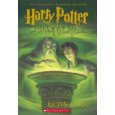 Harry Potter and the Half-Blood Prince (Book 6) by JK Rowling
More is revealed, Dumbledore dies and Harry saves the day. But it is no less a satisfying read for that simple summary. I enjoyed it the first time, especially after my disappointment of reading Book 5 the first time round, and perhaps enjoyed it even more the second time. 4 stars
5. 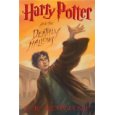 Harry Potter and the Deathly Hallows (Book 7) by JK Rowling
All is explained and the whole sequence of novels finally fits together, like one long jigsaw puzzle. The final chapter, 15 years later, is weak and too predictable, but it is amazing to me that Rowling managed to maintain the strength and power of her story for so long and so consistently. These are novels that I will probably return to read again for a third time in a few years time. 4 stars
6. 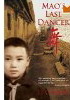 Moa's Last Dancer by Li Cunxin
An autobiography of a poor peasant boy who, through a lucky break, goes on to become an internationally renowned ballet dancer after defecting from China to the USA. I found his writing a little simple and, in the beginning, a tad tedious, but gradually his story gripped me and I was eager to know more about him. It is an interesting insight into the Chinese state's insecurity about itself and its overwhelming desire to prove itself to the world. Also revealing are the brutal and conformist ways that the Chinese go about training what they hope will be their superstar representatives on the world stage. Despite the simple writing, it is a fascinating view into a life I am glad I didn't have to experience. 3 stars
7. 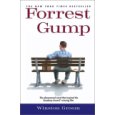 Forrest Gump by Winston Groom
If ever there is a book that has disappointed me, then this has to be it. Basing my purchase of it on my enjoyment of the movie, I had high expectations and interrupted my reading of Moa's Last Dancer to read this one. I shouldn't have bothered. It is a ridiculous story and Eric Roth, who wrote the screenplay for the movie, did a miraculous job of reinventing the story for the big screen. Give it a miss and watch the movie again instead. 1 star (for effort)
8. 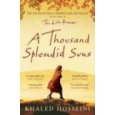 A Thousand Splendid Suns by Khaled Hosseini
An absolute must-read! Not only is it a fascinating, and at times harrowing read about the lives of two women in Afghanistan, but it provides an insight into the daily life and struggles of Afghanis throughout the tumultuous past few decades, which CNN with all its war coverage either couldn't or just didn't bother to do. If you enjoyed The Kite Runner, then this is a novel you cannot miss. 5 stars
9. 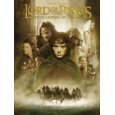 Fellowship of the Ring by JRR Tolkien
I read the Lord of the Rings trilogy about 20 years ago and after seeing the movies decided to tackle it again. I must say that the movies did a lot in helping me understand more of the book and what I found particularly interesting was watching the movie again when I had finished the book. The changes made in the movie where illuminating and made a lot of sense and in fact I would recommend watching the movie rather than traipsing through Tolkien's long-windedness. 3 stars
10. The Two Towers by JRR Tolkien
Whereas the first part of the trilogy was a single complete story, the second part is two stories happening simultaneously but written separately. Again, watch the movie to get the story without all the hot air and blustery descriptions. 3 stars
11. 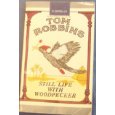 Still Life with Woodpecker by Tom Robbins
A group of foreigners has started a book club here in Yuanlin and this was the first book we read. It isn't a book I would have thought of reading otherwise, but I am glad I did. In a way it is written in the style that I expected when I bought Forrest Gump - full of social commentary, witticisms, contentious statements and ridiculous characters who live exaggerated lives. A memorable and unconventional read. 4 stars
12. 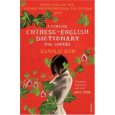 A Concise Chinese-English Dictionary for Lovers by Xiaolu Guo
An illuminating insight into the mind of a young Chinese woman studying English in England, this novel rang true for me, given my experience with Taiwanese women. Written in Chinese-English, which progressively improves to more standard English throughout the year of her studies and her relationship with an older English man, it is a very honest and therefore often very amusing account of the challenges faced in cross cultural relationships, with many memorable lines, of which my favourite in the chapter titled "Colony" must be, "My body is your colony." This is my choice for our book club read. 4 stars
13. 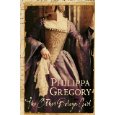 The Other Boleyn Girl by Philippa Gregory
A courtly soap opera, but fascinatingly and imaginatively written. At times I found myself thinking of it as a glorified Mills & Boons, but the various levels of intrigue and the royal stage on which it is played out rescues the novel from such an ignominious classification. As someone who enjoys reading historical novels, this was a pleasurable read, not too taxing and at times providing quite fascinating insight. 3 stars
14. 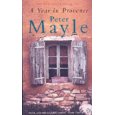 A Year in Provence by Peter Mayle
This is a travel book with a difference, presenting the perspective of someone living in a foreign country, France, but less concerned with the sights and journeys than with the experiences and insights gained from the locals and their fascination and almost religious fervour about food, which is conveyed in the writing. 3 stars
15.  Like Water for Chocolate by Laura Esquivel
If you want recipes with a difference, then this is the book for you. It is a novel full of influential cooking and magical results wrapped up in a tortilla of love fought for, lost and gained. I am still trying to figure out how the recipes in each chapter relate to the events of that chapter, for I am sure that they do. This is a carefully crafted story with numerous levels of meaning that I thoroughly enjoyed. It is our third book club read. 4 stars
16. 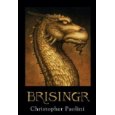 Brisingr by Christopher Paolini
Last year I read the first two books in this fantasy saga about Dragon Riders and their dragons, Eragon and Eldest. The first book deals with the hatching of Saphira to Eragon, thereby adopting him as her rider and their rudimentary training and bonding as dragon and rider. The second books details their further extensive training by the elves and their mission to save the peoples of Alagaesia from their evil Dragon Rider King, Galbatorix. This third book in the saga, Brisingr, which was initially intended to be the final chapter, simply need not have been written. While the first two books had purpose and were fascinating reads for me, in this third installment Paolini chews more than he bites off. It wanders, it stagnates, it kind of tries to pick up steam, and then splutters to an unsatifying end and the promise that the next volume will indeed be the final episode. I am certain that readers of the first two books can skip the third and go straight to the fourth, when it appears, and not have missed a thing. 2 stars
17.  Kafka on the Shore by Haruki Murakami
This is another of our book club reads and a new experience for me. I have read works by Kazuo Ishiguro, but he is English-Japanese, whereas Murakami is native Japanese. There are some similarities to their styles, like I have found similarities in the styles of South American writers, but Murakami is perhaps more bizarre than Ishiguro. The novel is basically a mysterious process of self discovery and has two main characters, Kafka and Nakata, whose quests are dealt with in alternative chapters and are linked. It was a gripping read initially, but towards the end things waver and by the end of the novel there are more questions than answers. If this was deliberate on Murakami's part, then it is disappointing. If it wasn't deliberate, then he did a poor job. Overall, an interesting reading experience, which makes me want to read more of his books, but not an entirely satisfying read. 3 stars
18.  The Golden Notebook by Doris Lessing
I remember reading with pleasure and writing an essay about one of Doris Lessing's short stories in my first year English course, and this prompted me to buy this book, which has been acclaimed as her greatest work. It must be stated at the outset that this a daunting read. It is over 600 pages long and very philosophical and academic. Lessing seems to be consciously crafting a work and it is less a pleasure to read than it is an exercise in reading. The "story" of Anna Wulf, if it can be called such, is composed primarily of four different coloured notebooks she keeps: a black one for her African experiences, a red one for political issues, a yellow one for an unfinished, unpublished novel and a blue one which is her personal diary. Interspersed between Anna's notebooks entries is the story of her real-time life. Perhaps a woman would enjoy reading this more than I did, with its deep and detailed probing of Anna's emotions and thoughts. I literally flipped through the last 30 pages to see if I was missing anything new and closed the book with relief! No doubt, Lessing is a brilliant thinker and manages to keep things tied together in a way that a lesser author would not be able to achieve in a few lifetimes, but it was too much for me. 3 stars (because I can't bring myself to give it 2)
19. 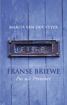 Franse Briewe: Pos uit Provence by Marita van der Vyver
Yes, I can still read and understand Afrikaans, although it took a little getting used to again. Leana gave me this book for my birthday this year, another of her determined efforts to improve my rapidly declining Afrikaans ability, which is becoming an embarrassment to her, if not to me! This book is reminiscent of Peter Mayle's "A Year in Provence", but without the broad view of the region, people, food and places that had such an impact on Mayle. Instead van der Vyver gives a personal look into her and her family's daily life and experiences, with brief occasional forays into the French experience. Otherwise the setting for these letters could have been anywhere in the world, even South Africa. She does write beautifully, a fact which even an Afrikaans deprived Philistine like me can appreciate, but that isn't enough to make "Franse Briewe" as memorable as Mayle's account of Provence, to which this book is perhaps unfairly, but inevitably compared. 3 stars
20. 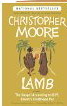 Lamb: The Gospel According to Biff, Christ's Childhood Pal by Christopher Moore
What happened to Christ during the thirty years after his birth? Moore tries to answer this question through Biff, Christ's more practical and worldly-wise sidekick whom Matthew, Mark, Luke and John deliberately failed to mention in their more famous Gospels. Biff's Gospel deals with Christ's quest to find the Three Wise Men who were present at his birth, in order to discover whether he is really the Messiah and what his mission is. I found the first part of the book more ridiculous than entertaining (up to the start of their quest for the second Wise Man). The young Christ is presented as something of a bumbling, naive idiot, which perhaps didn't sit well with my perspective of the historical Christ. After that initial section of the novel however, I felt that things picked up and the tone changed and I became quite engrossed in the storytelling. It turned out to be a far more entertaining read that I at first expected, but not necessarily a book I would recommend. 3 stars
21. 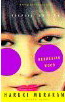 Norwegian Wood by Haruki Murakami
Pei Han bought me this book, because she wanted to buy me an English book, which she has never done before, and saw me reading and talking about the last Murakami so thought this one would be a safe bet! It is vastly different to "Kafka on the Shore". It is essentially a love story written in conventional storytelling mode, apparantly the only one of his novels written in this way. It does delve into the psychology of love, but not in the same way that "Kafka" psychologically dug and twisted things into weirdness. The characters are strongly presented and engrossing and, while not a fast moving tale, I found myself wanting to understand their lives and thinking which are the engines that drive this story. A read well worth it. 4 stars
22. 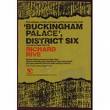 Buckingham Palace, District Six by Richard Rive
A collection of colourful characters inhabit a rundown row of houses called Buckingham Palace in a section of District Six, Cape Town. We are presented with a portrait of a close-knit, multicultural community that gave District Six its legendary vibrancy before its destruction under the Apartheid Group Areas Act. It is a humourous, yet poignant sketch of a lost community, with its characters and caricatures skillfully and memorably presented. However, the cast of characters is so broad and varied that at times I got confused about who was who, at least in the first part of the book. For those who want an insider's view of being Coloured in Apartheid South Africa, albeit a romanticized one, this book is for you. 4 stars
23. 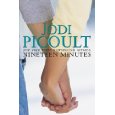 Nineteen Minutes by Jodi Picoult
Can schoolyard bullying lead to murder? Picoult suggests that this might be one of the reasons behind the school killings that have occurred in the US through this fictional exploration of a bullied boy's mind that ultimately leads him on a shooting spree through his high school. It was a gripping telling with new bits of revealing information being shared throughout the novel that give the reader a thorough insight into the boy's mind. However, it did read a bit like a movie script, which for me was very dissatisfying as I felt that she wasn't writing for writing's sake, but rather with a greater cash incentive in mind. Perhaps I am being too purist. 3 stars
24. The Boleyn Inheritance by Philippa Gregory
This novel picks up from where "The Other Boleyn Girl" left off and deals with Henry VIII's fourth and fifth wives. Dealing less with the courtly intrigue that characterized the first novel, this one is more focussed on the women and their responses to an increasingly sickly, fatter, tyrannical king whom they are unfortunate enough to be married to. It is a very unflattering portrait of Henry and shows these two wives of his, Anne of Cleves and Katherine Howard, as being victims of male politiking, unlike Anne Boleyn who became a victim of her own intrigues. This novel is a wonderfully imagined portrait of Henry's court and wives. 4 stars
25. 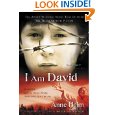 I am David by Anne Holm
A young boy's epic and determined journey through central Europe to find his mother is the basis of this heart-warming story. Having being raised in a communist concentration camp somewhere in Eastern Europe, David manages to escape into an unfamiliar world where he suspects everyone and so causes others to suspect him. It is a story of isolation and self-discovery, in the extreme, which many teenagers will be able to relate to. The story is filled with unlikely coincidences and adventures, but which nonetheless make for a gripping and sympathetic read. 3 stars
26. 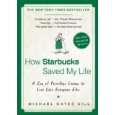 How Starbucks Saved My Life by Michael Gates Gill
This is the true story of a down-and-out ex-corporate executive who discovers what life is like on the other side of the tracks at age 63 when he is offered a job by a young Starbucks manager. Out of desperation he accepts her offer and over the course of a year comes to realize how little he trully appreciated of his past 63 years. It is told in a very down-to-earth manner that is entertaining and avoids the pitfall of becoming moralising, although I did become a little tired of all his name dropping, as if he couldn't quite let go of his previous life while simultaneously claiming that that was what working at Starbucks had wrought in his life. A motivational read about taking opportunities wherever they present themselves. 3 stars
Dion Marc Delport
Comment on this article in my Guestbook
Back to Dion's Home Page