It was perhaps inevitable that the time-consuming process of writing SMS messages on cell phones would result in a shorthand, we could say mobile, version of English. After all, the purpose of any form of communication is to make yourself understood as succinctly and clearly as possible and if correct spelling or use of vowels in the words you type isn't necessary for that communication, then why use them.
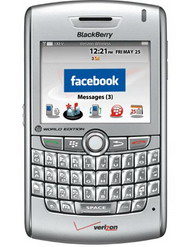
However, as an English teacher, there is one aspect of this mobile English that concerns me - the sheer number of teenagers who use cell phones for their interactions with each other and the way in which they are learning to write English through this technology. Their writing is largely phonetic, which is very effective for communication, but which I suspect will eventually have a hazardous effect on their abilities to write standard English when it is required. The following exchange between a group of teenagers on Facebook, using Facebook Mobile, is submitted as evidence (the names of the correspondents have been deleted to protect them from the scorn of English purists):
A: How do you know that sum1 really loves you and isnt lyin 2 u?
B: If sum1 lvs sum1...dey would wori da hle tym nd b sceard 2 leav u wif anoth chck nd she wil fne u nd sms u alot nd u would b on her mind 27/7 nd she would wana spend every moment wif u........nd if sum1 liein 2 u....dey would try make up exscuses nd u would hav a weard or bad feeln nd dey would act weard sum tyms nd dey tel u da same thng ova nd ova again wen u ask dem da same queastion ova nd ova nd wen dey giv u da same answer ova nd ova u get a feeln dat sumthng nt ryt
B: Nd wen dey say i lv u...u cn c dat dey realy mean it or if dey jst sayn it 4 nthn
C: Dude i have dat same pr0blem
B: Wel den read up coz ive gne threw it 3tyms b4 nd nw it easy 2 c
D: If she loves you,she wouldnt have to say it for you to believe it you would see it in her touch,the way she looks at you,things she says to you... U catch my drift yo?�:)
C: Yea tnx ladies
B: K no prob
E: U cant knw. . U jst hav 2 trust them and h0pe dat u w0nt get hurt. .
The language of this pop psychoanalytic session shows a strong, innovative recreation of language that stands in stark contrast to the teenage angst about love that is revealed. It is an exclusive language however, limited to a specific group. If you were able to read their messages once right through, without going back to make sense of the abbreviations, then you are part of that group, otherwise these were messages not intended for you.
Every generation experiments with their language and extends the use and meanings of the language and its words, which is one reason why we don't speak Shakespearean English anymore, but I have to wonder where this mobile English is leading the language. It is undoubtedly more efficient, more direct, simpler and quicker, aspects that we should welcome in any language for effective communication, but I also find thus utilitarian use of English somewhat disheartening. Is there no room for beauty in language?
As you thumb away on your cell phone, don't mind your "p"s and "q"s as much as you do your "a", "e", "i", "o" and "u" s.
Dion Marc Delport
17 February 2009