 |
|
|
|
|
|
|
|
|
|
|
|
|
|
|
|
|
|
|
|
|
|
|
|
|
|
|
|
|
|
|
|
|
|
|
|
|
|
|
|
|
|
|
|
|
|
|
|
|
|
|
|
|
|
|
|
|
|
|
|
|
|
|
|
|
|
|
|
|
|
|
|
|
|
|
|
|
|
|
|
|
|
|
|
|
|
|
|
|
|
|
|
|
|
|
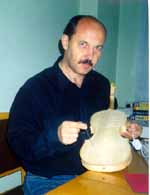
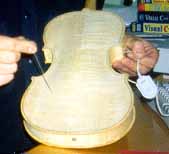
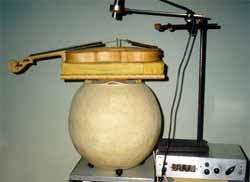
Others technique - by Fuhr
glass tube (D=1,5mm) with rubber insertion.
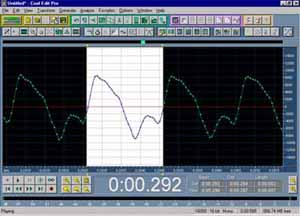
Sounding is registered by a microphone and
is investigated with the program
Cool Edit Pro, Sound Forge ...etc. |
|
|
|
 |
|
|
|
 |
|
|
|
|
|
It is necessary to moisten fingers with water. |
|
|
|
|
|
 |
|
|
 |
|
|
|
|
 |
|
|
|
|
|
|
|
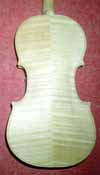
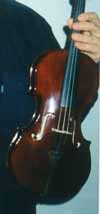
viola |
|
|
|
|
|
|
|
|
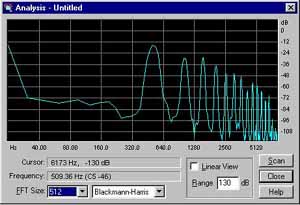
( Program Cool Edit.. ) |
|
|
|
|
|
|
 |
|
|
|
|
|
|
|
|
 |
|
|
|
|
|
|
 |
|
|
|
|
|
|
|
|
 |
|
|
|
|
|
|
|
 |
|
|
|
|
 |
|
|
|
|
|
|
|
|
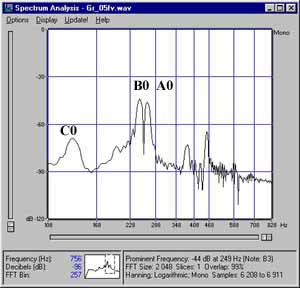
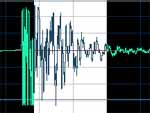
( Prgram Sound Forge ) |
|
|
|
|
|
|
|
The knock by a finger in the back plate and its spectrum analysis. It is necessary to exclude the beginning of a signal ( this site (zone) contains nonlinearity and transients) |
|
|
|
|
|
|
Site (zone) of the free fading fluctuations |
|
|
|
|
|
|
|
|
|
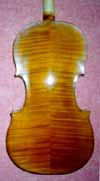
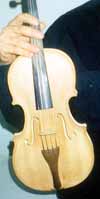
violin |
|
|
|
Sound its violin |
|
|
|
|
 |
|
|
|
|
|
|
Main wood or (A1+B1)/2 = 432 Hz |
|
|
- the violin over a speaker |
|
|
|
|
|
|
|
|
|
(1) 16bit, 16,000Hz, 50Kb, mono |
|
|
|
|
|
 |
|
|
|
|
|
|
|
|
|
(2) 16bit, 16,000Hz, 24Kb, mono |
|
|
|
|
|
|
|
(3) 16bit, 16,000Hz, 27Kb, mono |
|
|
|
|
|
|
|
Sound other my violin |
|
|
|
|
|
|
|
B1- = 445 Hz |
|
|
|
|
|
|
|
|
(4) 16bit, 16,000Hz, 32Kb, mono |
|
|
|
|
|
(5) 16bit, 11.000Hz, 70Kb, mono |
|
|
|
|
|
Here you also can hear sounding of my violin |
|
|
|
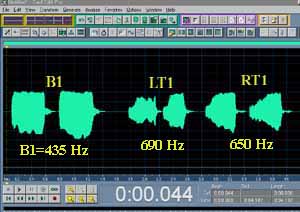
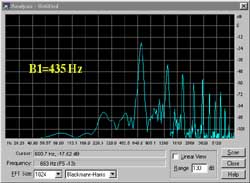
By Fuhr ( some part of tuning) |
|
|
|
 |
|
|
|
 |
|
|
|
|
|
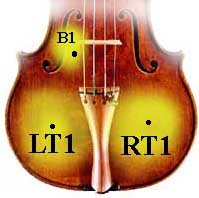
Sound B1 ( Main wood..... (?) ) |
|
|
|
|
|
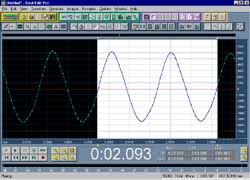
If you do vibration through a glass (by Fuhr), in this case it is important to have
a pure (near to a sinusoid) and strong tone of some height...
At first I apply a part of a tube with a rubber insertion.
The frequencies of adjacent sites should be little differ (probably in limits of a halftone...)
At test by Fuhr by a part of a tube without a rubber insertion, you receive (will have) other tone.
Smaller site in this case vibrates. In the sounding of a violin these frequencies can be useful in selection of high-frequency formants (~2000 - 3500 Hz....)
Here we have a big field for creativity. |
|
|
|
 |
|
|
|
 |
|
|
|
|
Sound its violin (16 bit 25kHz mono 80 Kb) |
|
|
|
B1 |
|
|
|
|
|
|
|
|
|
|
 |
|
|
|
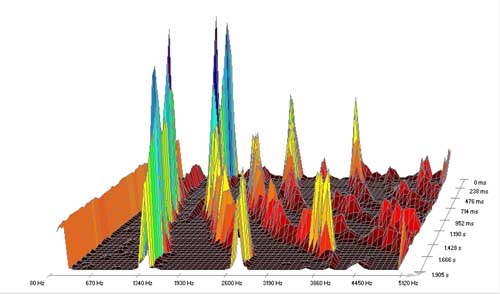
For example programm Wave Lab...
Sounding G... and its spectrum analisis. |
|
|
Sound G... 16000bit mono |
|
|
|
|
|
|
 |
|
|
|
|
|
|
|
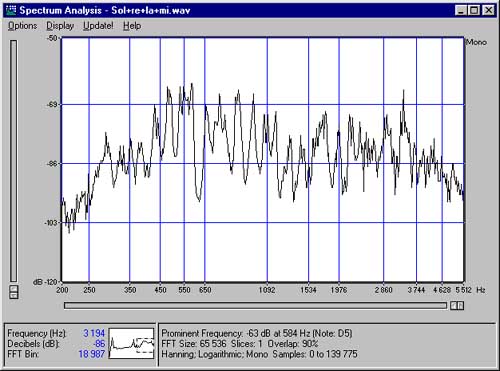
And its spectrum analisis
( program Sound Forge... ) |
|
|
Sound G-D-A-E 16000bit mono |
|
|
|
|
|
|
 |
|
|
|
Next |
|
|
|