 |
|
|
|
|
|
|
|
|
|
|
|
|
|
|
|
|
|
|
|
|
|
|
Stingers |
|
|
|
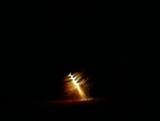
Stinger or Stinger Rockets are Spin Stabilized Rockets that stabilize themselves by spinning. They don't need fins or sticks to guide them like a normal rocket. The spinning motion provides enough air resistance to stabilize the rocket during flight. They are howevor surprisingly simple and provide a nice effect! |
|
|
|
 |
|
|
|
What You'll Need:
1. A small tube. I use one thats twice as long as it is wide.
2. clay (kitty litter)
3. propellant (your choice!)
4. something to drill with (drill, drill press, etc.)
5. fuse |
|
|
|
|
|
 |
|
|
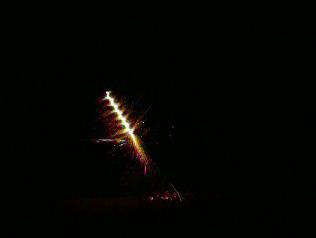
Stinger rockets work very simply. The fuse ignites the propellant which causes the rocket to spin very fast. Then when it gets up to speed it breaks through to the core and expels gas out the nozzle as well and flies! The gasses from both holes and spinning motion causes the corkscrew look! |
|
|
|
|
|
|
Start by filling this tube just like any rocket or fountain.
Set your tube upright on a flat surface and pour a small amount of clay in. Put the dowel or rammer in the tube and smack it several times with a hammer to create an endplug. This endplug should be about 1/4" thick. You can usually get away with thinner endplugs on these than other rockets because of the short burn time. |
|
|
|
Your propellant is your choice... 60/30/10 KNO3/C/S which is a common BP propellant works well. Another propellant is standard BP with an extra 20% of any addition like charcoal, Al, Ti, Fe, etc. In the photo you see the flight of a Stinger with 80/20 BP/Al(bright).
In little increments fill your rocket up using the same hammering method as before.
Then finish it off by putting a clay endplug in! |
|
|
|
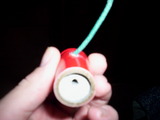
These rockets feature two holes for the gasses to escape. First drill a standard nozzle with a core about 1/3 the way into the rocket. The nozzle should be 1/3 the ID of the rocket (experimenting may be needed). Then drill a hole the same size as your fuse at an angle into the side. Don't drill it strait in, it shouldn't break inyto the core.. Look at the pictures and diagram.
How far up the tube from the nozzle end depend on how fast you want it to take off. The farther up the tube the longer it will spin before takeoff! Mine are usually just about halfway. |
|
|
|
 |
|
|
|
|
|
The fuse must go in the side hole. These can be set up just on a flat surface but will work much better if fired from a launch pin. A nail put through a board works just fine. Merely slide the Stinger down into the core and fire! The nail will allow it to spin freely till it gets up to speed then break through to the core and off she goes!!
Now then...these rockets have a very unique sound. Any size fuse will work... Depending on the size of the side hole the different the sound is. If the hole is small then it will create a nice chirping noise! Howevor fuse is usually thick so Black Match can be used but you must be very careful because it burns much faster than normal fuse and can ignite from any spot rather than just the end!! |
|
|
|
Home |
|