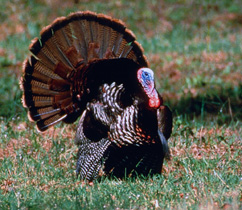
 One of the easiest ways to find a Tom is to �put him to bed� the night before. This means to locate the Tom at dusk by using a locator call and making him shock gobble, by seeing/hearing the bird go to roost, or by using hen calls to get him to gobble on roost. Once a Tom goes to roost, unless he has been extremely spooked he will not leave that tree until dawn the next day. By �putting him to bed� you will know exactly where to find him in the morning. When you return or are just starting to try and find a Tom, get there well before dawn and try an owl call. This should make the Toms shock gobble. This may or may not work. If you �put him to bed� and you feel confident he's there go ahead and setup on him anyways. If you are just starting to try and find a bird keep moving quietly through the woods using a locator call every now and then until you find a bird. Whether you know the bird is there or you are just locating one, try and get about 200 yards from where you think he is. If you are good and quiet try and get 125 yards, but if your real good 100 yards is the best, but don't get greedy. Any closer and you will definitely get busted. Try and get above the roosted Tom or at the same level. Turkeys do not like coming downhill to a call. I have always heard that this is because if they get spooked it is easier to run downhill than uphill. I know that it is exciting to hear that thundering gobble, but don't start calling to early. Wait until the sky starts to turn pink, but don't start hard and loud. Start with some soft calls just to let him know that your there. If he answers you while still on the roost shut up. This means he thinks you're a hen and he will be coming your way. If he doesn't answer get just a little louder to get his attention. If he still does not answer no sweat, listen for him to fly down and then start hammering him with a good cackle. If he starts to gobble after fly down he is probably coming your way and you may not have to call again. If you have not heard from him in 5 minutes or so yelp, cluck, or purr a little louder. But, stay awake he may be coming just not gobbling.
Let's look at some situations and find out what you should do. As a rule Toms gobble the best when it is clear, calm and high pressure. So keep an eye on the weather. But, if day is not perfect don't just sit a home because you can still call a bird when it is windy or there is a light rain. All you have to do is change your tactics a little. When it is windy the night before turkeys don't gobble as much, but they are still there and can be called in. If it is still windy in the morning you will need to change your calls to louder more high pitched calls. These calls will cut through the wind and are heard better by the turkeys. If there is a light rain try using calls like diaphragms or aluminum friction calls. These work better because they can stand the moisture. If you have ever tried to use a slate call when it is wet it is worthless. Another thing to remember is that if a Tom does gobble setup quickly, because he is normally closer than he seems.
Now it's time for how to setup on a Tom when he is coming in. These are the basics that you will need to know. The rest you will have to learn by talking with more experienced hunters and time in the woods. So enjoy your time with the Wild Turkey because they will be times that you will never forget. Remember safty first when hunting turkeys. Don't wear anything that another hunter may mistake for a turkey since you are trying your best to sound like one. Also remember that there are other hunters in the woods, so everything that sounds like a turkey may not be. Be sure of your target, practice calling and shooting and Good Luck! |
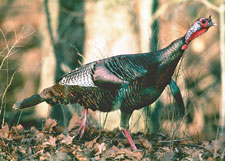 If you haven't had any luck don't give up, because about 9:00 those Toms will begin to get the �mid morning blues�. His girls have started slipping away from him to feed or to lay eggs and he is getting really lonely. This is also a good time because most of the other hunters have given up and headed home or to work and the birds that were spooked early in the morning have settled back down and looking for company. Let's say you still have not gotten a bird, that's ok because turkey hunting peaks in the afternoon from about 2:00 until 4:30 pm.
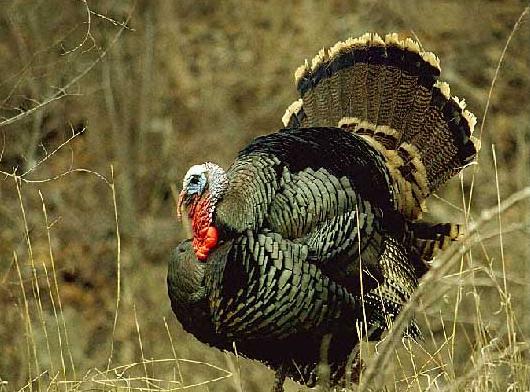 Again try and be at a higher or the same elevation that the Tom is and find a tree that is a little wider than you are. This breaks up your bodies outline. Turkeys have excellent eye sight and it is their best defense. If you are right handed sit down and point your left shoulder in the direction that you think the Tom is going to be coming from. Do just the opposite if you are left handed. If the bird starts coming in in a different direction than you thought adjust your setup slowly. But as you move make sure you have plenty of room to swing your gun so that you can adjust to him when he gets in sight. When you see him be mindful of your movements, only move when he is behind a tree or some other obstruction. Make sure he is within range of your gun. Normally this is within 40 yards, but to a point closer is better this is when patterning your gun is very important (you can print patterning targets from the