Seeds
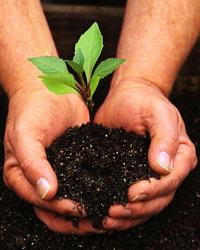
A seed. That was all it was, and yet it changed me. I suppose in this context it was the figurative meaning of seed, as it was the seed of an idea. Nevertheless, I've been thinking about seeds lately, and how they affect us all.
Last night I read the most eye-opening article. It was simple, just a brief description about what life could be like if we all began to respect the Earth around us through what we eat. The Earth would be harmonious, and we would all be healthier.
So today, on my run (yet another idea inspired with exercise) I began thinking about gardening. I contemplated what it would be like to grow my own food, and I remembered what it was like to eat the fresh vegetables that came from my family�s garden when I was growing up.
Specifically, I remembered one day when my whole family had spent hours picking, washing, and snapping green beans. We quite literally had beans coming out of our ears. When the work was done my brothers and I just flopped, but my dad had a better idea. He put some water in a pan and heated up some green beans. We all sat around the dinner table, in the middle of the afternoon, and feasted on crispy, salted and buttered green beans. It was one of the best meals of my life. To start with, there's just nothing like fresh green beans. They don't even resemble the garbage you find in cans. They have flavor, and they're crispy. They are just delicious.
That isn't it, though. The green beans didn't taste so good solely because they were freshly picked. I remember planting the seeds for those beans, first making a shallow ditch in the dirt with my small hands, and then dropping in the seeds. Two by two. Afterwards I covered them in blanket of dirt and patted it down like I was smoothing a quilt. Next came the dirty work. I spent hours in the baking hot sun weeding our garden with my brothers. Occasionally we would take pauses to swat flies or throw clods of dirt at each other. I can still remember how it feels to have a huge dirt covered weed land on the back of my neck. Finally, after a long summer of this, the best part came. The harvest. Beans grow long and thin on low bushes, and snapping every bean off of its plentiful branch took time, but it was worth it. Next, the buckets of freshly plucked beans were dumped into plugged sinks where they were washed and snapped by talkative hands. In short, as I looked down at my buttery plate of fresh beans, I saw not only the actual vegetables, but all of the hours of work behind them. I saw it as a miracle of life, going from such small seeds to this plentiful harvest. Those beans didn't just taste like beans, they tasted like life.
Pulling out of my reverie, and back into my run, I thought about what agriculture for most Western children is like. Beans don't come from plants; they come from cans or plastic wrap. Most of the food we eat today doesn't look anything like it originally did on the branch. So much of what we eat now is colored, shot up with chemicals, sprayed with preservatives, and even genetically modified.
That brought me to thinking about my lunch in the park that I had had the other day. I was eating an apple with peanut butter on it. It all tasted just fine, and out of boredom I decided to read the label on the peanut butter jar. The ingredients list looked normal enough. Peanuts, sugar, a bunch of unknown chemicals. I was about to move on to the nutritional chart when something caught my eye near the end of the list. Cotton. I looked again, but there it was, plain as day, smack in the middle of the ingredients list on my jar of Skippy peanut butter. I'm still feeling baffled by this, even days later. There is cotton in peanut butter? What the hell could cotton possibly be doing in peanut butter? Besides destroying my digestive system that is. Cotton is supposed to be in clothes, not food.
I was running past the park I had been eating at that very moment, in fact, and I started to get it. Every single food that comes in a package has weird things in it that really should never be put into my body. I began to wonder why anything with half of its ingredients list being eight syllable words that I don't recognize has ever appealed to me. Why do we eat this stuff? And we wonder why we have things like cancer and heart disease.
I saw all of the trees rising around me, glistening in the humid weather. A rainstorm was coming, and the tall grasses and puffy white dandelion blossoms, now full of seeds, were swaying in the wind.
Seeds, I thought. All of these things around me came from seeds. The huge tree I was passing with conical clusters of fragrant flowers all over its massive, swaying branches came from a seed. The trunk, at least twice my size, grew up from a tiny bundle of life, so condensed that it could have fit into the palm of my hand. I realized that every single growing thing around me had done the same thing.
What a miracle.
I began to ask myself, shouldn't this be celebrated? Shouldn't more children get to hold seeds in their tiny hands and be floored by the miracle that something so small can start something so amazing? Why do we go to aloof, cold buildings to buy food that doesn�t really resemble food, when the whole world around us is teeming with an unimaginable bounty of life? The tomatoes, ripening in the yellow sun, came from a seed smaller than your pinkie finger. The wheat grains in a basket, harvested by brown hands, will now be sorted tactfully by the wind as they are thrown up and caught in shallow baskets again and again. The sunflower, like a firey eye, turns to follow the golden sun through the sky. Its seeds, so tasty, are what make the center of its bloom brown.
Did you know?
I just feel suddenly that such a miracle of life requires its due respect. Food should never be something grown under false lighting and shot up with every chemical both imaginable and otherwise. The labors of plants are met with harvest machinery, not loving and appreciating hands. Food, like the child of a mother tree, should never be genetically modified, and it should never, ever be so full of preservatives that it can last on a shelf for fifteen years.
Really, food is too precious for that. I remember thinking, at the end of my run, that I�m done. That that�s it. I�m not going to disrespect this world and the bounty it gives anymore. Someday I will start my own garden, but until then I will be eating foods that look like food. I will be eating things with peels, not crinkly plastic wrappers that not only can�t be eaten by animals, but will take centuries to biodegrade. I am done.
Every bite I take from now on will be infused with love. I will be giving my food its due as a child of this planet. Just like me.