
Introduction
Evidences from three federations of Malay culture that
merge as one during the sultanate of Sultan Mansyur Syah (14th century that is centralised in Malacca) indicates a
number of cultural treasures existed within that particular period and thus
evolved and prospered into several genres of Malay artistic presentations. This
includes syair and pantun (a form of poetry), ghazal
and Zapin.
An
expert on Malay culture, Dr Yusmar Yusuf from the University of Riau
acknowledges that Zapin although
revolves around the Malay archipelago is made even popular in the Peninsular
Malaya especially in Johor rather than the other parts of mentioned globe.
There
are around forty Zapin musical groups
that still exist till today in Johor. A study from a group of scholars from the
department of Malay Language and Culture, University of Riau proves that the
members in the above mentioned groups consist of older players. How credible
the findings will be debated in the later part of this essay.
A
historical check clearly states that it is believed that Zapin have been introduced here in the 14th century by
Muslim missionaries from the Middle East around Yemen (Hadramaut) as means to spread religion then. Nowadays, Zapin is less likely to be associated
with religion directly. It is considered part of the body of Malay culture and
is pursued due to its artistic values and entertainment purposes.
More on the Origins of Zapin
The
original form of Zapin is known as Zapin Arab and has since evolved to
numerous substantive forms and now has been collectively known as Zapin Melayu. In Johor alone, variations
of the Zapin have emerged in five
regions namely Zapin Tenglu and Zapin Pulau which originate from
Mersing; Zapin Lenga from Muar, Zapin Pekajang from Johor Baru; Zapin Koris from Batu Pahat; Zapin Parit Mustar and Zapin Seri Bunian from Pontian.
Forms
of variations are much influenced by tradition and living norms. Taking Zapin Tenglu for example this originates
from the fishing village of Mersing. The sharp irregular movements are inspired
by the lives of fishermen, tossed around in fishing boats on a rough sea,
struggling to pull in their nets. By contrast, the Zapin Lenga depicts the lives of farmers within the calm and serene
environment.
Zapin an Extant Dance Form
The influence of the Islamic
religion on the arts in Malaya or now formally known as Malaysia is perhaps
most evident in the Zapin, a music
accompanied dance form for which the southernmost state of Johor is popular.
The extant form of Zapin combines
Islamic chanting with body movements. Originally, only males were allowed to
perform the dance and that too in the presence of religious teachers who were
given the task to explain the meaning of the verses chanted, sung by the performers.
Knowledge of Islam especially historical facts of the Islamic civilization
incorporated within its lyrics was passed on to the audience.
Through
the years, much has changed. Women are a common sight in a Zapin performance and the dance itself is no longer performed
exclusively for religious ceremonies. It is now accepted as part of a secular
form of traditional entertainment.
The Zapin Ensemble
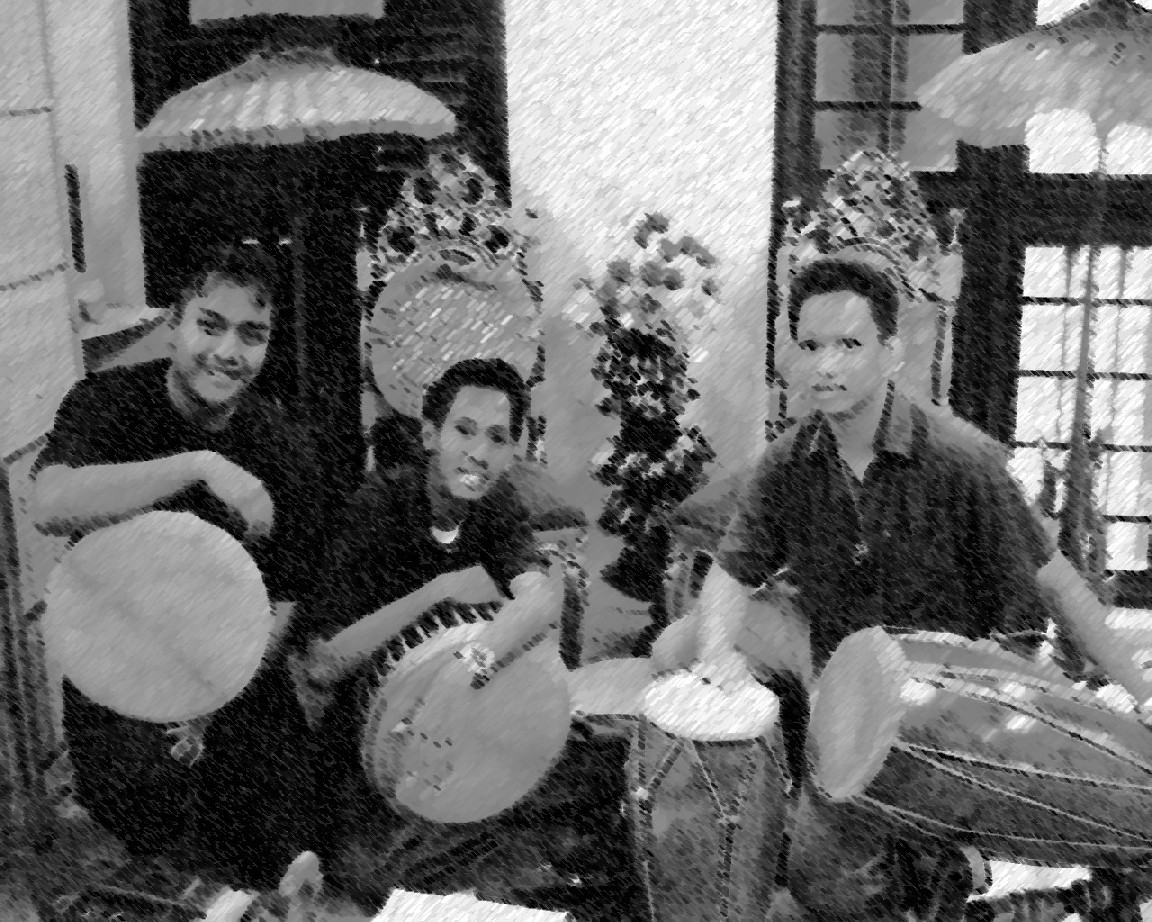
In a Zapin performance, the Zapin
dancers usually perform in pairs and are accompanied by a traditional music
ensemble commonly made up of musical instruments associated with Islamic
culture such as gambus, biola (violin), marwas (bongos) and the rebana.
There are and estimated 10-12 Zapin
musicians in an ensemble.
Popularising Zapin
Zapin is widely considered part of the Malay heritage thus
needed to be preserved. The younger generations will uptake the role to
preserve its esthetic values. The media such as the press, internet search
engines, radio and most importantly, television plays an important role to
extend Zapin or any other form of
cultural arts to its audiences. The X-generation viewers must view Zapin as a form of art that spurs
interest among them to pursue or at least support.
An
effort by Radio Sejarah Melayu, an online internet radio service provides web
surfers with a musical journey and the history of Malay world, featuring
traditional musical forms such as Zapin,
joget, asli, gamelan and many others.
Funds
from the arts ministry, non-government agencies and sponsoring companies must be
adequate and sufficient to help cultural bodies to boost Zapin and portray a positive image for Zapin.
Mr.
Noor Effendy Ibrahim, an artistic director from Teater Ekamatra (Singapore), acknowledges the need for
financial aid in order for any arts production company to survive and thrive.
Information
on Zapin must be made available and
easily accessible for those eager to enquire about Zapin. More books or columns in magazines relating to Zapin movements can help prosper Zapin for years to come. Pricing must be
kept minimal to allow students to purchase and read up on Zapin. A book entitled ‘Zapin,
Folk Dance of the Malay World’ by Mohd. Anis Md. Nor published by the
Oxford University Press (1993) is an example of an overpriced book. Though hard
covered, it presume ably could be priced a little lower to substantiate
learning.
Combining
pop music with essence of Zapin is a
creative way to present Zapin. New
sounds cape that originates from Zapin
is achieved by fusing various aspects of music, genres of music together. One
good example is the up to date musical CD album from Zubir Abdullah, a prolific
musician in Malay music (Singapore)
entitled ‘Perpaduan’ which
incorporates Latin beats, pop rhythm, Malay percussions with Zapin. Some of the tracks in his album I
personally described as fantastic variety of lutes and offers intriguing
speculation from perhaps music critics. There are unmetered gambus solos reminiscent of the Arab taqasim in rhythmic character and
melodic organization. His effort through various albums is widely recognized
and socially accepted even by the non-Malays.
Cultural Festivities
A
proven methodology to popularise a certain piece of art is to physically
showcase it. The public must be made aware that certain aspects of a culture
are still in practice and spiritually alive within the environment of a
community. This goes to Zapin
indefinitely. There are various cultural festivals that have launched Zapin back to popularity such as The
Bintan Zapin Festival (BZF, 2001),
Erau International Zapin Festival in
East Kalimantan (2003).
Festivals
like these are organized and well sponsored thus allowing Zapin movement bodies around the Malay world to collaborate efforts
and breathe life to the ever colourful Zapin’s
music and dance.
From a Personal Perspective
Although some culture
activist sense the urgency to protect Zapin
from extinction, I think there is no absolute or imminent threat to Zapin even in years to come. Looking at
cultural activities, arts festivals which profiled Zapin in various places including Europe and Far East Asia,
indicates that various organizations have successfully projected a youthful Zapin rather than Zapin as an act of art dominated only by the old.
During
the Jambi Arts Festival (2000), Sri Warisan Som Said’s Performing Arts Limited
from Singapore showcased ‘Singapore
Country Night’. Its dancers and musicians are mainly made up youths that
other than owning talents, they have showed great interest in Zapin. Yayasan Warisan Johor from
Malaysia has also gained recognition for its effort to recruit youths within
under its wings. The younger generation has definitely brightened up Zapin with their charismatic
performances and brings on fresh character to Zapin. Why certain activist insisted that Zapin is dying off in the coming age is therefore clearly
unjustified.
Conclusion
Zapin will always be a part of the Malay
culture. How it evolves in years to come depends on the youths of today to
uphold the task of preserving it. Unification of concepts on Malay music helps
distinguish Zapin from the rest,
leaving its unique features to be revived and creatively beautifies the Malay
soul. The music and the Zapin dance
which involves light movements and simplistic steps reflect on the gentleness
of the Malays.
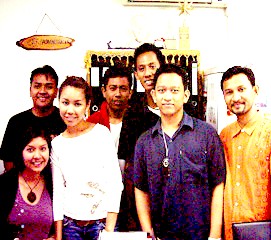
Learnt A Lot From These Guys !
Segala penghormatan daku
berikan pada pensyarahku, Zubir Abdullah yang ku akur sentiasa gigih akan
perjuangan karya SENInya.
Begitu juga dengan beberapa lagi penggiat seni musik, seni tari tradisional
yang bereksperimentasi dengan pelbagai wahana untuk membawa budaya Melayu ke
mercu yang lebih tinggi.
U have my upmost RESPECT people! Keep it up.
******
Since it's inception in 1997, Sri Warisan has consistently been producing great
repertoires in the multi disciplined art forms (dance, music, vocal and multimedia). - Mdm Som Said.
******
Insan Seni 'Impervious' ..?
Mereka katakan insan seni adalah
kelompok manusia degil yang tiada kemahuan untuk menerima pandangan dari
perspektif orang lain.
Ku sangkal kenyataan sebegitu kerana tanpa masyarakat yang menerima / menilai
sesuatu karya seni manakan mungkin seni itu dapat ditakrif sebegitu ..?
Seni dipelbagaikan dengan genre dan keistimewaan tersendiri. Indahnya sesuatu
seni berdasarkan nilai estetika yang berdiri sekira dihayati.
Ayuh, kita hembuskan nyawa ke jasad budaya yang kian layu tiada bermaya.
*ikhlas*
Elmi Zulkarnain