
|
|
Bhutan
The exact itinerary of the trip, including the follow-up journey to Thailand and Laos, is shown by clicking the Factoid button on the navigation bar. What follows are some of the highlights of that journey shown in pictures (hey, its was a photo tour after all!) and brief text. Neither words nor pictures can truly convey the sereneness of Bhutan and Laos, nor the chaotic din and smells and sensations of Thailand. Hopefully this brief introduction to these exotic lands will tempt you into visiting for yourself. Enjoy! Paro, the country's second largest town, is home not only of the national
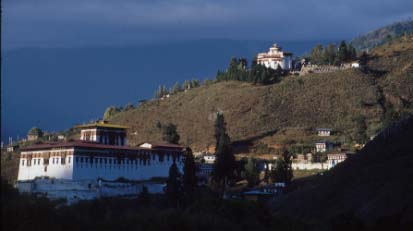
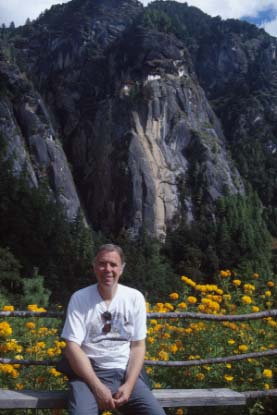
airport but also the national museum - Ta Dzong (shown high on the hill in this
photo). 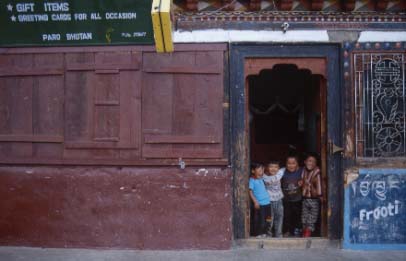 is
a single street, maybe three blocks in length, with small shops, cafes and
bars. In this most isolated of countries, English is the second language
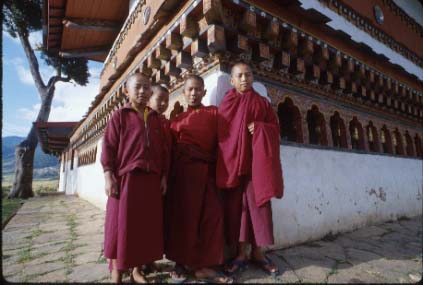
making life for an American tourist a bit easier. These four young lads
are standing in the doorway of one such small shop. (The Bhutanese are
far from camera-shy and often INSIST that you photograph them!) is
a single street, maybe three blocks in length, with small shops, cafes and
bars. In this most isolated of countries, English is the second language
making life for an American tourist a bit easier. These four young lads
are standing in the doorway of one such small shop. (The Bhutanese are
far from camera-shy and often INSIST that you photograph them!)
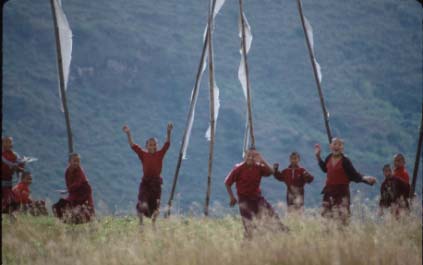
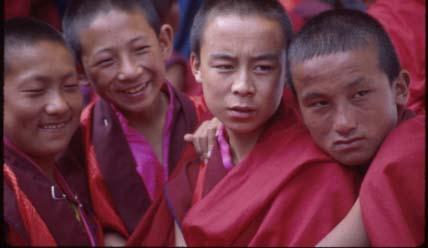
The Chimi Lhakhang, or Mad Monk Monastery, was perhaps my favorite stop on the entire Bhutan journey. Walking through barley fields for perhaps a half-an-hour, we reach the monastery just as the student monks were breaking from the morning studies. They were fabulous subjects, both in posed portraits or while running through the fields of the Buddha!
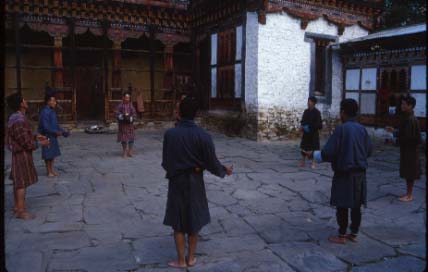
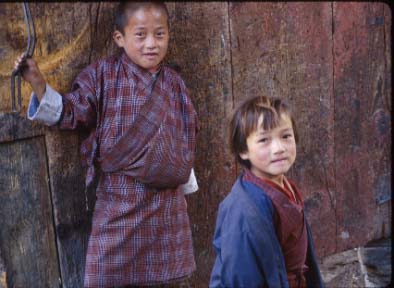
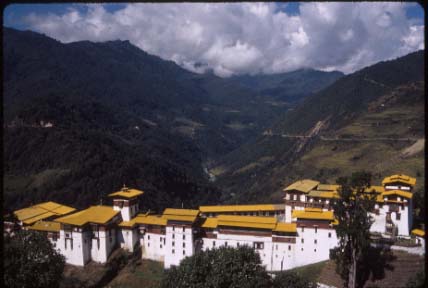
After a day in the Punakha Valley, we continued east to the Bumthang Valley, a full day's drive including crossing over Pele La, an 11,000 foot mountain pass. The Bumthang Valley, far wider than the Punakha Valley, is a major agricultural center and the site of several major festivals. Due to some last minute changes in schedule, we were not going to be able to attend a festival in this area. But, serendipity led us to a rehearsal of a small Dzong's upcoming festival. It was just the participants, a few locals and ourselves that were there. It was a grand afternoon of photography and of observing the joy and sincerity of the people. Two of the younger observers are the subject of this portrait at the entrance door of the monastery. If you haven't already gathered, the Bhutanese are some of the most visually striking people anywhere on earth.
Returning to the Punakha Valley several days later, we attended our first full-blown festival at the Wangdi Phodrang Dzong, shown in the accompanying photo. A magnificent setting at the turn of a long, steep valley made the festivities all the more special. We spent an entire day at the festival, watching dancers, processions and the locals.
We then returned to Thimphu for the nation's largest festival,
t Before we knew it, we were back in Paro. On that final morning, several of us took off for an hour+ drive north to a trailhead, and then climbed 1000 feet in an hour to the Tahtshang Gompa viewpoint. The temple in the upper background, a day's hike from the viewpoint, is considered the most sacred site in Bhutan. Unfortunately, the temple burnt several years ago. But work is underway to restore it to its former glory.
|