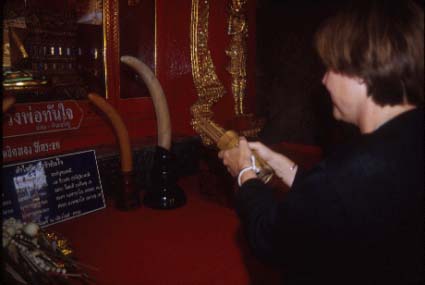
Bangkok. Its
a teaming, crowded, hot, sticky, congested metropolis with McDonalds, Kentucky
Fried Chicken, Burger King, 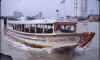 Pizza
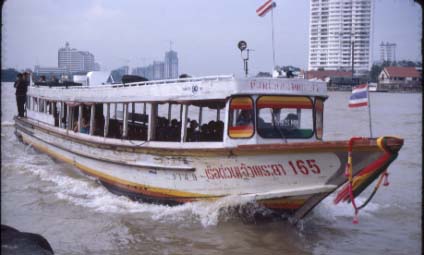
Huts everywhere. The sky train moves one efficiently above the morass to
the river, where long, narrow ferries link key destinations and a forced breeze
makes things a bit more tolerable. Chuck spent several days in Bangkok,
while Gillian basically was there for a night's sleep and a few hours of quick
sightseeing.
Pizza
Huts everywhere. The sky train moves one efficiently above the morass to
the river, where long, narrow ferries link key destinations and a forced breeze
makes things a bit more tolerable. Chuck spent several days in Bangkok,
while Gillian basically was there for a night's sleep and a few hours of quick
sightseeing.
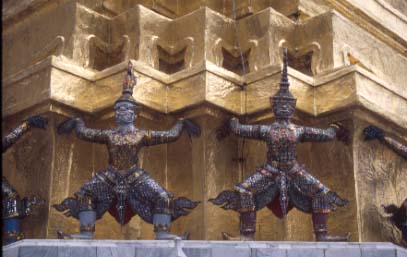
The memories of Bangkok, though, were quick to
discern - the thronging metropolis and the gold-gilded temples. 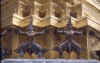 Amidst
the hubbub lay numerous Buddhist temples, important destinations for tourists
and locals alike. The craziness of the urban scene melted away (almost
literally in the 90 degree steam of the city) when one entered the temple
grounds. Though even the main temples were crowded, the pace was slow and
the reverence real. Chuck visited the Royal Palace, with its Emerald
Buddha. And the two of us visited the Temple of the Reclining Buddha,
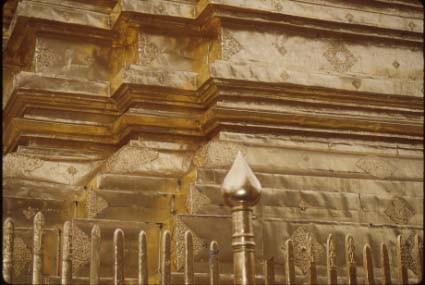
probably the most famous of Thailand's temples. The gold on gold glitter
was spectacular and other-worldly.
Amidst
the hubbub lay numerous Buddhist temples, important destinations for tourists
and locals alike. The craziness of the urban scene melted away (almost
literally in the 90 degree steam of the city) when one entered the temple
grounds. Though even the main temples were crowded, the pace was slow and
the reverence real. Chuck visited the Royal Palace, with its Emerald
Buddha. And the two of us visited the Temple of the Reclining Buddha,
probably the most famous of Thailand's temples. The gold on gold glitter
was spectacular and other-worldly.
Then, after a 80-minute flight on Thai Airways,
we were in another world - Phuket. The
largest of the Thai resort areas, Puget has all of the mundane trappings of
tourist resorts anywhere in the world. But, with a little (or a lot!) of
pre-trip planning, 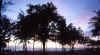 we
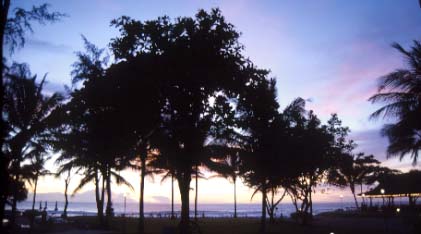
were able to find a first-class resort more or less to its own on Kato Noi beach
- the Kato Thani Beach Resort. Great room, nice beach, decent dining, good
pool, and the ever present monsoon. We knew October would be risky
weather-wise but the Bhutan trip dictated the timing of the remainder of the
journey. Out of 6 days on
we
were able to find a first-class resort more or less to its own on Kato Noi beach
- the Kato Thani Beach Resort. Great room, nice beach, decent dining, good
pool, and the ever present monsoon. We knew October would be risky
weather-wise but the Bhutan trip dictated the timing of the remainder of the
journey. Out of 6 days on Phuket, we had perhaps three really pretty nice days, one so-so day and 2
days of wind and rain. But when the intent was to lay back and relax, the
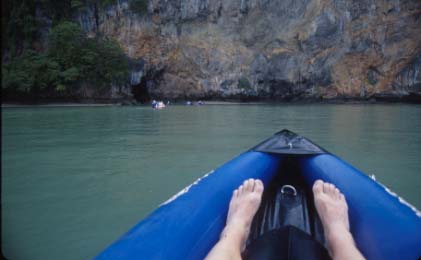
stay met our needs (and saved on suntan lotion!). Other than a day trip to
the Panging Marine National Park off the northeast coast, we basically stayed
within a few miles of the resort the entire week.
Phuket, we had perhaps three really pretty nice days, one so-so day and 2
days of wind and rain. But when the intent was to lay back and relax, the
stay met our needs (and saved on suntan lotion!). Other than a day trip to
the Panging Marine National Park off the northeast coast, we basically stayed
within a few miles of the resort the entire week.
So ended the more touristy part of the trip - at
least for a week. It was now back to the airport, back to Bangkok and then
on to Udon Thani in northeast Thailand. We were planning on attending a
folk music, dance and arts festival in a small village outside of Udon
Thani. Only on the morning after our arrival did we discover
that the  festival
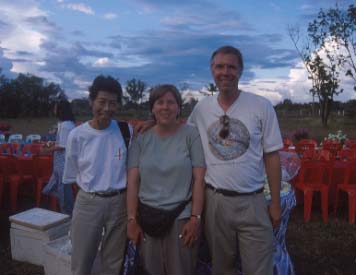
had been moved to March (this was October!). The Assistant Director of
Tourism for NE Thailand, however, took pity on us and invited us to be her guest
at a Mountain Bike Rally to be held in the same small town. Now, Mountain
Bikes are not exactly our thing, but we were here with little else to do, so
away we went to the Ban Chiang World Heritage Site and the first annual
mountain bike rally.
festival
had been moved to March (this was October!). The Assistant Director of
Tourism for NE Thailand, however, took pity on us and invited us to be her guest
at a Mountain Bike Rally to be held in the same small town. Now, Mountain
Bikes are not exactly our thing, but we were here with little else to do, so
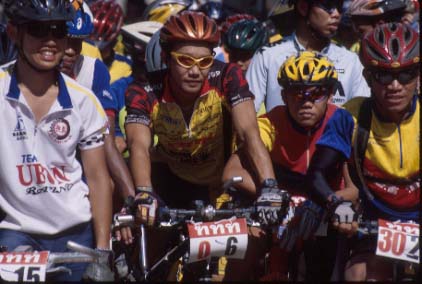
away we went to the Ban Chiang World Heritage Site and the first annual
mountain bike rally.  It
actual was quite interesting (at least for a while). We were able to relax
in the VIP area (except when there were actual VIPs there!), had front row
positions for the start of the race, and enjoyed the evening banquet (until the
rains hit near the end). A key lesson we learned years ago while traveling
is to go with the flow - take opportunities when they pop up - and it usually
works out.
It
actual was quite interesting (at least for a while). We were able to relax
in the VIP area (except when there were actual VIPs there!), had front row
positions for the start of the race, and enjoyed the evening banquet (until the
rains hit near the end). A key lesson we learned years ago while traveling
is to go with the flow - take opportunities when they pop up - and it usually
works out.
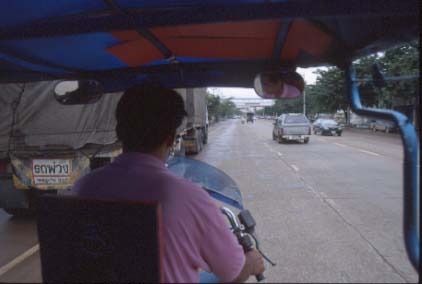
The next morning, we moved on to the  Thai-Laos
border via tom-tom (small motorized tri-cycle with a couple of benches attached
to the back) and second-class bus - the way the locals travel. Hmm.
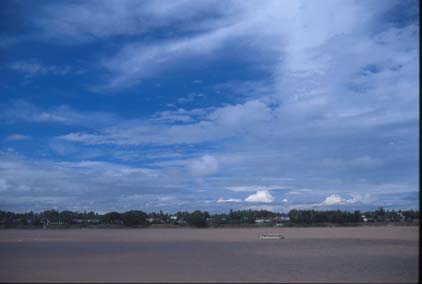
Well, it was an inexpensive way to travel. Now we were in Nam
Kai, a trading town on the Mekong and for some odd reason, a popular
hangout for American ex-pats left over from the Vietnam conflict era.
Thai-Laos
border via tom-tom (small motorized tri-cycle with a couple of benches attached
to the back) and second-class bus - the way the locals travel. Hmm.
Well, it was an inexpensive way to travel. Now we were in Nam
Kai, a trading town on the Mekong and for some odd reason, a popular
hangout for American ex-pats left over from the Vietnam conflict era.  Actually,
it was an interesting town, again with a few wonderful temples, simple
waterfront cafes and semi-decent Italian food at the expert cafe! It also
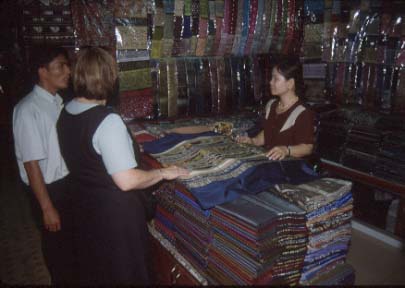
provided our first opportunity to view and purchase the wonderful, colorful
fabrics that Thailand and Laos are justly famous for.
Actually,
it was an interesting town, again with a few wonderful temples, simple
waterfront cafes and semi-decent Italian food at the expert cafe! It also
provided our first opportunity to view and purchase the wonderful, colorful
fabrics that Thailand and Laos are justly famous for.
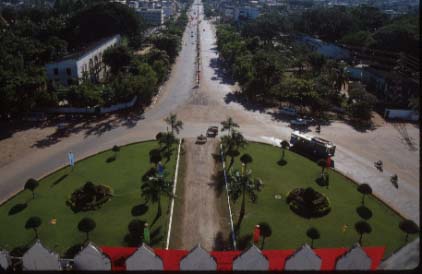
Vientiane, the
capital of Laos, was the next port-of-call. While we rarely take formal
tours, we did arrange for a guide and driver (via the internet!) for our Laos
journey. 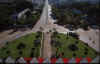 It
cost little more than purely on-our-own travel in Laos would have cost and
provided a much better use of our time and more insights as to local
culture. Vientiane may be one of the world's most laid-back capital
cities. French influence from earlier last century, coupled with several decades
of Soviet
It
cost little more than purely on-our-own travel in Laos would have cost and
provided a much better use of our time and more insights as to local
culture. Vientiane may be one of the world's most laid-back capital
cities. French influence from earlier last century, coupled with several decades
of Soviet  domination
are the major influences on this community. Though a communist country,
there is little if any clue that you're not in a capitalist stronghold - the
free market is thriving everywhere. We toured the major temples and
monuments of the city, ate fine French food for dinner and enjoyed traditional
Lao music and dance in the hotel's dining room in the evening.
domination
are the major influences on this community. Though a communist country,
there is little if any clue that you're not in a capitalist stronghold - the
free market is thriving everywhere. We toured the major temples and
monuments of the city, ate fine French food for dinner and enjoyed traditional
Lao music and dance in the hotel's dining room in the evening.
The following morning, it was off to the airport
for our journey to Luang Probang, the ancient
capital of Laos. The Lao Aviation flight aboard a Chinese Yunnan 7 propjet
was all-too-memorable though
thankfully only 45-minutes in duration! A new guide and driver met us at
the airport and took us to our fabulous little hotel. During the next two
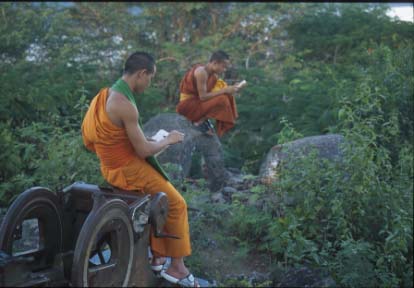
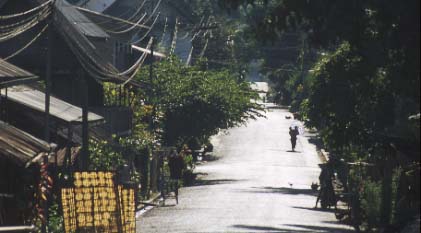
days, we strolled the streets of this beautiful town of 30-some temples and
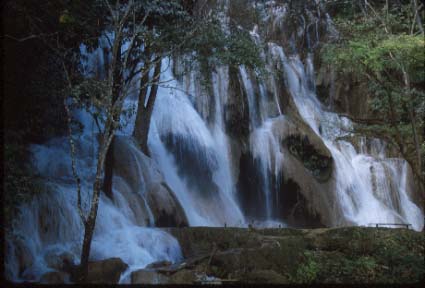
monasteries, of small cafes, and of few vehicles. We took a day trip to
some magnificent waterfalls and hill tribe villages (Lowland Lao, Hmong and
others). All in all, our favorite spot in Laos and Thailand. And, of
course, there was shopping for Lao fabrics.
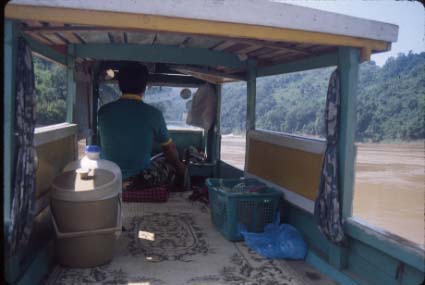
Our driver dropped us off atop a long staircase
leading down to the mighty Mekong. Our guide was now joined by our boat
captain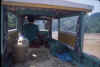 ,
his wife, and the engine mechanic, and the six of us started our two day journey
up (against the flow of the river) the Mekong.
,
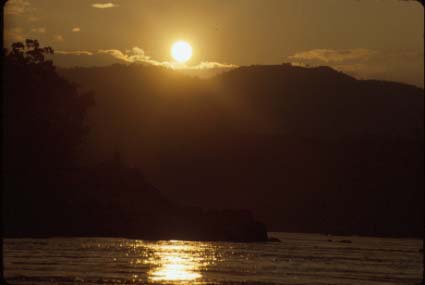
his wife, and the engine mechanic, and the six of us started our two day journey
up (against the flow of the river) the Mekong.  Water
Buffalo, small kids, families in dugout canoes, the occasional village, hillside
caves with Buddha statues. And a magnificent hotel (really) at the
half-way point, again with fine French dining, teak everywhere and cold
beer. A splendid and relatively inexpensive way of seeing the countryside.
Water
Buffalo, small kids, families in dugout canoes, the occasional village, hillside
caves with Buddha statues. And a magnificent hotel (really) at the
half-way point, again with fine French dining, teak everywhere and cold
beer. A splendid and relatively inexpensive way of seeing the countryside.
After a quick clearance of Lao Immigration, we
were off on a dugout canoe for the crossing of the Mekong back to
Thailand. Then it was off to Chiang Mai, the
cultural center of Thailand, for last minute shopping, more music 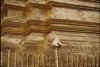 and
dance, and more exploration of hilltribes, waterfalls and the natural
setting. After Laos, everything about Thailand seemed so big, overscale
and crowded. Wonderful restaurants with outdoor dining
and
dance, and more exploration of hilltribes, waterfalls and the natural
setting. After Laos, everything about Thailand seemed so big, overscale
and crowded. Wonderful restaurants with outdoor dining 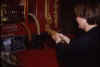 (Chiang
Mai, in the mountains of NW Thailand, is cooler and less humid than Bangkok); a
great little hotel along the river and a close walk to the night market made Thailand's second largest
city a bit more tolerable. Certainly more
pleasant that Bangkok, it served to ease our transition from the relaxation of Laos
to the world of work and home where we would find ourselves all too soon.
(Chiang
Mai, in the mountains of NW Thailand, is cooler and less humid than Bangkok); a
great little hotel along the river and a close walk to the night market made Thailand's second largest
city a bit more tolerable. Certainly more
pleasant that Bangkok, it served to ease our transition from the relaxation of Laos
to the world of work and home where we would find ourselves all too soon.