Books in Philosophy
Books in Philosophy
|
|
Continental Thought
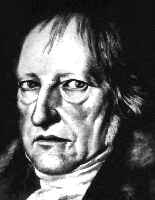 G.W.F. Hegel G.W.F. HegelHere are just a few of Hegel's editions in print in English:
And a select number of good introductions to various facets of Hegel's work, many of them written for the student or intelligent non-philosopher:
|
 Martin Heidegger Martin HeideggerMany of this controversial thinker's books have been available in translations of varying quality from Harper Collins in inexpensive editions for quite a while. In my opinion, HC is to be commended--especially as a mainstream publisher--for taking the chance on publishing Heidegger and keeping him in print. Recently, SUNY press has begun to issue some new translations and editions, including an important new version of Being and Time.
From the University of Chicago Press:
Indiana University Press translations of Heidegger:
Books about Heidegger's thought and life:
|
   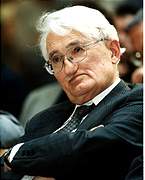 Jurgen
Habermas Jurgen
Habermas
Several good titles on Habermas's work are:
|
Ethics and Moral Psychology
   Alasdair
MacIntyre Alasdair
MacIntyreMacIntyre, currently at the University of Notre Dame, has taught at Oxford, the University of Essex, and was a visiting professor at Princeton. His work has passed through various phases of emphasis during his long career, but has always been concerned with broad ethical issues in a way that distinguishes him from many analytical 20th-century thinkers.
|
   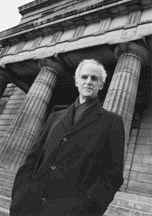 Charles Taylor Charles TaylorTaylor got his start in Marxism, but has done a good deal of work in rehabilitating the expressivist side of Hegel into today's discourse. His Hegel and Modern Society (1979) is a condensation of the much larger Hegel (1975) that essentially made his reputation. He has published three volumes of papers: The thread that runs through much of Taylor's work is a concern for the modern western identity, both of groups and individuals:
For an overview of Taylor's rich and subtle thought, take a look at:
|
Pragmatism
  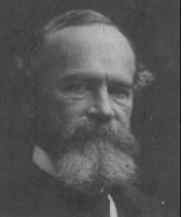 William
James William
JamesOur most famous home-grown American philosopher is also the one most analytically-trained contemporary students have no clue about. Read on!
Works about James:
|
    John Dewey John DeweyDewey's collected works have been published in twenty-seven volumes by Southern Illinois University Press at Carbondale--more information here. Following are some of the most significant texts from America's foremost exponent of democracy as a way of life--an attitude sorely wanting in the America of our "brave new world."
Political theory:
Some of Dewey's extensive work on child-centered education:
Interpretation and extension of Dewey's extremely rich version of pragmatism is a burgeoning field. Interesting, much of the work in this are is being done by non-philosophers. Here are just a few recent publications:
|
   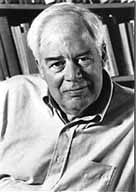 Richard Rorty Richard RortyInfuriating, enervating, entertaining, Richard Rorty never fails to challenge and provoke. Rorty's original interest in analytic philosophy turned to a devastating critique of the same tradition in Philosophy and the Mirror of Nature. While Rorty here identifies Wittgenstein, Heidegger and Dewey as the three most significant thinkers of the twentieth century, his book stands in the traditions both of humanism and of the refutation of epistemology as a sub-discipline of philosophy. Rorty's own positive philosophy of contingency, redescription, and private self-reconstruction is presented in a number of other volumes:
Rorty has also edited two books, The Linguistic Turn (a survey of mainly positivist linguistic philosophy) and Philosophy in History. Books of note about Rorty's work include:
|
|
Works by Robert
Brandom |
Works by Horkheimer & Adorno |
Works by Donald
Davidson |