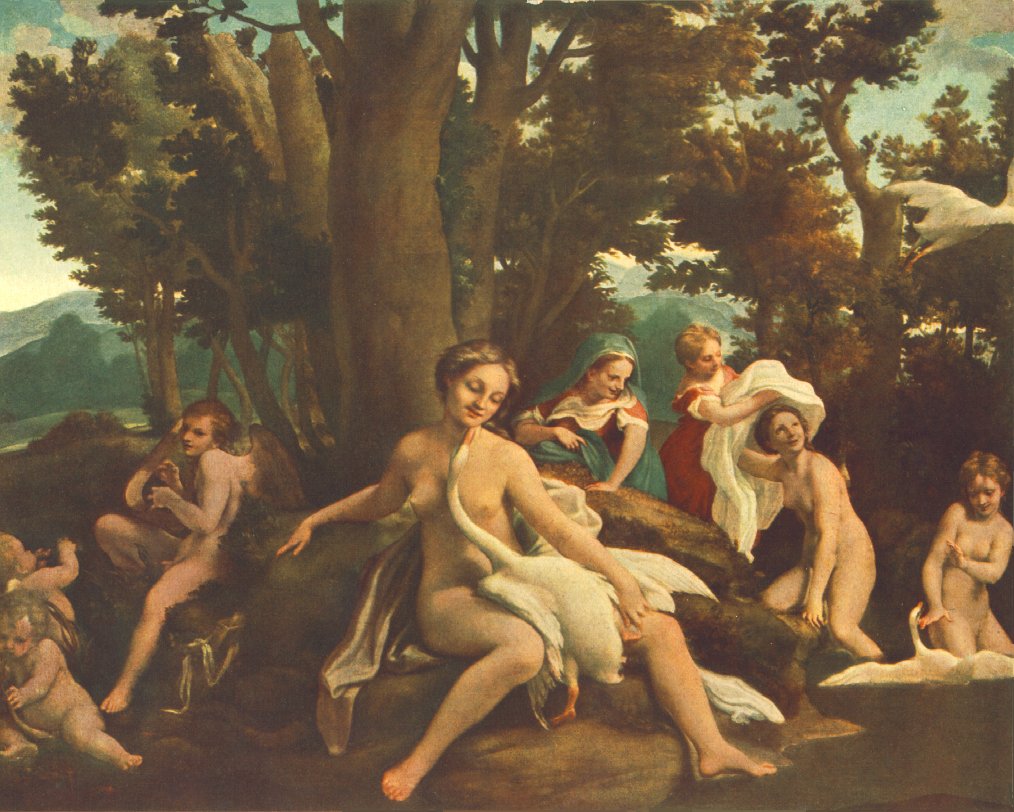
Helen came from one egg, and is perhaps the most recognizable name from Greek literature, as well as a cause of the legendary Trojan War. Clytemnestra killed her husband, Agamemnon, the victorius Greek leader of the Trojan War, because he sacrificed her daughter, Iphigenia, and "sweet flower," before sailing for Greece.
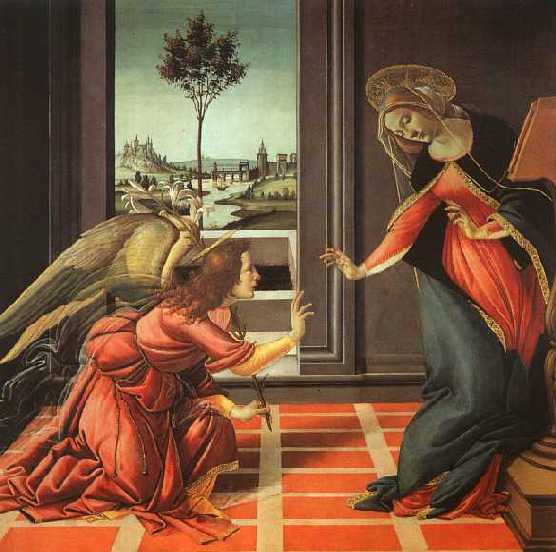
When viewing the poem Leda and the Swan and taking into account Yeats' views, and the rest of his works, this can be viewed as one of Yeats' gyres. Leda can be seen as an earlier version of Mary. They both carry the children of gods, and the resulting births give rise to different civilizations. Leda's children, in Yeats' view, mark the first step in Greco-Roman civilization, and Gabriel's visit toMary, announces the beginning of Christian Europe.
The poem serves as an example of the modern ideal of reworking of the past to fit into a new view. Yeats' perception of Leda and the Swan serving as a symbolic beginning to greek civilization is not one out of a history book, but one that compliments his view of historical cycles, and compares, in his imagining of events, to the annuciation of Christ.