|
|
|
|
|
|
|
|
 |
|
|
|
|
|
|
|
|
|
|
|
|
|
|
|
|
|
|
|
|
|
|
|
|
|
|
|
|
|
|
|
|
|
|
|
|
|
|
|
|
|
|
|
|
|
|
|
|
|
|
|
|
|
|
|
|
|
|
|
|
|
|
|
|
|
|
|
|
|
|
|
|
|
|
|
|
|
|
|
|
|
|
|
|
|
|
|
|
|
|
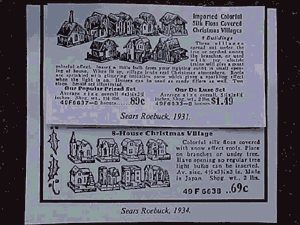
The
Golden Age of the really fine and elaborately
detailed large houses occurs during just the first few years of the Thirties
- probably from about 1929 thru 1934. It is during this period that the world
is introduced to :
|
|
|
|
|
|
|
|
|
|
|
|
THE COCONUTS
|
|
|
|
|
|
|
|
|
|
|
|
|
|
|
|
|
Click on any picture for a larger
image
|
|
|
|
|
|
|
|
|
|
|
|
|
 |
|
|
|
|
|
 |
|
|
|
|
|
|
|
|
|
|
|
|
|
|
|
|
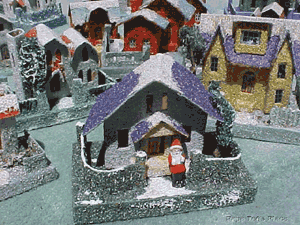
I used to call them"fuzzies,"or "shaggies" and a few
other names - but we owe the term "COCONUTS" to Barbara Lovejoy
who has not been collecting long, but has hit the essence of this type, as
far as I'm concerned, because that's what new-condition "coconuts are
like - the shredded coconut on pastries and cakes!
|
|
|
|
|
|
|
|
|
|
|
|
|
|
|
|
|
 |
|
|
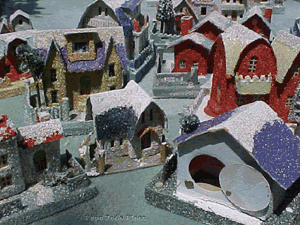
These
are mostly full Cocos - in other words, 100% covered by the shredded cellophane
floss. Fences,bases,walls and roof. More houses are found as partials; the whole
building or very often just the roof in coco, for example. Other parts will
be in flat or in sand stucco. One or two in the background can be seen with
sand bases. The house in the foreground shows one of the harder-to-find pivoted
"candy-filler" hatches on the back, the idea being that you could
either illuminate it with a string of lights, or use it as a surprise box.
|
|
 |
|
|
|
|
|
|
|
|
|
|
|
|
|
|
|
|
|
|
|
|
|
|
|
|
|