
Click on any picture for a larger
image

|
||||||||||||||||||||||||
|
Click on any picture for a larger
image
|
||||||||||||||||||||||||
|
||||||||||||||||||||||||
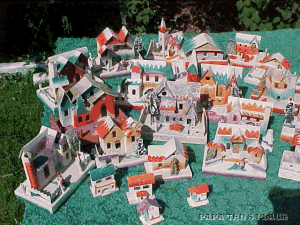
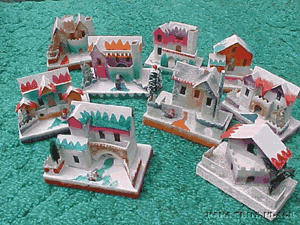
| I dunno - I call these Haciendas because the hot colors and the odd stucco portico walls suggest an Hispanic or SouthWestern U.S.A. flavor to me. A huge family. All sizes except maybe Giants,(at least I've yet to see one.) Just when I am sure I've seen every possible hacienda a new one pops up! They start mid-'30's and continue until WWII. | ||||||||||||||||||||||||
| Characteristic
of the haciendas are these interesting porticoed
walls, somehow resembling adobe - and the use of excellent hand watercolor wash
to acheive a color gradiency found on no other style of house. Also - the true
fired bisque figures first appear with the haciendas and are used generously
- found on all but the very smallest. I hold an inner smile while listening
to antique sellers telling me that these with figures go back to the 1800's
and are especially rare. It's simply not the case. If you find a hacienda without
a figure, look on the bottom; there is probably a hole where the wire originally
went through. |
||||||||||||||||||||||||
|
||||||||||||||||||||||||
|
||||||||||||||||||||||||
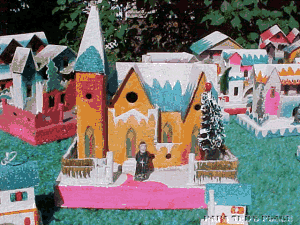
| Some
early transitional haciendas can be found quite
large with rich detail. Note the intricate hand-painted brick work on this church.
It also has a hand-detailed brown composition figure and rafia fence with wooden
posts that mark it as an early hacienda. Transitional...the evolutionary step
just leading into the true hacienda |
||||||||||||||||||||||||
|
|
|
|
|
|
|
|
|
|
|
|
|
|
|
|
|
|
|
|
|
|
|
|
|