 CARTILAGE
AND BURSAE
CARTILAGE
AND BURSAE
Bursae are fluid filled sacs that reduce friction between bone and muscle. In the shoulder joint there are four main bursae. These are the subacromial, subcoracoid, subdeltoid and subscapular bursae. Each name implies the individual location of each bursae. Both the subacromial and subcoracoid bursae prevent contact between the acromion and the coracoid process. Both the subdeltoid and the subscapular bursae lie between large muscles and the capsular wall to add cushion.
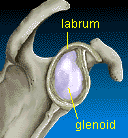
The glenoid fossa is covered by a very important fibrocartilage called the glenoid labrum. The glenoid labrum encloses the glenoid cavity.
The rotator cuff muscles
are protected from the coracoacromial arch or roof of the shoulder by the
subacromial bursae. Inflamation of this bursae is called bursitis.